Neisseria meningitidis-derived Exosome Research & Application
Infection & Exosomes Workflow Exosome Findings Exosome Features Our Advantages Client Voices
Neisseria meningitidis remains a leading cause of bacterial meningitis and septicemia worldwide, presenting significant challenges in vaccine design due to its diverse serogroups and variable outer membrane structures. Research over the past decades has revealed that Neisseria meningitidis-derived exosomes (also called outer membrane vesicles, OMVs) play essential roles in bacterial communication, immune modulation, and host interaction.
Creative Biolabs offers specialized support for research involving Neisseria meningitidis-derived exosomes, enabling scientists to explore their structural composition, antigenic characteristics, and possible uses in immunology and molecular biology.
Neisseria meningitidis Infection and Exosome-based Insights
NEISSERIA MENINGITIDIS PATHOGENIC PROFILE
-
N. meningitidis is categorized into 13 serogroups based on capsular polysaccharide composition, with serogroups A, B, C, W, and Y most commonly associated with human disease.
-
Group B strains are particularly challenging due to their polysaccharide's molecular similarity to neural tissue, limiting safe vaccine design.
-
Despite genetic variability, certain clonal lineages dominate during outbreaks, making targeted antigen discovery vital.
EXOSOME-BASED RESEARCH INSIGHTS
-
Exosomes derived from N. meningitidis are rich in outer membrane proteins (OMPs), which serve as immunogenic components that can stimulate protective immune responses.
-
Studies indicate that exosome-based formulations from group B strains can induce bactericidal antibody production and may act as carriers for protein-based antigens.
-
Exosomes from various strains have been evaluated for cross-reactivity and antigen conservation, providing a foundation for developing multivalent or recombinant vesicle vaccines.
Discuss your Neisseria meningitidis exosome project with Creative Biolabs today to explore tailored research possibilities.
Isolation and Characterization Workflow
At Creative Biolabs, our workflow for Neisseria meningitidis-derived exosome isolation and study follows a systematic approach designed to maintain vesicle integrity and reproducibility. The standard workflow focuses on custom exosome development, while analytical characterization and molecular profiling are optional add-ons based on project needs and strain library availability.
Standard Workflow
1. Strain Culture Preparation
-
Selection of appropriate N. meningitidis strains from Creative Biolabs' verified collection.
-
Cultivation under optimized aerobic conditions to promote vesicle formation.
-
Bacterial cell growth monitoring to ensure vesicle-rich culture stages.
2. Exosome Harvesting and Isolation
-
Sequential centrifugation to remove intact cells and debris.
-
Ultrafiltration or density gradient ultracentrifugation for vesicle concentration.
-
Validation of yield and purity through protein content and particle count.
3. Custom Exosome Development (Core Service)
-
Optimization of strain and medium conditions for targeted vesicle yield.
-
Scalable isolation suitable for downstream research assays.
-
Delivery of exosome preparations in sterile buffer under controlled storage conditions.
Optional Characterization and Profiling (Availability Dependent)
-
Structural Assessment (optional)
Transmission Electron Microscopy (TEM) and Nanoparticle Tracking Analysis (NTA).
Vesicle morphology, size distribution, and surface topology analysis.
-
Compositional and Functional Profiling (optional)
Proteomic and RNA sequencing to identify outer membrane proteins and molecular cargos.
Lipidomic profiling for membrane composition studies.
-
Functional Assays (optional)
Evaluation of immune modulation and antigen presentation properties.
Investigation of vesicle-host cell interactions in vitro.
Contact Creative Biolabs for a step-by-step consultation on isolation feasibility and available analytical extensions.
Key Findings from Research on Neisseria meningitidis-derived Exosomes
|
RESEARCH FOCUS
|
MAIN OUTCOME AND FINDINGS
|
|
Cross-reactive immune potential of detoxified N. meningitidis exosomes.
|
Exosomes treated to remove toxic components retained antigenic potential and elicited cross-reactive responses against N. gonorrhoeae.
|
|
Comparative evaluation of PorA, PorB, and RmpM-deficient exosomes.
|
OMP-deficient vesicles demonstrated enhanced bactericidal activity and improved infection clearance in murine models.
|
|
Immune response characterization after exosome immunization.
|
Immunized animals generated antibodies capable of recognizing diverse gonococcal proteins, showing promise for broad-spectrum immunogenicity.
|
|
Antigen identification following exosome-induced immunity.
|
Immunoprecipitation assays revealed multiple membrane and efflux-related targets, broadening the understanding of exosome-mediated antigen presentation.
|
Learn how Creative Biolabs can support your bacterial vesicle immunology project with flexible analytical solutions.
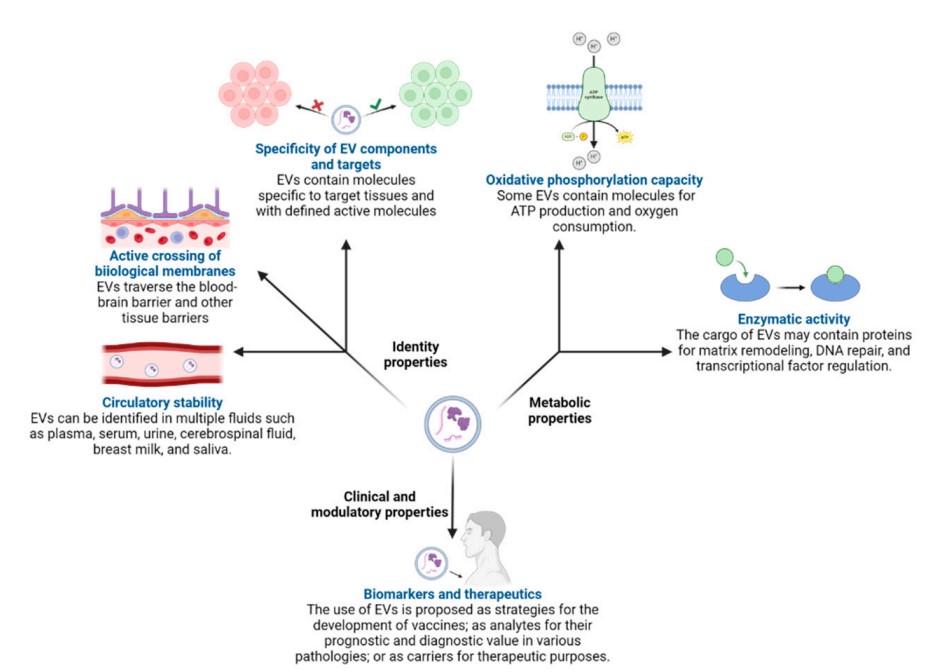 Fig.1 Bacterial-derived exosome features.1
Distinctive Features of Neisseria meningitidis-derived Exosomes

Rich in Outer Membrane Proteins (OMPs)
-
Include PorA, PorB, and Opa variants crucial for host-pathogen interaction studies.
-
Serve as accessible antigens for in vitro and in vivo immunogenicity assays.

Natural Adjuvant Properties
-
Contain lipooligosaccharides (LOS) that stimulate immune cell activation.
-
Provide intrinsic adjuvant effects that enhance antibody production.

Carrier Potential for Antigen Delivery
-
Capable of displaying recombinant antigens on their surface.
-
Useful as non-replicating delivery platforms for studying immune responses.

Biological Mimicry of Infection Dynamics
-
Vesicles mirror the bacterial outer membrane composition, enabling realistic modeling of infection mechanisms.
-
Facilitate the study of host-pathogen communication without the use of live pathogens.
Consult Creative Biolabs to access high-purity exosome preparations customized for your experimental objectives.
Advantages of Partnering with Creative Biolabs
 Comprehensive Expertise
-
Decades of accumulated know-how in Gram-negative bacterial vesicle research.
-
A multidisciplinary team integrating microbiology, proteomics, and immunology expertise.
Customizable Project Design
-
Flexible service modules tailored to client research focus — from isolation only to in-depth profiling.
-
Support for unique serogroup or strain requirements upon feasibility confirmation.
Quality and Traceability
-
Stringent QC for exosome integrity, endotoxin levels, and contamination control.
-
Documented workflow for full experimental reproducibility.
Data-driven Collaboration
-
Detailed reports with visual analytics and optional interpretative support.
-
Assistance in designing follow-up experiments and data validation.
Get in touch with Creative Biolabs today to design a reliable and data-backed bacterial exosome project.
Voices from Our Clients
Researchers collaborating with Creative Biolabs often highlight the seamless communication, transparency, and scientific precision that define our exosome research services.
"Creative Biolabs' team understood the complexity of Neisseria meningitidis vesicle work. Their technical insights helped us streamline our model, and the quality of the vesicle isolates exceeded expectations."
— Senior Microbiologist, European University Research Center
"The optional proteomic profiling service gave us a deeper look into the membrane protein diversity of our strain. It's rare to find such a combination of technical depth and collaborative flexibility."
— Principal Investigator, Infectious Disease Institute
"Working with Creative Biolabs was like having an extended arm of our own lab — responsive, detail-oriented, and committed to research accuracy."
— Project Leader, Vaccine Development Laboratory
Reach out to Creative Biolabs' scientific team and experience a research partnership built on expertise and reliability.
With continuous interest in bacterial vesicle research, Neisseria meningitidis-derived exosomes remain a cornerstone for advancing understanding of Gram-negative vesiculation mechanisms. Creative Biolabs is committed to supporting the global research community in exploring these vesicles for immunogenicity, molecular biology, and diagnostic model development. Start your Neisseria meningitidis-derived exosome project with Creative Biolabs and unlock new scientific possibilities.
FAQs
Q: What protocols do you follow for the isolation of Neisseria meningitidis-derived exosomes?
A: Our isolation protocols are optimized for yield and purity, incorporating ultracentrifuge to obtain high-quality exosomes while minimizing contamination from other cellular components.
Q: How do you ensure the accuracy of the exosome characterization methods employed?
A: We employ a combination of NTA for size distribution and concentration measurements, alongside TEM for morphological assessment. These techniques are validated through rigorous calibration and comparison with standard references.
Q: Can you provide customization for the profiling and sequencing services based on specific research needs?
A: Yes, we offer tailored profiling and sequencing services. Our team collaborates with researchers to design workflows that meet specific objectives, whether focusing on RNA, proteins, or lipidomic profiling of Neisseria meningitidis-derived exosomes.
Q: What types of downstream analyses can be conducted after exosome profiling?
A: Post-profiling, we can assist with a variety of downstream analyses, including functional assays, biomarker validation, and pathways analysis, enabling researchers to translate exosome characteristics into biological insights.
Reference
-
Peregrino, Eliud S., et al. "The Role of Bacterial Extracellular Vesicles in the Immune Response to Pathogens, and Therapeutic Opportunities." International Journal of Molecular Sciences 25.11 (2024): 6210. Distributed under Open Access license CC BY 4.0. The image was modified by revising the title. https://doi.org/10.3390/ijms25116210.
For Research Use Only. Cannot be used by patients.
Related Services: