Stem Cell-derived Exosome Application
- Bone Injury Repair
Overview Services Features FAQs
SC-Exo (stem cell-derived exosomes) have source cell properties that promote cellular self-healing and restore bone homeostasis. Creative Biolabs provides professional insights and related research services on SC-Exo in bone repair applications
Mechanisms of Bone Injury
-
Mechanical stress: Causes traumatic fractures and bone contusions following internal fixation causing fracture or destruction of bone tissue.
-
Biological stress: Due to external forces resulting in impaired blood circulation, metabolic abnormalities lead to obstruction of the osteogenesis process.
-
Pathological triggers: Bone tuberculosis, tumors, and infections can cause bone resorption and destruction, such as septic arthritis and osteomyelitis.
-
Secondary injury: Such as hematoma formed between fracture ends.
SC-Exo in Bone Injury Repair
|
SC-Exo Effect
|
Detail
|
|
Regulation of osteoblast and osteoclast activity
|
Endothelial progenitor cell-secreted exosomes enriched in lncRNA MALAT1 significantly promote fracture site repair by inhibiting miRNA-124 activity to induce bone marrow stromal cell migration and osteoblast differentiation. Human bone marrow mesenchymal SC-Exo promote osteogenic gene expression and bone formation in rats with cranial defects via secreted miR-196a.
|
|
Induction of osteogenic differentiation
|
Adipose SC-Exo enhance extracellular matrix-mediated differentiation toward the osteogenic spectrum, and SC-Exo at the stage of osteogenic differentiation can create a positive feedback effect to further promote osteogenic growth. Bone marrow MSC exosomes carry miRNA-122-5p to promote osteoblast proliferation via elevated receptor tyrosine kinase activity.
|
|
Promotion of vascular renewal
|
In in vitro distraction osteogenesis models, vascular density was higher in neonatal tibial bone tissue treated with exosomes secreted by endothelial progenitor cells, while the neonatal bone tissue had a higher loading limit and failure energy. This is mainly due to its activation of the Ras/ERK pathway through miRNA-126, which enhances endothelial cell angiogenesis.
|
|
Effects on bone metabolism
|
Periodontal ligament SC-Exo were reported to rescue inflammatory bone loss, accelerate alveolar bone formation, and alter periodontal necrosis morphology in periodontitis tissues of rats. In addition, enhancing inorganic salt deposition and matrix mineralization is one of the potencies of SC-Exo to affect bone metabolism.
|
|
Joint application with biomaterials
|
The biomaterials can fill the bone defect area in shape, while replacing the original bone tissue to assume part of the mechanical support role, while the addition of exosomes enhances the scaffold bioactivity and osteogenesis induction ability, and the effective combination of both enhances the bone homing performance of tissue engineering materials and improves the growth environment of bone cells.
|
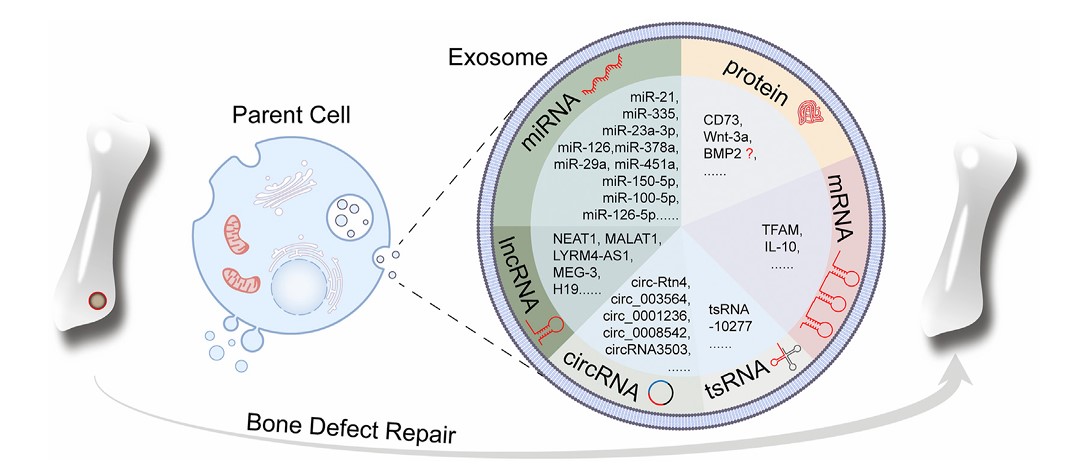 Fig. 1 Schematic of exosomal cargos with the function of promoting bone regeneration.1
Our Services
We offer a comprehensive range of research services focused on the application of SC-Exo in bone injury repair. Our team specializes in the isolation, characterization, and functional analysis of SC-Exo, providing tailored solutions for both research and preclinical studies. Our expertise ensures your research benefits from the latest advancements in exosome technology and analysis.
Features of SC-Exo
-
Anti-Inflammatory Properties: SC-Exo possess potent anti-inflammatory factors that help mitigate the inflammatory response associated with bone injuries, promoting a more conducive healing environment.
-
Enhancement of Osteogenic Activity: These exosomes contain growth factors and signaling molecules that can enhance osteoblast proliferation and differentiation, crucial for bone formation.
-
Tissue Regeneration: SC-Exo facilitate the regeneration of bone tissue by promoting the migration and recruitment of stem cells to the injury site, thereby accelerating the healing process.
-
Biocompatibility: Derived from stem cells, SC-Exo exhibit excellent biocompatibility and low immunogenicity, making them ideal candidates for therapeutic applications in bone injuries.
-
Versatile Delivery Mechanisms: SC-Exo can be engineered for targeted delivery, allowing for localized treatment of bone injuries while minimizing systemic side effects.
Creative Biolabs' exosome mass production platform overcomes the obstacles of low yields and complex extraction and isolation in exosome applications. Our experts respond to the understanding of the exact function of SC-Exo to repair bone injury and develop reliable solutions to fuel exosome research. Please contact us to advance your project.
FAQs
Q: How are SC-Exo collected and characterized for research purposes?
A: SC-Exo are isolated from stem cell cultures using techniques such as ultracentrifugation, size-exclusion chromatography, or commercially available isolation kits. Characterization involves techniques like nanoparticle tracking analysis, Western blotting, and electron microscopy to confirm size, morphology, and specific marker expression.
Q: How do SC-Exo compare to traditional stem cell strategy in bone injury repair?
A: Unlike traditional stem cell therapies that require direct injection of live cells, SC-Exo offer a safer and more efficient alternative by transferring bioactive molecules without the challenges associated with cell survival and potential tumorigenicity. This promotes a more targeted and effective process.
Q: Is there research exploring the combination of SC-Exo with biomaterials for bone repair?
A: Yes, ongoing research is investigating the potential of combining SC-Exo with biomaterials to enhance the regenerative environment for bone repair. This approach aims to better understand how the synergistic interactions between exosomes and biomaterials can improve structural support and biological activity at the injury site, promoting more effective healing processes in experimental models.
Q: What types of models can SC-Exo be tested on for bone injury research?
A: SC-Exo can be tested on various animal models, including murine models of critical-sized bone defects and fracture healing, as well as larger animal models like rabbits and sheep for translational studies. Additionally, in vitro 3D models, such as bioreactor systems and hydrogel-based constructs, are employed to simulate the bone microenvironment, allowing for detailed investigation of exosome-mediated effects on osteogenesis and tissue engineering strategies. These models provide valuable insights into the mechanisms of action and efficacy of SC-Exo in promoting bone repair.
Reference
-
Ma, Shaoyang, et al. "Engineering exosomes for bone defect repair." Frontiers in Bioengineering and Biotechnology 10 (2022): 1091360. Distributed under Open Access license CC BY 4.0. The image was modified by revising the title.
For Research Use Only. Cannot be used by patients.
Related Services: