Stem Cell-derived Exosome Application
- Cornea Injury Repair
Overview Services Features FAQs
Corneal injury is a common clinical disease in ophthalmology, disrupting the transparency and elasticity of corneal structures. SC-Exo (Stem cell exosomes) can play a role in corneal repair and contribute to the normalization of eye movement, visual function, regulation of vision, etc. Creative Biolabs contributes to the research and mechanistic understanding of SC-Exo in the repair of corneal injury.
Pathological Features of Corneal Injury
The cornea is a transparent and elastic layer of avascular tissue, consisting of an epithelial cell layer, an anterior elastic layer, a stroma layer, a posterior elastic layer, and an endothelial cell layer. After the corneal injury, the destruction of cellular and stromal components often causes a series of pathological changes.
-
Collagen fibers: Following damage, the corneal epithelium has a significant amount of collagen fibers visible. The collagen fibers form a meshwork structure that connects the corneal tissue to the surrounding sclera. However, this meshwork itself is not involved in the regeneration of corneal tissue.
-
Hyaluronic acid: It is a mucopolysaccharide substance composed of protein, sugar, and water, and is one of the components necessary to maintain corneal transparency. Therefore, it can cause corneal clouding after injury.
-
Mucin: It is a protein mucopolysaccharide substance composed mainly of collagen and glycoprotein. Mucin not only strengthens the adhesion between the epithelium and the sclera, but also acts as a barrier.
-
Vascular: Corneal injury can cause vascular hyperplasia and increased vascular permeability, eventually leading to lesions such as corneal edema and corneal ulcers.
-
Epithelial cells: Epithelial cells show some reactivity to external stimuli and can become edematous, thickened, and congested when damaged. Scar tissue can be formed after epithelial cell injury, and regeneration can occur during the healing process.
What We Offer
We provide comprehensive research services focused on the application of SC-Exo for corneal injury repair. Our offerings include isolating and characterizing exosomes from various stem cell sources, evaluating their therapeutic efficacy through in vitro and in vivo models, and conducting detailed biochemical analyses of their cargo. Additionally, we assist in developing explore protocols for the delivery and targeting of exosomes to enhance healing in corneal injuries, while also providing insights into the SC-Exo potential benefits.
SC-Exo Repair Injured Corneas
|
SC-Exo Types
|
Detail
|
|
Corneal limbal mesenchymal SC-Exo
|
Corneal limbal mesenchymal SC-Exo isolated from the corneal limbal stroma have the potential to induce differentiation toward keratocytes, while reducing stromal metallopeptidase expression, inhibiting corneal inflammation and neovascularization, and facilitating the injury repair process.
|
|
Adipose SC-Exo
|
Adipose SC-Exo upregulate collagen and fibronectin synthesis, promote the growth and transfer of corneal stromal cells, and rescue the corneal stroma to maintain transparency.
|
|
Bone marrow mesenchymal SC-Exo
|
Corneal edema was relieved, corneal permeability was improved, and corneal fluorescein staining signal was reduced in a bone marrow mesenchymal SC-Exo-treated mouse model of dry eye. Meanwhile, differential analysis screened that exosomal miR-204 mainly mediated the IL-6/Stat3 pathway to suppress local fibrosis and inflammation, well restoring corneal tissue structure and epithelial integrity.
|
|
Induced pluripotent stem cell-derived mesenchymal SC-Exo
|
The developed induced pluripotent stem cell-derived mesenchymal SC-Exo-associated thermosensitive hydrogel alleviates corneal scar formation and accelerates healing by releasing exosomal miR-432-5p, which inhibits translocation-associated membrane protein 2.
|
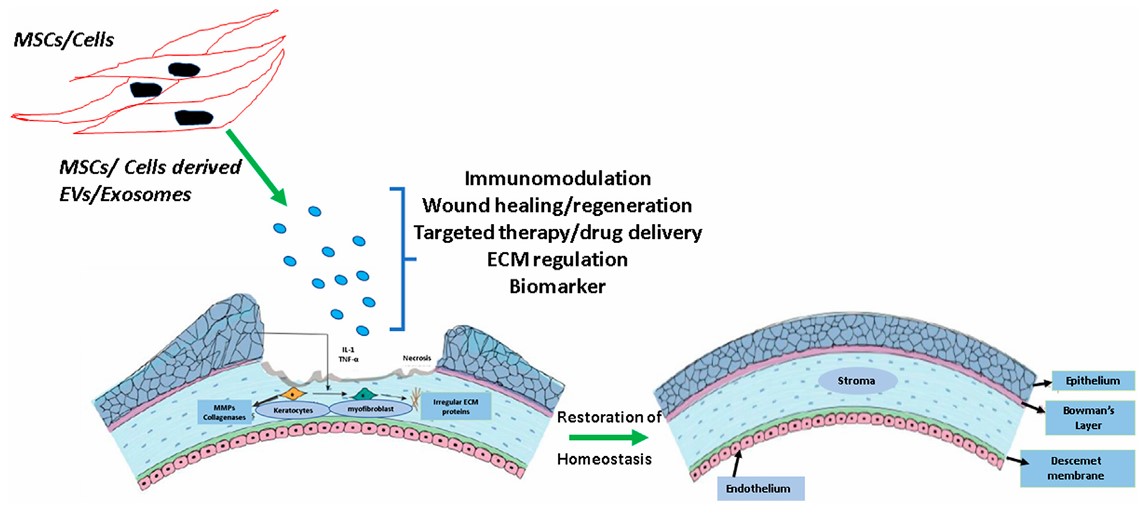 Fig. 1 Schematic showing the effect of exosomes on corneal wound healing and fibrosis.1
At Creative Biolabs, the construction of an exosome platform based on isolation, dissection, and engineering modifications facilitates the study of SC-Exo for interventional applications in ocular diseases such as corneal injury. Please contact us to learn more.
FAQs
Q: What animal models can be used to evaluate the therapeutic effects of exosomes on corneal injuries?
A: Various established animal models, such as rabbits and mice, closely mimic human corneal injuries have been utilized. These models provide a controlled environment for researchers to evaluate the safety and effectiveness of SC-Exo.
Q: What types of corneal injuries can be treated using SC-Exo?
A: The therapeutic potential of SC-Exo in various corneal injuries is being explored, including chemical burns, trauma-induced damage, and degenerative conditions. Researchers are trying to find out how well they work to promote epithelium regeneration and lower inflammation.
Q: Can your services assist in the development of study protocols for applications of exosomes?
A: Yes, we can help develop and optimize research protocols for exploring SC-Exo functions, including dosing, administration routes, and monitoring of outcomes.
Q: What are the advantages of using SC-Exo for repairing injured corneas compared to exosomes from other sources?
A: SC-Exo offer significant advantages for repairing injured corneas due to their enhanced therapeutic cargo rich in growth factors and cytokines that promote healing and regeneration. They have superior regenerative capacity, effectively stimulating epithelial cell proliferation and migration. Their ability to be engineered for targeted delivery to injured tissues, along with inherent immunomodulatory properties that reduce inflammation, further distinguishes them from exosomes derived from other sources, making them a promising option for corneal repair.
Reference
-
Tiwari, Anil, et al. "Mini review: Current trends and understanding of exosome therapeutic potential in corneal diseases." Frontiers in Pharmacology 12 (2021): 684712. Distributed under Open Access license CC BY 4.0. The image was modified by revising the title.
For Research Use Only. Cannot be used by patients.
Related Services: