Stem Cell-derived Exosomes and Therapeutic Applications
- Different Forms
Overview Services Features FAQs
SC-Exo (Stem cell exosomes), as non-cellular substances, can be released from SCs. SC-Exo act independently of specific structural and functional organelles and are derived from conditioned cultures without SCs. This gives them the benefits of not being easily recognized and processed by the immune system, being non-immunogenic, and being transferable in different body fluids. Creative Biolabs has accumulated insights on different forms including native and engineered modified SC-Exo and their applications and provides one-stop customized research services.
Exosomes produced by various types of SCs in natural culture are referred to as native SC-Exo. After undergoing particular growing conditions, SCs can access exosomes in the extracellular environment. Bioactive chemicals found in these exosomes may have significant effects on neighboring cells and organs.
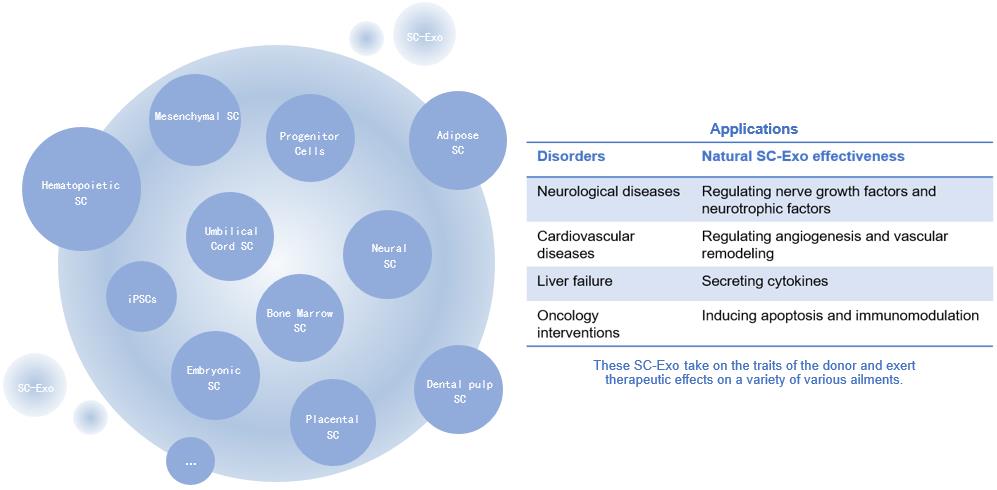 Fig.1 Various native SC-Exo and their applications.
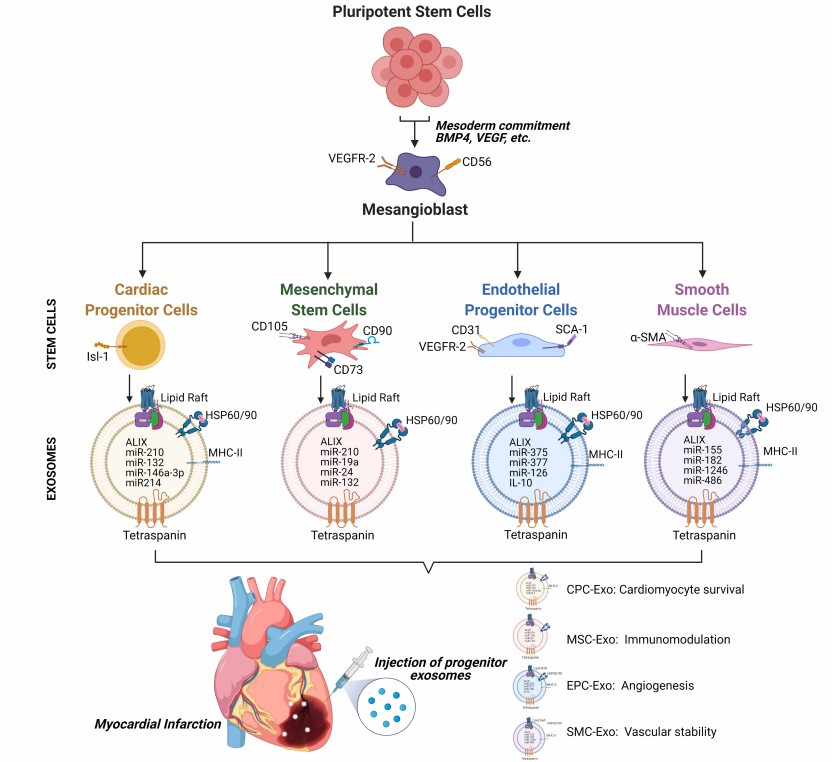 Fig.2 Sources of native SC-Exo.1, 3
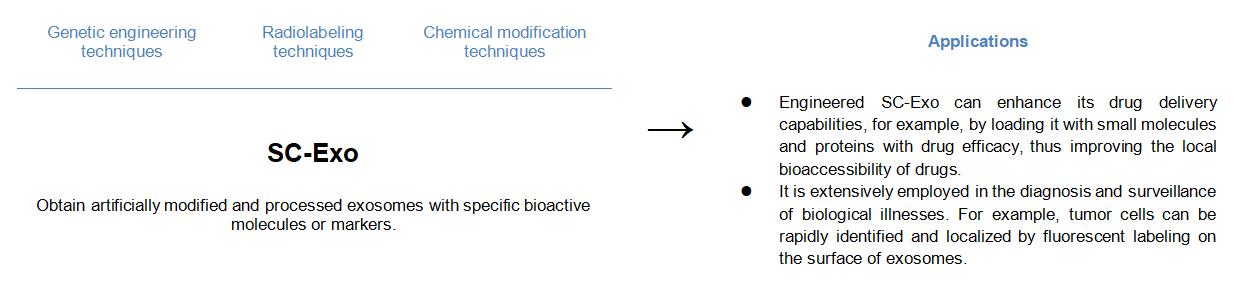
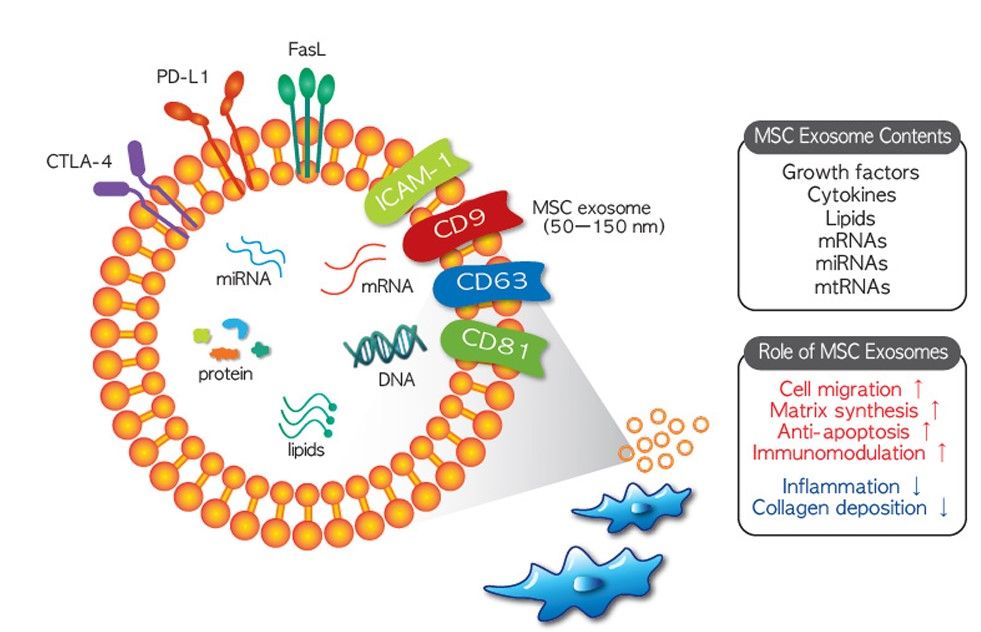 Fig.3 Composition and function of MSC-Exo.2, 3
Features
-
Diverse Sources: SC-Exo can be obtained from both natural sources and through engineered forms. Natural exosomes offer a biologically pure and potentially effective option for therapeutic applications. Engineered exosomes can be customized to enhance specific therapeutic properties.
-
Potent Therapeutic Potential: These exosomes hold great promise in various therapeutic applications. They have applications in medication delivery, regenerative medicine, and the treatment of numerous illnesses.
-
Targeted Delivery: Interventions can be made more efficient and targeted by using engineered exosomes that are specifically designed to target particular cells or tissues.
-
Biocompatibility: Exosomes generated from stem cells are often immunogenicity-free and biocompatible, lowering the possibility of negative reactions.
-
Versatility: Depending on the requirements of the application, they can be employed in many forms. They provide a range of techniques, whether they are designed or in their natural state.
Creative Biolabs provides services for isolation, characterization, profiling, and functional probing of different forms of SC-Exo. Please contact us to learn more.
FAQs
Q: How does the naturally occurring version of SC-Exo differ from its engineered form?
A: Natural exosomes are obtained directly from stem cells and retain their native properties. Engineered exosomes can be modified to enhance specific characteristics, such as targeting ability or therapeutic payload.
Q: What challenges exist in researching stem cell-derived exosomes?
A:
-
Difficulty in isolating and purifying exosomes in large quantities with high purity.
-
Understanding the complex interactions between exosomes and the immune system.
-
Establishing standardized methods for characterizing and quantifying exosomes.
Q: How do researchers determine the efficacy of stem cell-derived exosomes in research?
A:
-
In vitro cell culture experiments to assess the impact on cell behavior.
-
Animal models to study exosome function in a more complex biological context.
-
Measuring specific biomarkers or physiological changes as indicators of exosome activity.
References
-
Thej, Charan, and Raj Kishore. "Unfathomed nanomessages to the heart: translational implications of stem cell-derived, progenitor cell exosomes in cardiac repair and regeneration." Cells 10.7 (2021): 1811.
-
Lee, Byung-Chul, Insung Kang, and Kyung-Rok Yu. "Therapeutic features and updated clinical trials of mesenchymal stem cell (MSC)-derived exosomes." Journal of clinical medicine 10.4 (2021): 711.
-
Under open access license CC BY 4.0. The image was modified by revising the title.
For Research Use Only. Cannot be used by patients.
Related Services: