Stem Cell-derived Exosome Application
- Placental MSC Source
Introduction Advantages Applications Services FAQs
Placental Mesenchymal Stem Cell-Derived Exosomes (PMSC-Exos)
Placental mesenchymal stem cells (PMSCs) have garnered significant attention in recent years as a valuable source of therapeutic agents for regenerative medicine. Isolated from the human placenta, a tissue typically discarded after birth, PMSCs offer several practical advantages over other stem cell sources: they are readily accessible, pose minimal ethical concerns, exhibit high proliferative capacity, and possess low immunogenicity. These properties make PMSCs an attractive option for cell-based therapies across a spectrum of diseases. However, despite their promise, the clinical translation of PMSCs has been hampered by several challenges, including limitations in delivery methods, difficulties in maintaining cell viability and functionality post-transplantation, and logistical issues associated with large-scale clinical applications.
Emerging evidence suggests that many of the therapeutic effects of PMSCs may be mediated not by the cells themselves, but by their secreted extracellular vesicles, particularly exosomes. PMSC-derived exosomes (PMSC-Exos) are nanoscale vesicles enriched with bioactive molecules such as proteins, lipids, mRNAs, and non-coding RNAs, which play pivotal roles in intercellular communication. These vesicles exhibit key advantages over cell therapies, including enhanced stability, reduced immunogenicity, and the ability to cross biological barriers. Moreover, PMSC-Exos avoid some of the safety concerns associated with stem cell transplantation, such as uncontrolled differentiation and tumorigenicity, positioning them as a compelling alternative in the field of regenerative medicine.
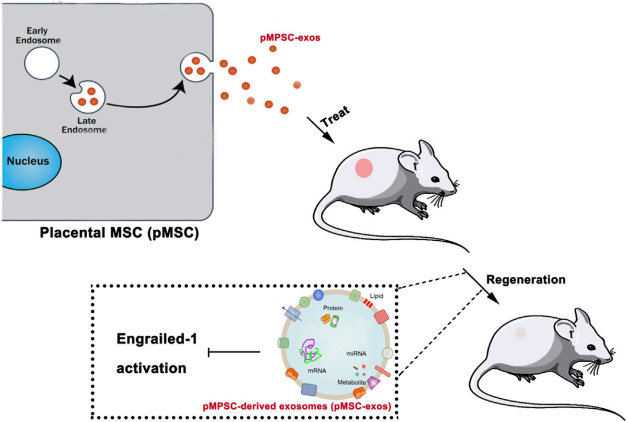 Fig.1 pMSC-exos induced wound regeneration via inhibiting Engrailed-1 activation.1
At Creative Biolabs, we have established a comprehensive service platform to support exosome research and application development. From exosome isolation from various sources, to tailored exosome engineering services, we are dedicated to accelerating the translation of PMSC-Exos into clinically relevant therapies.
Key Advantages of PMSC-Exos
Unlike some other stem cell-derived products, PMSC-Exos carry low levels of MHC class II molecules, reducing the risk of immune rejection and making them a safer option for therapeutic use.
-
Rich Cargo of Bioactive Molecules
These exosomes are packed with a diverse range of bioactive molecules—proteins, lipids, RNAs—that can modulate inflammation, promote regeneration, and support tissue repair across multiple organ systems.
-
Cell-Free Therapy with Reduced Risks
PMSC-Exos bypass some of the challenges associated with live cell therapy, such as the risk of tumor formation, uncontrolled differentiation, or long-term engraftment concerns.
-
Superior Stability and Scalability
Exosomes are more stable in circulation compared to live cells and can be stored and transported more easily, which is a major advantage for clinical translation and commercialization.
They can be engineered or loaded with specific therapeutic agents, enabling the development of exosome-based delivery systems tailored for particular diseases or tissues.
Therapeutic Applications of PMSC-Exos
PMSC-Exos have demonstrated robust pro-angiogenic properties, making them an attractive candidate for treating ischemic vascular diseases. Studies in animal models, such as hindlimb ischemia, have shown that PMSC-Exos can promote vascular remodeling, enhance endothelial cell proliferation, and inhibit apoptosis. Furthermore, in murine models of myocardial infarction, PMSC-Exos not only mitigated myocardial fibrosis but also modulated the gut microbiota composition, suggesting an intriguing gut-heart axis mediated by exosomal signaling. These findings underscore the multifaceted potential of PMSC-Exos in cardiovascular repair. Creative Biolabs offers exosome profiling services and functional research in vitro and in vivo, enabling researchers to elucidate the molecular mechanisms underpinning these therapeutic effects.
-
Neuroprotection and Neural Repair
The neuroprotective capacity of PMSC-Exos has been highlighted in models of spinal cord injury (SCI), where long-term administration of PMSC-Exos improved motor and urinary functions. These effects are thought to arise from the promotion of endogenous neural stem cell activity and modulation of neuroinflammatory pathways. Creative Biolabs supports researchers in this field through advanced exosome extraction techniques, exosome characterization services, and the development of specialized animal models for neurological disorders.
-
Tissue Repair and Wound Healing
PMSC-Exos are rich in regenerative and anti-inflammatory mediators, enabling them to accelerate wound healing across diverse tissue types. In a rat skin wound model, PMSC-Exos were found to downregulate Engrailed-1 activity by inhibiting the YAP signaling pathway, thereby expediting tissue repair. In a separate study involving a high-fat diet-induced mouse model of obesity, PMSC-Exos alleviated liver injury by modulating Let-7i-5p-associated pathways related to inflammation, oxidative stress, and mitochondrial function. To enhance the therapeutic potential of PMSC-Exos, Creative Biolabs offers exosome engineering services, including disease-targeted modifications, ensuring that exosomes are precisely tailored for specific regenerative applications.
The regenerative capabilities of PMSC-Exos have also spurred interest in aesthetic medicine. Clinical studies suggest that PMSC-Exos, whether administered alone or in combination with adjuncts such as botulinum toxin, hyaluronic acid, or calcium hydroxyapatite, can improve skin texture and quality in individuals with various dermatological concerns. To support research in this field, Creative Biolabs provides exosomal lipidomics, metabolomics, and proteomics services, helping elucidate the molecular basis of skin regeneration mediated by PMSC-Exos.
Given their low expression of MHC class II molecules, PMSC-Exos exhibit potent immunomodulatory properties. Case reports have documented the resolution of chronic skin graft-versus-host disease following PMSC-Exo therapy, highlighting their potential in controlling aberrant immune responses. Moreover, PMSC-Exos have been shown to inhibit cellular senescence in cholangiocyte organoids, offering a novel therapeutic approach for diseases such as primary sclerosing cholangitis and primary biliary cholangitis. Exosomal cytokine profiling, offered by Creative Biolabs, is essential for characterizing the immunoregulatory properties of PMSC-Exos and optimizing their therapeutic applications.
-
Pregnancy-Related Disorders
PMSC-Exos derived from patients with gestational diabetes mellitus (GDM) have been found to carry high levels of miR-130b-3p, which impairs vascular remodeling by downregulating ICAM-1 expression in umbilical vein endothelial cells. This discovery opens avenues for using PMSC-Exos as diagnostic and therapeutic tools in pregnancy-associated conditions. At Creative Biolabs, we provide exosomal miRNA sequencing services, enabling researchers to identify disease-specific exosomal markers and uncover new diagnostic targets.
Beyond their intrinsic therapeutic effects, PMSC-Exos also serve as promising vehicles for drug delivery. Engineered PMSC-Exos with reduced miR-4450 expression have been shown to restore ZNF121 levels, inhibit apoptosis and inflammation in nucleus pulposus cells, and slow the progression of intervertebral disc degeneration in mice. Creative Biolabs offers a full suite of exosome cargo loading services—including pre-loading and post-loading techniques—to optimize the delivery of therapeutic payloads via PMSC-Exos.
Partnering for the Future of PMSC-Exos
While the field of PMSC-Exos holds great promise, further investigation is needed to fully elucidate their mechanisms of action, optimize their production, and ensure safety and efficacy in clinical applications. At Creative Biolabs, we are committed to supporting researchers in harnessing the full potential of PMSC-Exos. Our one-stop service platform offers exosome isolation, purification, characterization, functional analysis, and engineering, empowering our partners to accelerate breakthroughs in regenerative medicine. If you're ready to unlock the next frontier of cell-free therapeutics, please contact us to explore our exosome services—let's drive innovation together.
FAQs
Q: Why are PMSC-Exos considered a promising therapeutic tool?
A: PMSC-Exos carry a rich cargo of proteins, lipids, and RNAs that can modulate immune responses and promote tissue repair. They're derived from the placenta—a tissue that's abundant and ethically non-controversial—making them an attractive option for scalable therapies.
Q: Are PMSC-Exos safer than traditional stem cell therapies?
A: Generally, yes. PMSC-Exos offer a cell-free alternative that avoids the risks associated with live stem cell transplants, like tumor formation or uncontrolled differentiation. Their low immunogenicity also makes them less likely to trigger rejection.
Q: What diseases might benefit from PMSC-Exo-based therapies?
A: The list is growing, but so far, research shows promise in treating cardiovascular diseases, neurological disorders, inflammatory conditions, chronic wounds, and even some skin-related issues.
Q: Can PMSC-Exos be engineered for specific needs?
A: Absolutely. We can modify or load PMSC-Exos with specific therapeutic agents to enhance targeting and efficacy. This customization is a key advantage of exosome-based approaches.
Reference
-
Zhang, Yan, et al. "Placental stem cells-derived exosomes stimulate cutaneous wound regeneration via engrailed-1 inhibition." Frontiers in Bioengineering and Biotechnology 10 (2022): 1044773. Distributed under Open Access license CC BY 4.0, without modification.
For Research Use Only. Cannot be used by patients.
Related Services: