Are you currently facing long drug development cycles, difficulty in achieving balanced dual-target binding, or challenges in producing functional, stable antibody fragments at scale? Our Creative Biolabs Fab-scFv BsAb Fragments Generation service helps you accelerate drug discovery, obtain high-quality recombinant bispecific fragments, and streamline therapeutic development through advanced recombinant DNA technology and high-throughput expression platforms.
Contact our team to get an inquiry now!
Fab-scFv BsAb fragments represent an evolutionary step in therapeutic antibody engineering, moving beyond the traditional full IgG structure. They leverage the inherent, rock-solid stability of the Fab fragment (composed of the full light chain and the VH-CH heavy chain fragment, Target A binder) and genetically fuse an scFv (a VH and VL linked by a short, optimized peptide, Target B binder) specific for a second antigen, typically to the Fab's C-terminus. This modular design is brilliant because it ensures highly efficient heterodimer formation by relying on the native light chain/heavy chain pairing mechanism of the Fab domain, significantly mitigating the product complexity and yield issues associated with de novo bispecific IgG engineering. Research confirms that these fragments maintain the high-affinity binding of the parent antibodies while providing the benefits of smaller size (approx. 75-100 kDa). This characteristic size profile is key to achieving better tissue penetration in solid tumor environments and reducing systemic accumulation, as detailed in numerous publications on next-generation bispecific formats.
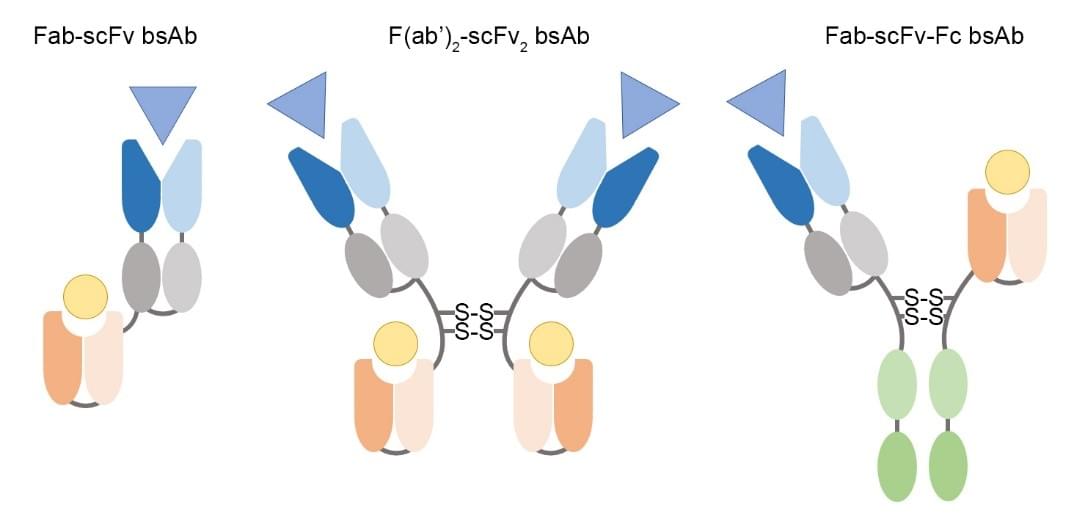 Fig.1 Structure of scFv-Fab fragments bispecific BsAbs.
Contact us for more Fab-scFv BsAb Fragment Product details and customized quote!
Creative Biolabs stands apart in the bispecific antibody fragment space due to our iterative optimization platform and unwavering focus on biophysical stability. Our in-house vector design minimizes the propensity for aggregation, a common pitfall in fragment development, especially with scFv components. By utilizing parallel expression screening in both microbial and transient mammalian systems, we ensure the fastest route to high-yield, functional material. Our fragments are designed for optimal pharmacokinetics, balancing the need for deep tissue penetration with sufficient in vivo retention time for therapeutic efficacy.
Experience the Creative Biolabs Advantage - Get a Quote Today
A: Fab-scFv fragments, lacking the Fc region, offer advantages where rapid tissue penetration (e.g., solid tumors or ocular delivery) and fast blood clearance are critical. They also avoid Fc-mediated effector functions (like ADCC/ADCP), which is beneficial for T-cell engagers or imaging agents where minimal non-specific immune activation is desired. If a long serum half-life is required, we recommend exploring our Fc-fused fragment options.
A: While scFv modules can inherently be prone to aggregation, our optimized Fab-scFv design significantly enhances overall stability. The incorporation of the Fab domain provides a stable foundation, and our use of bioinformatically optimized linker sequences minimizes misfolding. We provide detailed Tm and aggregation data to ensure the molecule meets stability criteria for development.
A: Absolutely. Our service begins with Step 1: Design & Vector Construction. If you provide the hybridoma cells, we first perform VH and VL sequencing to obtain the genetic blueprint needed to construct the Fab and scFv components before proceeding with the fusion and expression process. This initial step ensures high sequence accuracy for successful engineering.
A: This depends entirely on your target application and structural needs. Bacterial expression (E. coli) offers high yield and low cost, often preferred for simpler fragments, but it may lack necessary post-translational modifications. Mammalian expression (CHO/HEK) is generally recommended when folding complexity or specific modifications are important. We screen both systems to recommend the optimal route for your specific molecule.
A: The affinity is primarily determined by the variable region sequences of the parent antibodies you provide. Our engineering process is designed to retain the original affinity of both binding domains. We rigorously validate this using quantitative binding assays (SPR/BLI) to ensure the KD values for both antigens are functionally preserved in the final Fab-scFv format.
Welcome! For price inquiries, we will get back to you as soon as possible.
INQUIRY





SERVICES
PRODUCTS
PLATFORMS