Stem Cell-derived Exosome Application
- Spinal Cord Injury Repair
Introduction Properties Applications Services FAQs
Introduction to Stem Cell-Derived Exosomes in the Treatment of Spinal Cord Injury
Spinal cord injury (SCI) represents a severe form of central nervous system trauma, typically resulting in the impairment of voluntary movement, sensory perception, and autonomic regulation below the site of damage. Typically triggered by traumatic insults such as vehicular accidents, sports-related injuries, or falls, SCI may also arise from infections, malignancies, or iatrogenic causes. The ensuing pathophysiological cascade includes acute necrosis of neural tissue, persistent neuroinflammation, glial scarring, and irreversible loss of neurons and axonal connectivity. Despite extensive research, effective treatments for SCI remain elusive, largely due to the complexity of the spinal cord 's regenerative failure and the formidable challenge of restoring neural networks.
Stem cell-derived exosomes (SC-Exos) have recently gained prominence as a promising acellular modality in regenerative medicine, offering novel avenues for tissue repair without the risks associated with cell-based therapies. These nanoscale vesicles encapsulate a repertoire of bioactive molecules such as proteins, RNAs, and lipids, and are capable of modulating the spinal cord microenvironment in favor of repair. Their nanoscale size, membrane integrity, and intrinsic homing properties allow SC-Exos to cross biological barriers and deliver cargo directly to target cells. At Creative Biolabs, we recognize the increasing relevance of SC-Exos in SCI repair and provide a full spectrum of services to support discovery, validation, and preclinical translation.
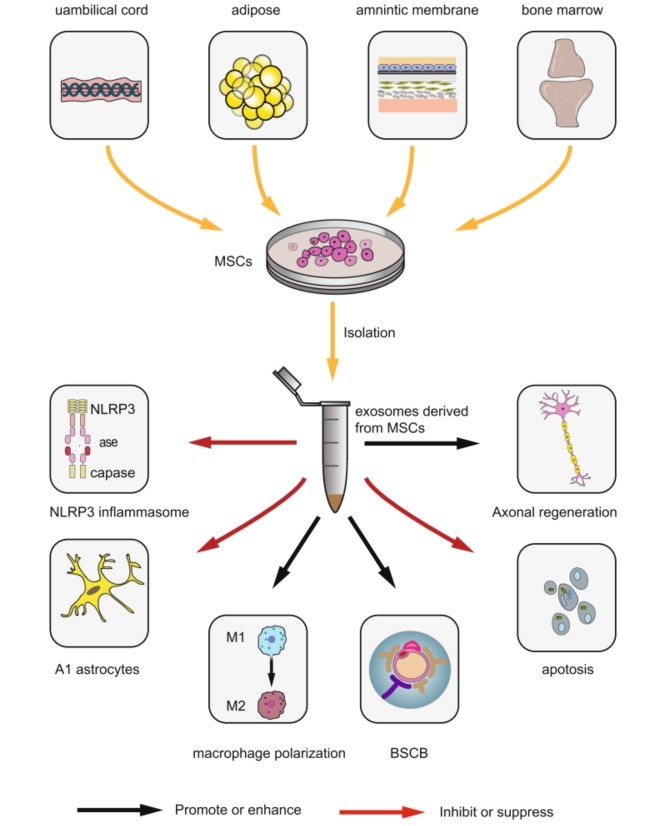 Fig.1 The therapeutic effects of exosomes derived from different MSCs in the treatment of SCI.1
Pathophysiological Targets of SC-Exos in SCI Repair
1. Modulating Astrocyte Phenotypes
Astrocytes are central players in both neuroprotection and neurodegeneration following SCI. A1 astrocytes adopt a neurotoxic profile, exacerbating cell death and inhibiting axonal growth, while A2 astrocytes support neuronal survival by secreting trophic factors. Studies indicate that exosomes secreted by bone marrow-derived mesenchymal stem cells (BMSCs) can modulate astrocyte differentiation, promoting a shift toward the reparative A2 phenotype associated with neuroprotection. Creative Biolabs offers tailored exosome profiling services and astrocyte co-culture assays to help elucidate molecular mediators driving this phenotypic modulation.
2. Shaping Microglial Polarization
Microglia exhibit plasticity along a spectrum from pro-inflammatory M1 to anti-inflammatory M2 phenotypes. SC-Exos from various origins have demonstrated the ability to skew microglial responses toward the M2 state, thus promoting resolution of inflammation and fostering neural regeneration. We offer in vitro experimental systems where client-derived or Creative Biolabs exosomes provided by client or Creative Biolabs can be applied to primary microglial cultures to assess gene and protein markers of polarization.
3. Supporting Axonal Regeneration
Axonal injury is a hallmark of SCI, leading to the interruption of long-range signaling. SC-Exos, particularly those enriched in miR-21 and other neuroregenerative miRNAs, have been shown to promote axonogenesis via the activation of growth-promoting signaling cascades. To assist researchers in identifying such functional miRNAs, Creative Biolabs provides comprehensive miRNA sequencing and targeted qPCR validation services.
4. Promoting Vascular Remodeling
Effective neural repair also depends on the re-establishment of vascular support. SC-Exos have been found to stimulate angiogenesis in the injured spinal cord, likely by delivering proangiogenic factors such as VEGF, angiopoietins, and relevant RNAs. Our service portfolio includes exosomal proteomic profiling, lipidomics and metabolomics to delineate the molecular basis of exosome mediated vascular remodeling.
5. Preventing Neuronal Apoptosis
Neuronal death is one of the most detrimental consequences of SCI. Accumulating evidence indicates that SC-Exos mitigate apoptosis by modulating caspase activity and influencing pro-survival pathways. Creative Biolabs provides high-throughput protein screening platforms to quantify apoptosis-associated exosomal cargo and assess downstream signaling responses.
Progress in SCI Studies
Numerous preclinical investigations have validated the therapeutic effects of SC-Exos in rodent models of SCI. For instance, intrathecal or intravenous administration of BMSC-Exos has resulted in improved locomotor outcomes, reduced lesion volumes, and increased neuronal sparing. Moreover, exosomes from adipose-derived MSCs and umbilical cord MSCs have demonstrated comparable efficacy in restoring spinal cord integrity and reducing glial scar formation. These findings collectively highlight the translational promise of SC-Exos.
To help researchers bridge the gap between laboratory findings and clinical application, Creative Biolabs provides full support for in vivo SCI modeling, exosome delivery solutions and behavioral assays.
Services from Creative Biolabs
At Creative Biolabs, we offer a robust and modular platform tailored to exosome research in spinal cord repair. Our services include:
We understand the complexity of SCI research and aim to make your journey from bench to potential bedside as seamless as possible. Whether you're exploring mechanistic questions or developing translational therapeutics, our team is here to support every stage.
Contact us today to learn how our comprehensive exosome technology services can help advance your spinal cord injury research.
FAQs
Q: Which types of stem cells are most commonly used for exosome production in SCI studies?
A: Among the various stem cell sources explored for exosome production, bone marrow, adipose tissue, and umbilical cord mesenchymal stem cells have emerged as the most extensively investigated and applied in preclinical settings. Each produces exosomes with unique molecular cargos and functional properties. At Creative Biolabs, we can isolate and analyze exosomes from a variety of cell culture supernatant, depending on your research needs.
Q: Are engineered exosomes more effective for spinal cord injury applications?
A: Engineered exosomes can be designed to carry specific therapeutic molecules or target particular cell types in the spinal cord. This may enhance precision and potency. Creative Biolabs offers surface modification and cargo-loading services to customize exosomes for research or preclinical therapeutic development.
Q: How does Creative Biolabs support spinal cord injury research involving exosomes?
A: We provide end-to-end support, from exosome production and purification to molecular profiling, functional assays, and in vivo SCI model services. Whether you're conducting exploratory basic research or moving toward translational studies, we 're equipped to accelerate your project with high-quality, reproducible results.
Q: What types of analyses are most useful for SC-Exos in spinal cord injury research?
A: Multi-omics profiling—including proteomics, transcriptomics (mRNA and miRNA), lipidomics, and metabolomics—is essential to understand the functional cargo of SC-Exos. These datasets can reveal therapeutic targets, biomarkers of efficacy, and possible mechanisms of action. Our platform supports integrated omics analysis with expert bioinformatics support.
Reference
-
Liu, Wen-Zhao et al. "Mesenchymal stem cell-derived exosomes: therapeutic opportunities and challenges for spinal cord injury." Stem cell research & therapy vol. 12,1 102. 3 Feb. 2021, doi:10.1186/s13287-021-02153-8. Distributed under Open Access license CC BY 4.0, without modification.
For Research Use Only. Cannot be used by patients.
Related Services: