Bispecific antibodies (BsAbs) are engineered to simultaneously engage two distinct antigens, offering next-generation therapeutic efficacy by targeting complex diseases. However, traditional formats like full IgG molecules often face severe Fc chain mispairing, while smaller fragments suffer from rapid renal clearance and poor stability.
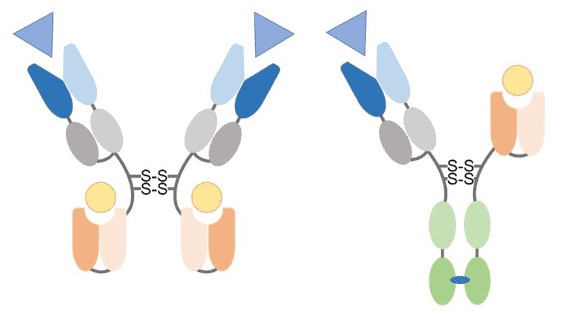 Fig.1 Structure of scFv-Fab fragments bispecific BsAbs.
The Fab-scFv-Fc format, or Bipod, is a strategic, asymmetric fusion that attaches a stable Fab arm and a flexible scFv fragment to an engineered Fc domain. This intermediate-sized molecule (approx. 80 kDa-100 kDa) strategically leverages the FcRn receptor for extended PK and a favorable safety profile, ensuring controlled and sustained delivery. This makes it an ideal choice for high-impact applications like T-cell redirection (CD3 engagement) and synergistic dual-pathway blockade.
Creative Biolabs' Fab-scFv-Fc BsAb Generation Service offers a strategic pathway to overcome drug developability issues. Are you currently facing BsAb construct instability, complex purification challenges, or short systemic half-life for your next-generation therapeutic? Our Fab-scFv-Fc service helps you accelerate drug discovery and develop highly specific, stable antibodies through structure-guided engineering and FcRn-optimized formats.
Contact our team to get an inquiry now!
Creative Biolabs is the trusted partner for intermediate-sized BsAb fragment engineering. Our advantage lies in integrating decades of structural biology expertise with design principles, guaranteeing exceptional purity and function where traditional formats fail.
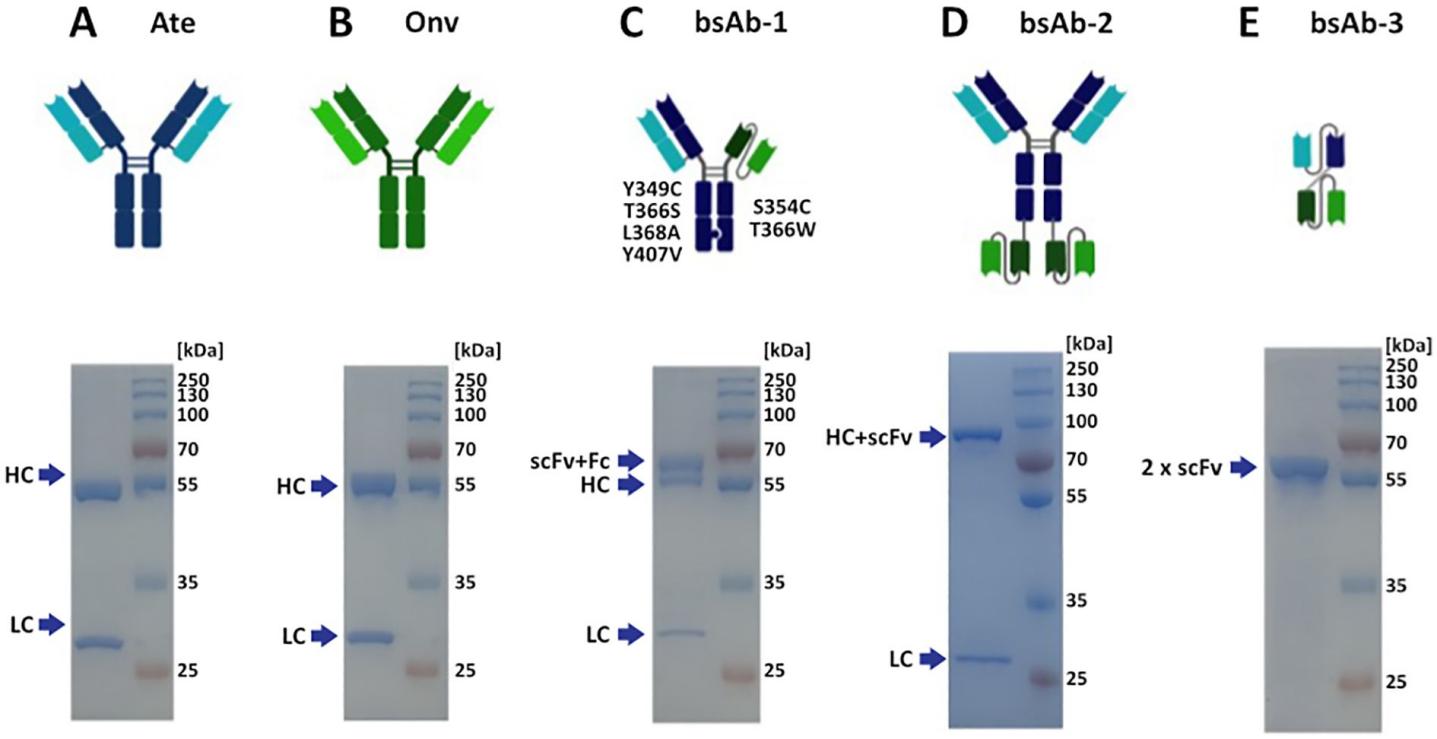 Fig.1 Structures and SDS-PAGE profiles of the antibodies.1
The study successfully expressed and purified the Fab-scFv-Fc (asymmetric) BsAb targeting VISTA and PD-L1, confirming high purity of ≥95% via SDS-PAGE. The BsAb was then tested functionally against various cancer cell lines (pancreatic, endometrial, and breast). While ELISA binding assays showed that the BsAbs had slightly weaker binding properties (EC50) compared to the parental monospecific antibodies, their functional efficacy was significantly superior. Specifically, the Fc-based BsAbs (which include the Fab-scFv-Fc format) induced statistically significant higher levels of tumor cell lysis across all three cancer types compared to both the individual monotherapies and their physical combination. This enhanced cytotoxicity was directly linked to a significant increase in the secretion of pro-inflammatory cytokines, including IFN-γ, TNFα, and Granzyme B. These results strongly support the utility of the Fab-scFv-Fc format for effectively bridging T-cell activation and concurrent blockade of two major immune suppression pathways.
A: The inclusion of the Fc domain is key. It enables binding to the neonatal Fc receptor (FcRn) in endosomes, which prevents the therapeutic molecule from being degraded and efficiently recycles it back into circulation. This FcRn-mediated mechanism is highly effective, guaranteeing a significantly prolonged systemic half-life compared to fragments below the renal clearance cutoff (≈60kDa). Inquire today to see our PK modeling data comparing Bipod to other fragment formats.
A: Yes, this is where Creative Biolabs' expertise is crucial. We address Fab mispairing, which is often a major yield killer, using our Structure-Guided Redesign. This advanced technique engineered into the CH1/CL interfaces destabilizes non-cognate pairs while stabilizing the correct heavy-light chain pair for both Fab arms. This commitment to precision significantly reduces mispairing and ensures the final BsAb is highly functional.
A: Our design incorporates an optimized linker sequence and uses the Fc fusion to stabilize the scFv domain. Every final candidate undergoes rigorous biophysical characterization (DSC, SEC) to confirm high thermal stability and minimal aggregation. We have demonstrated that our engineered Bipod constructs are highly stable and suitable for manufacturing, addressing the known fragility associated with standalone scFv fragments.
A: The Bipod format is ideal when you require sustained systemic exposure (long half-life) for chronic conditions or multi-dose regimens, especially for T-cell engagers in solid tumors. Diabodies (Tandem scFv) are best when rapid clearance is preferred (e.g., in vivo imaging or toxicity concerns), but they require frequent, high-dose administration. The Bipod offers the best balance of PK, stability, and penetration.
A: For T-cell redirection, which often involves the CD3 target, we typically use an Fc-silent IgG backbone (e.g., a non-binding IgG4 or a LALA mutein of IgG1). This is a critical precaution to eliminate unwanted Fc-mediated effector functions (ADCC or CDC), thereby minimizing potential systemic inflammation or toxicity. Let us help you select the right Fc mutein for your specific therapeutic goal.
Experience the Creative Biolabs Advantage - Get a Quote Today
Reference
Welcome! For price inquiries, we will get back to you as soon as possible.
INQUIRY





SERVICES
PRODUCTS
PLATFORMS