Are you currently facing product heterogeneity, heavy/light chain mispairing, and the exponential cost of traditional BsAb engineering? Creative Biolabs' IgG-Fab BsAb Generation Service helps you accelerate drug discovery and obtain high-purity, stable tetravalent bispecifics through our advanced Precision Ligation Assembly technology.
Contact our team to get an inquiry now!
The IgG-Fab Generation Service at Creative Biolabs is centered on the production of the highly effective IgG-Fab2 bispecific antibody (BsAb) format. This molecule is characterized by its appended structure, featuring two full Fab arms chemically linked to the N-termini of the heavy chains of a central IgG backbone. Structurally, the resulting molecule is tetravalent (four antigen-binding sites, often referred to as 2+2 valency), which significantly enhances functional potency through the avidity effect. Crucially, the design retains an unmodified, native Fc domain, ensuring the resulting therapeutic exhibits the desired, prolonged serum half-life and full effector functions characteristic of conventional IgGs.
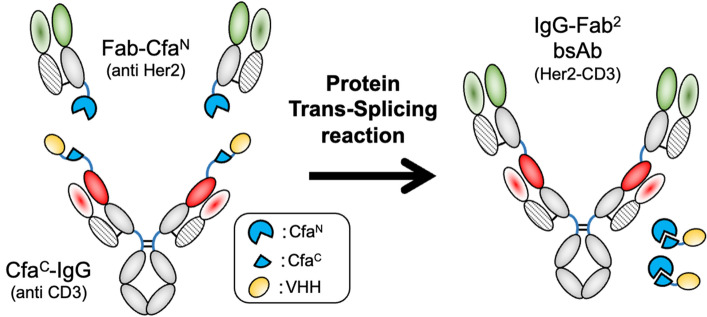 Fig.1 Reaction scheme of IgG–Fab2 construction via PTS reaction.1
There are different strategies to generate IgG-Fab molecules,
1) Conventional methods using co-expression of multiple chains, technologies to avoid heavy-heavy chain mispairing and heavy-light chain mispairing are required, such as introduction of KIH (knobs-into-holes), charge pairs, domain crossover, etc.
2) Antibody fragments assembly, a methodology rooted in specific protein trans-splicing (PTS) technology.
This strategy dictates that the two primary components-the Fab arm and the IgG backbone-are separately expressed and purified in high-yield mammalian systems. This essential separation guarantees the correct light-chain pairing and folding of the Fab component before final assembly. Subsequently, the highly specific PTS reaction is employed to chemically and site-specifically ligate the components, ensuring a near-perfectly homogeneous final product. This results in a stable, clinical-grade IgG-Fab2 therapeutic with guaranteed purity, validated by published data confirming its potent functional activity in applications like T-cell redirection.

Creative Biolabs' IgG-Fab BsAb Generation Service provides a decisive advantage in the competitive biologics space by providing a proven solution to the most persistent manufacturing challenges. Our reliance on Precision Ligation Assembly ensures high-quality, high-valency products that are impossible to generate efficiently using standard approaches.
Experience the Creative Biolabs Advantage - Get a Quote Today
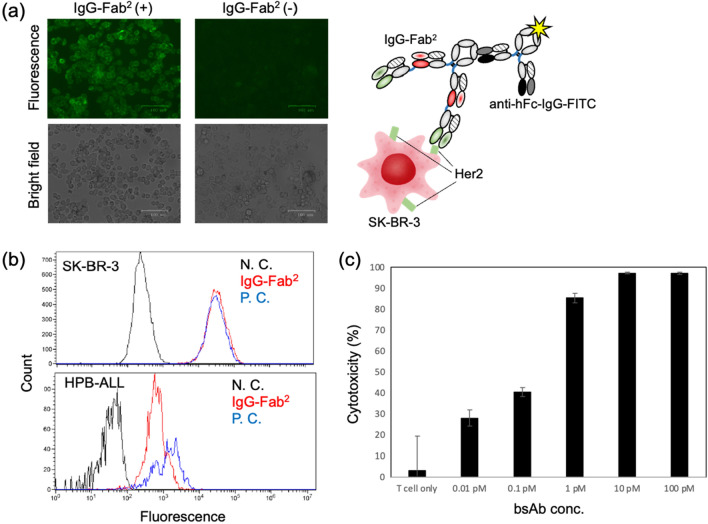 Fig.2 The binding activity of the constructed IgG–Fab2(Her2/CD3).1
A recent study validated the construction of a homogeneous IgG–Fab2 bispecific antibody (BsAb) format using an intein-mediated protein trans-splicing (PTS) strategy, demonstrating a path to overcoming common chain-pairing issues. Researchers constructed a tetravalent IgG-Fab2 (Her2/CD3) molecule by separately expressing and purifying the anti-Her2 Fab component and the anti-CD3 IgG backbone. This separation was crucial for ensuring correct heavy/light chain association before the final ligation step. A critical engineering step involved removing a potential N-linked glycosylation site near the split-intein sequence, which successfully improved the protein ligation yield and minimized undesired cleavage side-products. The resulting purified BsAb demonstrated correct binding to both Her2-positive (SK-BR-3) and CD3-positive (T-LAK) cells via flow cytometry and microscopy, confirming its dual-targeting structure. Most significantly, an in vitro cytotoxicity assay confirmed potent T-cell redirection: the molecule achieved over 80% cell killing of Her2-positive tumor cells at a concentration of just 1 pM, validating the IgG–Fab2 format's high functional potency mediated by the avidity effect.
A: Methods like Knobs-into-Holes and CrossMab attempt to enforce correct pairing during co-expression, but still carry risks of partial mispairing and often require complex variable domain engineering. Our Ligation-Based Assembly (e.g., Intein-mediated Trans-splicing) completely bypasses this issue by separately expressing and purifying the components before chemically joining them, guaranteeing a near-perfectly homogeneous final product. This translates directly to higher purity and reduced manufacturing risk.
A: The IgG-Fab2 format is tetravalent (2+2 valency). Its primary advantage is superior functional potency due to the avidity effect, which significantly enhances binding strength, particularly for low-density targets. Published data confirms that this format can deliver high efficacy, such as powerful T-cell engagement and tumor cell killing at picomolar concentrations.
A: Yes. Our workflow includes a critical Component Design and Optimization step where we analyze your V-regions for common liabilities (like aggregation propensity or problematic sequences). We optimize the constructs, including the specific removal of instability factors like N-linked glycosylation sites, ensuring the feedstock for the final ligation is as stable and pure as possible.
A: Yes. The final IgG-Fab2 molecule is built upon a standard, unmodified human Fc domain. Since the Fc region (responsible for half-life extension via the neonatal Fc receptor, FcRn) is preserved and unmodified, the molecule retains the native, long serum half-life characteristic of a conventional IgG antibody, which is crucial for therapeutic viability.
A: To start, we require the cloned V-region sequences for the two binding arms and any available preliminary binding data. The process is streamlined, with a typical turnaround time ranging from 14 to 20 weeks, depending on the scale and complexity of your specific sequence optimization needs. We encourage you to contact us with your sequences for a detailed, project-specific timeline.
Reference
Welcome! For price inquiries, we will get back to you as soon as possible.
INQUIRY





SERVICES
PRODUCTS
PLATFORMS