Beta vulgaris derived Exosome Research & Application
Overview Advantages Research Potentiality Services FAQs
The Rationale for Investigating Beta vulgaris-derived Exosome
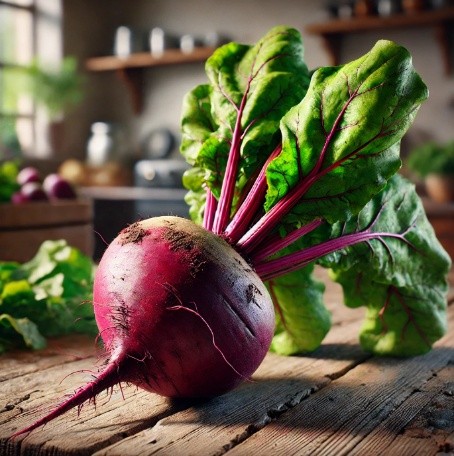
Beta vulgaris, a widely consumed dietary vegetable, is well known for its rich nutritional profile and longstanding use in traditional medicine. This root crop contains abundant vitamins (C and K), folate, potassium, manganese, and iron, along with a diverse spectrum of bioactive phytochemicals. Of particular interest are its high levels of antioxidants—including polyphenols, carotenoids, and the distinctive betalain pigments—compounds associated with strong antioxidant, anti-inflammatory, and hepatoprotective activities.
At Creative Biolabs, we are guided by the principle that nature often organizes its most effective molecules within protective and functional structures. Plant-derived exosomes, typically purified from plant extracts, are nanosized lipid-bilayer vesicles (approximately 30–200 nm) that can transport proteins, lipids, and nucleic acids between cells. Given the extraordinary biochemical richness of Beta vulgaris, exosomes derived from this plant are thought to act as natural nanocarriers, capable of delivering these beneficial metabolites with improved stability and efficiency. Their inherent biocompatibility positions them as a promising alternative to synthetic liposomes or exosomes sourced from mammalian cells.
Unlock The Potential of Beta Vulgaris-Derived Exosomes. Start Your Project with Us Today.
Distinct Characteristics of Beta vulgaris-derived Exosomes
The unique attributes of Exosomes isolated from Beta vulgaris confer several key advantages that make them highly attractive for biomedical applications:
Exosomes isolated from Beta vulgaris exhibit several notable properties that enhance their value for biomedical research and therapeutic development:
Rich Bioactive Cargo
Beta vulgaris-derived exosomes (BExos) naturally encapsulate the plant's potent phytochemicals, including betalains and polyphenols. This built-in enrichment reduces the need for complicated drug-loading strategies and helps maintain the activity of these compounds.
Improved Stability and Bioavailability
The vesicular lipid bilayer shields sensitive molecules from degradation—particularly in challenging environments such as the gastrointestinal tract. This protection may support improved stability and more reliable bioavailability compared to administering free-form compounds.
High Biocompatibility and Low Immunogenicity
As plant-based vesicles, BExos generally show low immunogenicity in mammalian systems, thereby lowering the risk of undesirable immune reactions—a key advantage in translational therapeutic development.
Scalable and Cost-Efficient Production
Beta vulgaris is widely cultivated, economical, and readily available. These traits support large-scale production of exosomes and help overcome the high manufacturing costs commonly associated with mammalian exosome platforms.
Advance Your Exosome Innovation. Request A Consultation Today.
Summarizing Key Functional Findings
Recent pioneering studies have begun to elucidate the biological actions of BExos, pointing toward their exciting therapeutic promise. These findings, often based on advanced isolation techniques like ultracentrifugation and detailed characterization via Nanoparticle Tracking Analysis (NTA) and Transmission Electron Microscopy (TEM), highlight two primary areas of impact:
Vascular Regeneration and Anti-Aging/Anti-Scar Properties
Research utilizing BExo has demonstrated a significant proangiogenic effect on endothelial cells. In dermal fibroblasts, BExo treatment modulates gene expression profiles, specifically promoting the production of Collagen Type I/III and Hyaluronan Synthase Enzyme Type 2. These actions are central to skin homeostasis, suggesting that BExo holds novel properties for skin repair, anti-aging, and anti-scar applications. Interestingly, while demonstrating these beneficial effects, BExo was found to be safe and did not negatively affect the viability of cancerous cells in vitro at the tested dosages.
Cardioprotection Against Doxorubicin-Induced Toxicity
A separate study focused on BExos demonstrated a remarkable capacity to alleviate chronic drug induced cardiotoxicity—a major complication of this potent chemotherapy agent. The mechanism of protection was elucidated as being, at least partly, mediated by the inhibition of ferroptosis (a form of iron-dependent regulated cell death). Administration of BExos significantly improved cardiac function and reduced oxidative stress markers like malondialdehyde (MDA), highlighting their potential as a novel therapeutic adjuvant for chemotherapy patients.
Discover the Bioactive Potential of Beet-Derived Exosomes. Get Expert Support.
Broad Applications of Beta vulgaris-derived Exosomes
The potent biological activities observed in preliminary studies suggest that the application range for BExos is extensive and transformative.
 Cardiovascular Health
Leveraging their ability to inhibit oxidative stress and ferroptosis, these Exosomes offer potential strategies for treating drug-induced cardiac injuries, ischemia-reperfusion injury, and general cardiovascular stress management.
Dermatology and Regenerative Medicine
The confirmed pro-angiogenic and collagen-modulating effects position Exosomes as promising components for wound healing, scar revision, and high-efficacy cosmeceutical formulations targeting dermal aging.
Anti-inflammatory and Immunomodulation
The high concentration of anti-inflammatory betalains, delivered via Exosomes, could be harnessed to manage chronic inflammatory conditions and potentially regulate immune responses.
Drug Delivery Systems
Beyond their intrinsic cargo, the nanovesicles can be engineered (via post-loading or surface modification) to carry specific therapeutic molecules, transforming them into a versatile drug delivery platform for targeted cancer therapy or gene delivery.
Nutraceutical Development
The high safety and bioavailability profile make them excellent candidates for advanced nutraceuticals designed for optimized nutrient and antioxidant intake, addressing deficiencies and promoting long-term health.
Transform Your Product Pipeline with Plant Exosome Technology. Talk to Our Scientists.
Creative Biolabs' One-Stop Research and Development Platform
Creative Biolabs is committed to advancing the study of plant-derived exosomes. We offer a comprehensive, integrated, and one-stop exosome research platform designed to accelerate client R&D initiatives, tailored to the unique challenges of plant exosome isolation and characterization.
Our services cover the entire research pipeline:
See What Plant Exosomes Can Do for You. Start Your Custom Project.
Customized Beta vulgaris-derived Exosome Manufacturing
Recognizing the need for high-quality, reproducible research materials, Creative Biolabs leverages its mature plant exosome production process to offer customized manufacturing services. We can produce large-batch, highly standardized Beta vulgaris-derived exosome products strictly according to client specifications and rigorous quality control standards. This service ensures consistency across various phases of research, from initial in vitro screening to pre-clinical validation, providing researchers with reliable tools to move their findings toward translational applications. Our product quality control includes sterility testing and functional validation assays.
Harness the Natural Power of Beta vulgaris. Get a Free Technical Evaluation.
FAQs
Q: How does the purity of plant-derived Exosomes (like BExos) compare to mammalian exosomes?
A: Isolation of plant-derived Exosomes is technically challenging due to high co-purification of matrix components, such as plant cell debris and non-vesicular molecules. At Creative Biolabs, we employ differential ultracentrifugation to achieve a high degree of purity. Characterization via TEM and NTA confirms the quality of the isolated vesicles.
Q: Are there concerns about the stability and storage of Beta vulgaris-derived Exosomes?
A: BExos demonstrate good inherent stability due to their lipid-bilayer structure. However, like all nanobiological materials, optimal long-term storage is crucial. We typically recommend storage at -80 ℃ for lyophilization for dry product storage.
Q: Can Beta vulgaris-derived Exosomes be targeted to specific organs or cell types?
A: This is an active area of research. While naturally circulating Exosomes may exhibit a degree of tropism, we can enhance targeting through our exosome modification services. This involves chemically or biologically conjugating targeting moieties (e.g., peptides, antibodies, or aptamers) to the surface of the BExos, guiding them more specifically to desired cell types, such as cancer cells or injured cardiac tissue, thereby maximizing therapeutic index.
Q: What evidence confirms the cross-kingdom delivery function of BExos?
A: Functional studies, particularly those using fluorescently labeled BExos, confirm that these nanovesicles are efficiently internalized by mammalian cells (e.g., endothelial cells, fibroblasts, and cardiomyocytes). The subsequent in vitro and in vivo observations of beneficial biological effects (e.g., anti-ferroptosis, pro-angiogenesis) strongly imply that the plant-derived cargo is successfully delivered and functionally active within the mammalian recipient cells.
Innovation Starts Here. Explore Custom Beta vulgaris Exosome Solutions.
For Research Use Only. Cannot be used by patients.
Related Services: