
Acne related research focuses on the complex interaction between sebaceous activity, inflammation, microbial balance, and cellular stress responses within the skin. From a basic research perspective, anti acne evaluation seeks to clarify how bioactive materials influence these biological processes under controlled laboratory conditions. Creative Biolabs provides an Exosome Anti Acne Efficacy Testing Service tailored for in vitro skincare research. This service evaluates how exosomes modulate sebocyte function, inflammatory signaling, and skin cell responses associated with acne prone conditions. The data generated support mechanistic understanding and early stage screening rather than clinical treatment assessment.
| Steps | Details |
|---|---|
| Step 1 Research Objective Alignment | Creative Biolabs reviews the research focus, such as inflammation modulation, sebum regulation, or cellular stress response. Exosome characteristics and comparison groups are evaluated to ensure experimental relevance. |
| Step 2 Model Selection and Preparation | Sebocyte cultures, keratinocytes, or combined systems are established under standardized conditions. Baseline lipid production and inflammatory status are confirmed prior to testing. |
| Step 3 Exosome Exposure Design | Exosomes are applied at defined concentrations and exposure schedules. Treatment parameters are selected to support dose response and comparative analysis. |
| Step 4 Induction of Acne Related Conditions | Where applicable, inflammatory or lipid stimulation conditions are introduced to mimic acne associated biological stress within the model. |
| Step 5 Endpoint Measurement | Key indicators such as lipid accumulation, inflammatory mediator levels, and cell viability are quantified. Cellular morphology and functional changes are monitored throughout the study. |
| Step 6 Data Processing and Reporting | Results are summarized to highlight relative anti acne related biological responses and experimental observations relevant to skincare research. |
Workflow related adjustments can be discussed directly with Creative Biolabs technical specialists.
Creative Biolabs applies cellular systems that reflect key biological aspects of acne related skin conditions, supporting meaningful in vitro evaluation.
The service integrates inflammatory markers with lipid related measurements to capture multiple dimensions of acne related responses.
Assay parameters can be adapted to support different research questions, including comparative screening and mechanistic studies.
Results are organized to support internal research decisions and follow up study planning.
Feature related discussions are welcomed by Creative Biolabs scientific support.
 Understanding Sebum Regulation
Anti acne assays help clarify how exosomes influence lipid synthesis and secretion in sebocyte related systems.
Inflammatory Response Modulation
Data support evaluation of how exosomes affect inflammatory signaling pathways relevant to acne prone skin.
Screening of Exosome Preparations
Comparative testing assists in selecting exosome sources or preparation methods for further skincare research.
Foundation for Integrated Skin Studies
Findings may guide subsequent studies related to barrier function, soothing response, or microbiome interaction.
Application focused conversations can be arranged with the Creative Biolabs research team.
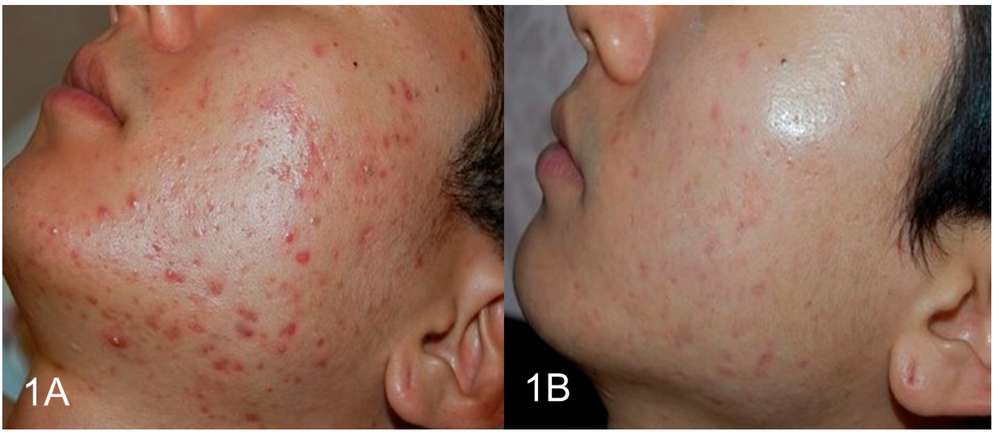 Fig.1 Visible Improvement of Acne and Skin Texture After Topical Exosome Treatment.1
"Creative Biolabs helped us clearly evaluate how different exosome samples affected lipid production and inflammatory markers."
"The anti acne model design was well controlled and suitable for early stage screening."
"Communication with Creative Biolabs remained technical and aligned with our research needs throughout the project."
Creative Biolabs values constructive feedback and long term research collaboration.
Understanding acne related biological responses at the cellular level is essential for advancing skincare research. Creative Biolabs supports this effort by providing structured anti acne efficacy evaluation grounded in reproducible in vitro models. To discuss your study objectives or request technical input, contacting Creative Biolabs is always encouraged.
A: No. The Exosome Anti Acne Efficacy Testing Service is designed exclusively for basic research and in vitro evaluation. It does not support clinical or therapeutic claims.
A: Sebocyte cultures are frequently applied, often in combination with keratinocytes. Model selection depends on the specific research objective.
A: Common endpoints include lipid accumulation indicators, inflammatory mediator levels, and cell viability metrics. Additional markers may be included based on study design.
A: This service focuses on cellular response evaluation. Any inclusion of microbial stimulation conditions is discussed during study planning to ensure feasibility.
A: Results reflect relative biological modulation under controlled laboratory conditions and are intended to guide research direction rather than predict in use outcomes.
Reference