
Skin repair at the cellular level involves coordinated responses to damage, including restoration of cellular integrity, regulation of stress signals, and recovery of normal biological functions. Exosomes are increasingly studied for their role in intercellular communication during these repair related processes. Creative Biolabs provides the exosome skin repair efficacy testing Service to support basic skincare research focused on cellular recovery mechanisms rather than therapeutic outcomes.
This service evaluates how exosome samples influence skin related cell models under damage associated conditions. Endpoints are selected to reflect cellular repair capacity, stress response modulation, and recovery of normal cellular activity. DNA damage associated indicators are included when relevant to better understand how cells respond after exposure to repair related stimuli. Studies conducted by Creative Biolabs aim to generate clear and reproducible data suitable for early stage research and comparative analysis.
| Step | Detail |
|---|---|
| Step 1 Research Alignment and Sample Assessment | Each project begins with a review of research goals and exosome sample characteristics. Source information, preparation approach, and concentration range are assessed to ensure suitability for repair related assays. |
| Step 2 Establishment of Damage Related Cell Conditions | Skin related cell models such as keratinocytes or fibroblasts are cultured under controlled conditions. Damage associated stimuli are applied when appropriate to create a reproducible repair relevant environment. |
| Step 3 Exosome Exposure Strategy | Exosome treatments are introduced following defined exposure schedules. Single treatment and sequential exposure formats may be used to capture different stages of cellular recovery. |
| Step 4 Measurement of Repair Related Indicators | Cellular readouts include markers associated with cell viability recovery, stress response regulation, matrix related activity, and DNA damage repair signaling when applicable. Multiple indicators are collected to support balanced interpretation. |
| Step 5 Data Processing and Reporting | Results are compiled into a structured report detailing experimental conditions, observed trends, and biological interpretation within a basic research framework. |
The service supports research into how exosomes interact with skin cells during recovery from stress or damage.
Data can be used to compare different exosome sources or preparation methods under the same repair related conditions.
Repair related readouts provide insight into how recovery processes contribute to maintaining cellular balance over time.
Results are suitable for internal documentation, academic studies, and early stage development planning.
For application focused discussions, reach out to Creative Biolabs scientific advisors.
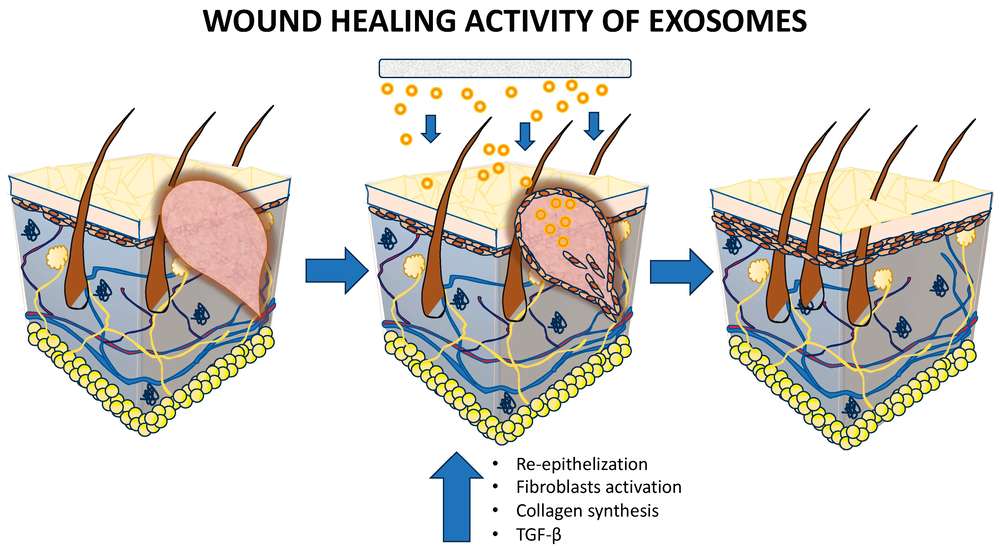 Fig.1 Re-epithelization and accelerated wound healing using exosomes.1
The service emphasizes biological processes involved in restoring normal cell function rather than surface appearance changes.
When applicable, DNA damage associated markers are incorporated to provide insight into cellular repair signaling pathways.
Damage induction and recovery conditions are carefully controlled to ensure data consistency across experiments.
Reports are structured to support hypothesis building and internal research review rather than performance claims.
For feature specific questions, contact Creative Biolabs technical support.
"The repair focused endpoints were well chosen and aligned with our research question. We appreciated that the data reflected recovery trends rather than single time point effects."
"Creative Biolabs clearly explained the rationale behind including DNA damage related markers. This helped our team interpret the repair signaling data correctly."
"The workflow allowed us to study recovery over time, which was critical for our project. Creative Biolabs was flexible when we requested additional sampling points."
"The reporting format made it easy to compare treated and untreated groups without overstating the results."
"Our interactions with Creative Biolabs felt collaborative. Technical questions were answered with solid biological reasoning."
Exosome skin repair efficacy testing service from Creative Biolabs supports foundational research into how exosomes influence cellular recovery and repair related mechanisms in skin models. By focusing on controlled experimental design and biologically meaningful endpoints, Creative Biolabs provides data that helps research teams make informed next step decisions. To discuss how this service can support your research objectives, contact Creative Biolabs and connect with a technical expert for detailed guidance.
A: Creative Biolabs applies standardized damage induction parameters and includes internal controls within each experiment. Replicates are designed to capture biological variation while maintaining consistency across treatment groups, allowing researchers to distinguish true repair related trends from background noise.
A: Yes. Sampling points can be arranged to reflect early, intermediate, and later stages of cellular recovery. This helps researchers observe dynamic changes rather than relying on a single endpoint.
A: Creative Biolabs selects marker combinations that differentiate recovery signaling from basic viability changes. Data interpretation focuses on recovery patterns and regulatory responses rather than simple cell count increases.
A: The workflow can accommodate parallel testing formats, making it suitable for comparative research involving multiple samples or experimental conditions within the same study.
A: Results are structured for internal research reports, hypothesis refinement, and cross project comparison. Many teams use the data as a reference point for subsequent assay development or formulation optimization studies.
Reference