
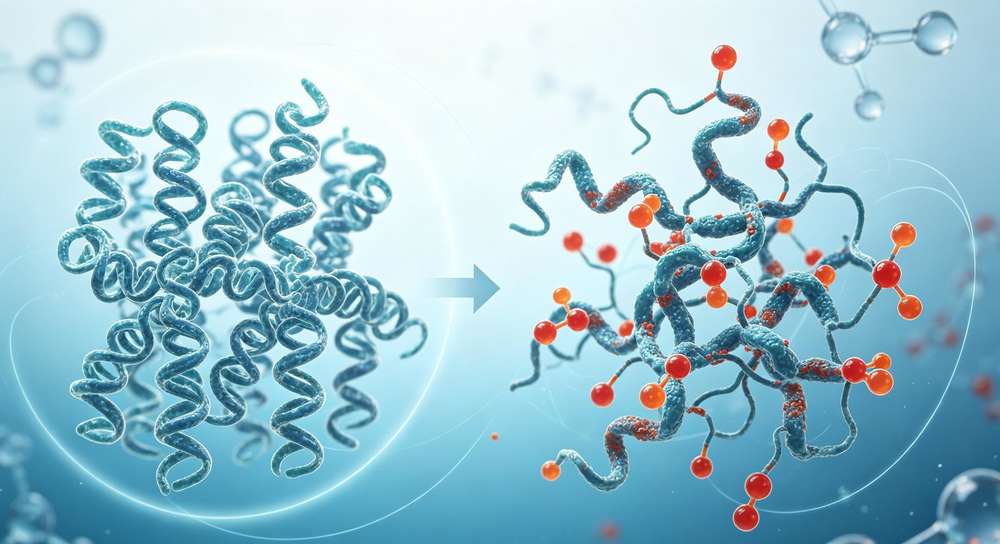
In the landscape of biological aging, protein carbonylation has been identified as a sophisticated biomarker of irreversible oxidative damage. This phenomenon involves a covalent modification where ROS induce the formation of carbonyl groups on amino acid side chains. Unlike other oxidative markers that a cell might reverse, carbonylation typically results in permanent structural alterations, leading to carbonyl stress. In the skin, this manifests through the degradation of the extracellular matrix and the accumulation of damaged proteins, contributing to yellowing and a loss of elasticity.
Creative Biolabs recognizes that exosomes represent an advanced biological medium for addressing these challenges. Loaded with antioxidants and molecular chaperones, exosomes provide a multifaceted approach to maintaining proteostasis. Our specialized anti-carbonylation efficacy testing services are engineered to evaluate how specific exosome candidates protect proteins from these terminal modifications. By quantifying the attenuation of carbonyl group formation, we deliver high-resolution data essential for characterizing the therapeutic potential of exosome-based interventions.
Inquire About Our Testing Solutions
The testing protocols are situated at the intersection of oxidative proteomics and vesicle pharmacology. The platform focuses on three primary objectives to determine the protective influence of exosome samples.
Carbonylation frequently originates from lipid peroxidation, yielding electrophilic aldehydes like 4-hydroxynonenal. These act as precursors that attack amino acid residues. The platform evaluates the capacity of exosome candidates to sequester these reactive species. By measuring the reduction in this protein adducts, the direct influence of the exosomal cargo in preventing the initial stages of protein damage can be quantified.
The accumulation of carbonylated proteins is a driver of tissue yellowing and loss of tensile strength. The testing infrastructure focuses on the protection of Collagen Type I and Elastin. High-sensitivity assays are utilized to detect carbonyl groups within these fibers. Furthermore, the expression of genes such as Collagen Type I Alpha 1 and Elastin is monitored to assess whether exosome application supports the transcriptional health of the tissue while maintaining skin translucency.
The therapeutic potential of exosomes often involves the stimulation of innate cellular quality control. Existing carbonylated proteins must be cleared by the 20S proteasome or autophagic pathways. The platform assesses how exosome treatment modulates these clearance pathways, measuring both the prevention of new carbonylation and the clearance of existing damage.
Learn More About Our Analytical Capabilities
Creative Biolabs integrates precise biochemical detection with sophisticated tissue models to support anti-carbonylation efficacy evaluation.
Every study begins with a standardized isolation workflow, applying fractionation methods such as Ultracentrifugation and Size-Exclusion Chromatography to recover exosomal populations with minimal contamination. Each batch is subjected to a quality screen, including nanoparticle tracking analysis (NTA) for counting and transmission electron microscopy for structural examination. Surface epitope detection of markers such as CD63 and TSG101 is performed using western blotting (WB) to ensure the carbonylation readouts are tied to a well-defined vesicle population.
The 2,4-dinitrophenylhydrazine (DNPH) derivatization method is utilized as the recognized standard for identifying protein carbonyl groups. When combined with Enzyme-Linked Immunosorbent Assays, this allows for the highly sensitive quantification of damaged proteins.
To replicate carbonyl stress, Human Dermal Fibroblasts and three-dimensional reconstructed skin models are employed. These systems are subjected to controlled stressors, such as glyoxal exposure, which accelerate protein carbonylation. This approach allows for the observation of protective effects in a tissue-accurate environment.
Discover Our Advanced Testing Platforms
A standardized workflow is maintained to ensure the reproducibility of all outcomes.

Collaborate on Your Research Projects
The data produced by our testing platform supports multiple phases of development.




Advance Your Research with Reliable Data
A: Standard antioxidant assays measure the capacity to neutralize radicals, whereas carbonylation testing measures the actual, terminal damage to the proteome. Because carbonylation is irreversible, demonstrating that exosomes prevent this specific modification provides much stronger evidence for their long-term therapeutic potential.
A: Yes. The infrastructure is designed to evaluate exosomes and exosome-like nanovesicles from diverse origins, including milk-derived vesicles and various plant species such as Aloe vera.
A: Yes. Immunoprecipitation followed by carbonyl detection can be performed to isolate and analyze the modification status of specific proteins of interest, providing a granular view of tissue protection.
A: Depending on the source and purity of the sample, concentration normalization, purification steps to remove free protein contaminants, and filtration or centrifugation to ensure sample homogeneity may be performed. The specific pretreatment protocol is customized based on the sample characteristics and research objectives.
A: Both positive and negative controls are incorporated in each test run, and identical cell batches, culture conditions, and stress induction parameters are employed across all experimental groups. Additionally, the detection systems are regularly calibrated using standardized reference materials to ensure the reliability and comparability of data across batches.
Speak with Our Scientific Team Today