
The epidermal barrier is a dynamic biological sentinel, and its integrity relies on the sophisticated arrangement of the stratum corneum bolstered by tight junction complexes. However, this defensive architecture is frequently besieged by UVB radiation and pollutants, manifesting as accelerated Trenameperidermal Water Loss and persistent micro-inflammation.
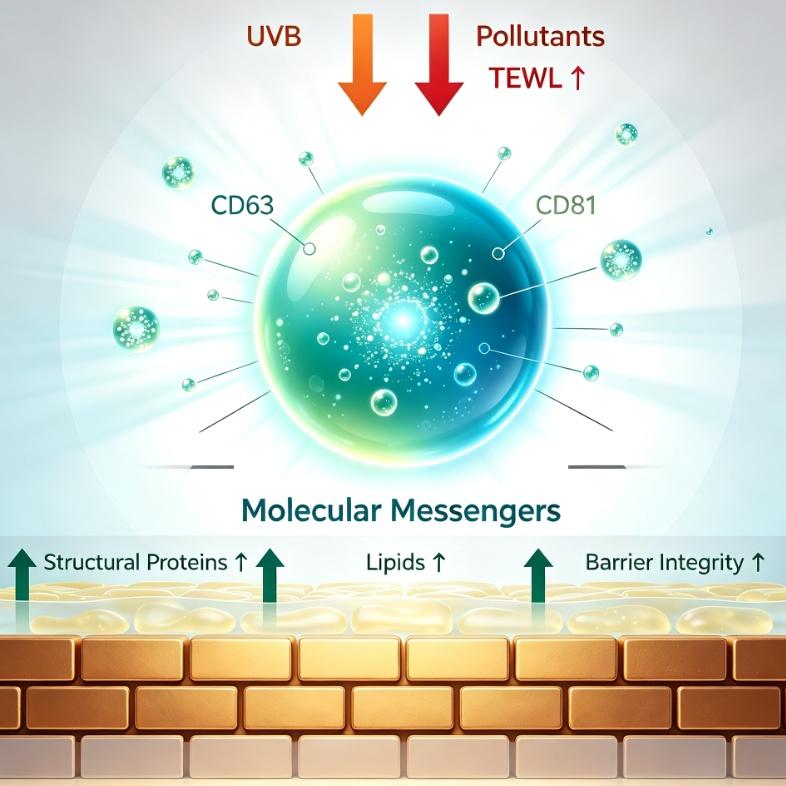
Creative Biolabs delivers a high-precision testing ecosystem designed to substantiate how exosomes actively recalibrate this defensive matrix. Moving beyond superficial occlusion, exosomes function as molecular messengers that galvanize the endogenous production of structural proteins and essential lipids. The analytical services offered deliver the empirical rigor necessary to explore the therapeutic potential of exosome-based candidates in barrier fortification. Diverse sources such as Lactobacillus brevis and Lycium barbarum can be utilized to investigate how these vesicles may enhance the skin's natural resilience.
Collaborate with Our Scientists for Superior Barrier Analysis
Creative Biolabs has engineered a robust laboratory infrastructure dedicated to the intersection of extracellular vesicle biology and dermatological research. Exosome purification is performed using appropriate isolation strategies tailored to sample characteristics and research objectives. The purification scheme is adapted according to the biophysical properties of the raw material to ensure yield and purity.

Prior to any trial, each preparation undergoes a stringent audit covering nanoparticle tracking analysis (NTA) for size distribution and transmission electron microscopy (TEM) for morphology. Western blotting (WB) for canonical markers such as CD63 and CD81 is also performed. The platform bridges the gap between screening and physiological conditions by employing a versatile array of models, including three-dimensional (3D) reconstructed human epidermis and ex vivo skin explants. This allows for a bespoke testing strategy aligned with your specific therapeutic goals.
Discover Our Integrated Characterization Capabilities
Creative Biolabs employs a tiered evaluative framework to dissect the impact of exosomal interventions on the epidermal shield.
Request an Irradiation Testing Consultation
The testing protocols are anchored in the latest breakthroughs in vesicle pharmacology, specifically their role in orchestrating keratinocyte differentiation. The platform focuses on three primary mechanisms.
The mechanical tenacity of the skin is dictated by structural anchors such as Filaggrin (FLG) and Loricrin (LOR). FLG is the precursor to Natural Moisturizing Factors (NMFs) and is vital for keratin filament aggregation. The exosomal capacity to upregulate these genes can be quantified, countering the barrier thinning associated with environmental insult.
Secondary defense relies on tight junctions, primarily Claudin-1 (CLDN1) and Occludin, which seal the spaces between cells. The platform evaluates how exosomal payloads stabilize these gateways, preventing the ingress of irritants and reducing the molecular triggers of sensitive skin.
A robust shield requires a balance of ceramides. The activity of Serine Palmitoyl Transferase (SPT), the gatekeeper of ceramide production, is monitored alongside Aquaporin-3 (AQP3) expression. High-Performance Liquid Chromatography is utilized to measure NMFs, confirming whether the candidate truly enhances moisture-retention capacity.
Obtain a Technical Briefing on Our Biomarker Panels
The insights gathered from the platform accelerate exosome innovation across various sectors.
Comparative benchmarking is available to dissect the relative potency of microbial-derived versus botanical-derived vesicles.
The platform provides the molecular evidence required for candidates targeting erythema and neurosensory soothing.
The platform helps researchers identify whether a candidate works primarily through lipid synthesis or protein upregulation.
By utilizing gradient dose data, the service assists in refining the concentration of exosomes in final delivery systems.
Accelerate Your Research Program Today
A: Yes. The models are sensitive to the specific cargo profiles of different sources, allowing for precise benchmarking between probiotic-derived and plant-derived vesicles.
A: FLG and LOR are prioritized for structural strength, CLDN1 for tight junction integrity, and SPT for lipid restoration. AQP3 is also measured to assess hydration health.
A: A dual-stressor model involving precision mechanical friction and controlled UVB exposure is utilized to replicate the compromised state typical of sensitive skin.
A: Samples with a known particle concentration quantified via NTA are recommended. Specific requirements for storage and shipping to preserve vesicle integrity can be provided upon consultation.
Contact Our Experts for a Customized Quote