
Solar radiation is a major external stress factor affecting skin cell stability, genomic integrity, and metabolic balance. In skincare research, sun protection studies focus on understanding how bioactive materials influence cellular responses to ultraviolet exposure rather than measuring consumer level protection indices.
Creative Biolabs offers an Exosome Sun Protection Efficacy Test designed for in vitro research environments. The service evaluates how exosomes modulate biological responses following controlled UV stimulation using skin related cellular and reconstructed tissue models. The resulting data support mechanistic insight into stress response regulation and cellular protection behavior.
| Steps | Details |
|---|---|
| Step 1 Research Scope Definition | Creative Biolabs reviews the research objective, UV exposure type, and exosome sample background. Appropriate cellular or reconstructed skin models are recommended based on study goals. |
| Step 2 Model Establishment | Keratinocytes, fibroblasts, or reconstructed epidermal models are cultured under standardized conditions. Baseline cellular health and barrier status are confirmed prior to testing. |
| Step 3 Exosome Treatment Setup | Exosomes are applied at defined concentrations and incubation periods. Treatment parameters are selected to support comparative evaluation across samples. |
| Step 4 Controlled UV Exposure | Cells or skin models are subjected to regulated ultraviolet stimulation. Exposure conditions are carefully controlled to induce measurable stress without compromising model viability. |
| Step 5 Biological Endpoint Assessment | Post exposure responses are evaluated using oxidative stress indicators, DNA damage related markers, and cell viability measurements. Morphological changes are documented when applicable. |
| Step 6 Data Analysis and Reporting | Results are compiled to highlight relative protective trends and biological modulation associated with exosome treatment. |
Workflow related questions can be addressed through direct communication with Creative Biolabs technical specialists.
Creative Biolabs applies skin related models that respond predictably to ultraviolet stimulation, supporting reproducible stress response evaluation.
Readouts focus on oxidative balance, genomic stability, and cellular recovery rather than cosmetic protection indices.
The assay framework allows parallel testing of multiple exosome samples or treatment conditions under identical exposure settings.
Results are presented to support scientific reasoning, screening decisions, and follow up study design.
Feature specific discussions can be arranged with Creative Biolabs scientific staff.
 Cellular Stress Response Insight
Sun protection assays clarify how exosomes influence cellular defense mechanisms following ultraviolet exposure.
DNA Stability Evaluation
Measurement of DNA damage related indicators supports research into genomic protection pathways.
Oxidative Balance Assessment
Data help determine whether exosomes contribute to maintaining redox balance under environmental stress.
Foundation for Downstream Studies
Observed effects may guide subsequent repair, aging, or barrier related efficacy evaluations.
Application oriented consultations are welcomed by the Creative Biolabs research team.
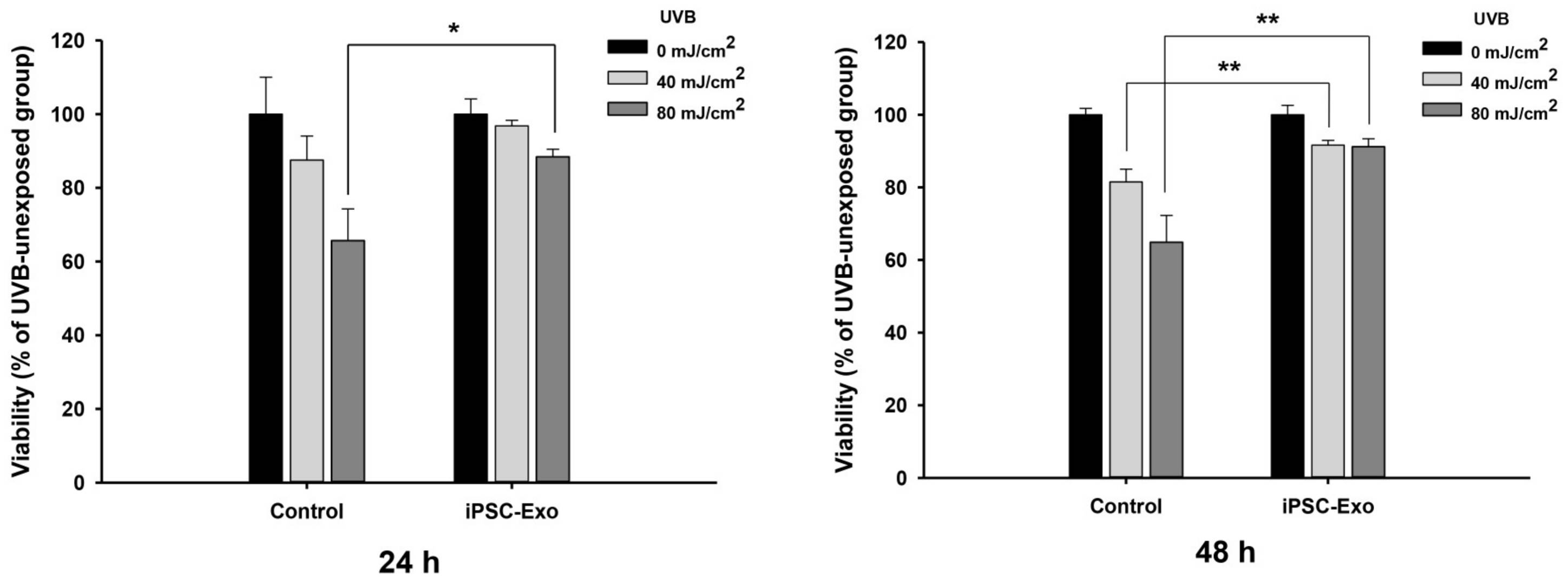 Fig.1 The safeguarding effect of iPSC-exosomes on cells damaged by UVB radiation.1
"Creative Biolabs provided a well controlled UV model that allowed us to compare protective responses across samples."
"The biological endpoints selected by Creative Biolabs aligned well with our internal research questions."
"Communication throughout the study remained focused on data interpretation rather than marketing claims."
Creative Biolabs values ongoing dialogue and collaboration with research partners.
Understanding how exosomes influence cellular responses to ultraviolet stress strengthens the foundation of skincare research. Creative Biolabs supports this process by delivering structured sun protection efficacy evaluation grounded in reproducible biological models. To discuss study design or request technical input, reaching out to Creative Biolabs is always encouraged.
A: Creative Biolabs applies controlled ultraviolet conditions selected to induce measurable cellular stress. Specific exposure parameters depend on model type and research objectives.
A: Keratinocyte cultures, fibroblast systems, and reconstructed epidermal models are frequently used. Model choice is determined during study planning.
A: Common endpoints include oxidative stress indicators, DNA damage related markers, and cell viability assessments. Additional markers may be included based on study design.
A: Results indicate relative biological modulation under defined laboratory conditions. They are not predictive of in use performance or clinical outcomes.
Reference