
Wrinkle formation at the biological level is closely associated with alterations in dermal matrix composition, reduced collagen synthesis, elastin imbalance, and changes in fibroblast behavior. Rather than focusing on visible appearance, mechanistic wrinkle related research centers on how cellular structure and extracellular matrix regulation are influenced over time. Creative Biolabs offers the exosome anti wrinkle efficacy testing service to support basic skincare research investigating matrix associated pathways and fibroblast activity.
This service evaluates how exosome samples interact with dermal fibroblasts and related in vitro systems that model matrix remodeling conditions. Key readouts may include collagen associated gene expression, elastin related markers, matrix metalloproteinase regulation, and signaling pathways linked to structural protein turnover. Studies conducted by Creative Biolabs are designed to provide biologically meaningful data within a research framework rather than cosmetic or clinical claims.
| Step | Detail |
|---|---|
| Step 1 Project Definition and Matrix Focus Discussion | Research objectives are clarified with emphasis on matrix related mechanisms. Exosome source information, purification method, and intended comparison groups are reviewed to align experimental design with wrinkle associated biology. |
| Step 2 Dermal Fibroblast Model Preparation | Primary fibroblasts or established dermal cell lines are cultured under controlled conditions. When relevant, matrix stress stimuli may be applied to simulate collagen degradation environments observed in aging related models. |
| Step 3 Structured Exosome Treatment Plan | Exosome samples are administered at defined concentrations across selected time points. Sequential sampling allows observation of transcriptional and protein level changes related to matrix regulation. |
| Step 4 Matrix and Structural Marker Assessment | Multiple matrix related indicators are measured, including collagen synthesis markers, elastin associated signals, and enzymes involved in matrix remodeling. Signal pathway components relevant to extracellular structure maintenance are also evaluated. |
| Step 5 Data Integration and Analytical Reporting | All experimental conditions, controls, and observed trends are summarized in a structured report. Biological context is provided to support research interpretation without overstating conclusions. |
For workflow related inquiries, connect with Creative Biolabs technical support.
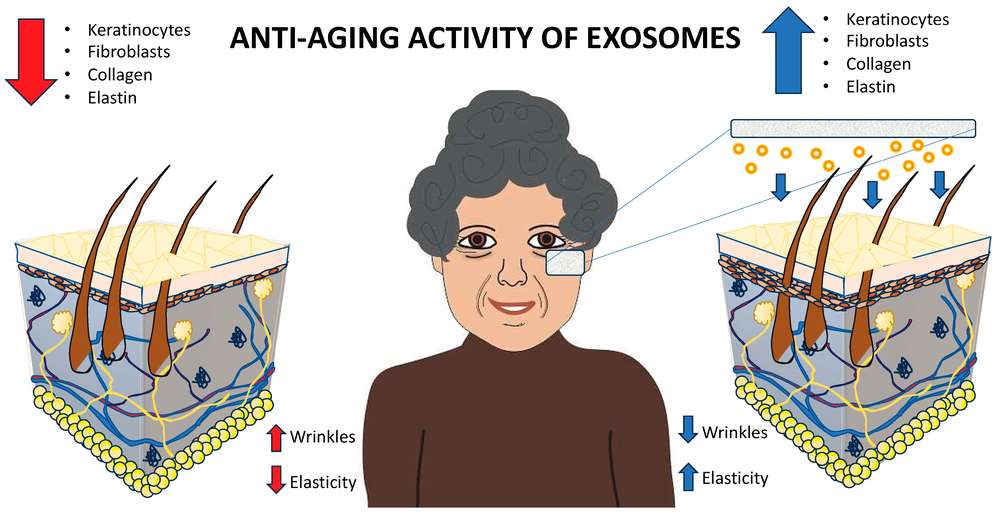 Fig.1 The use of exosomes promotes the production of cells and proteins that delay aging.1
This service helps clarify how exosomes influence collagen balance and extracellular structure regulation in dermal models.
Comparative data enables researchers to assess how different exosome sources affect matrix related markers under the same conditions.
By focusing on fibroblast behavior, the service connects cellular responses with extracellular matrix regulation.
Results can inform formulation research and guide further mechanistic studies in basic research settings.
For application specific consultation, contact Creative Biolabs scientific support.
The service focuses specifically on extracellular matrix biology and fibroblast behavior, which are central to wrinkle associated mechanisms.
Both gene expression and protein level indicators can be included to provide a broader understanding of matrix dynamics.
Parallel testing of different exosome batches or preparation methods is supported under identical matrix related conditions.
Results are presented with clarity and scientific restraint, making them suitable for internal research documentation.
For additional feature information, reach out to Creative Biolabs specialists.
"The matrix related markers selected by Creative Biolabs aligned closely with our internal research focus. The collagen and enzyme data provided a clear view of structural regulation."
"We valued the measurement of both transcriptional and protein level indicators, as it enabled us to verify that the trends observed were consistent across various analytical layers."
"Creative Biolabs demonstrated transparency regarding the implications of the data, which reinforced our confidence in the findings due to their scientific rigor."
Exosome anti wrinkle efficacy testing service from Creative Biolabs supports foundational research into extracellular matrix regulation and fibroblast activity associated with wrinkle related biology. Through controlled experimental design and matrix centered evaluation, Creative Biolabs provides research teams with structured data to inform subsequent investigations. To discuss your project objectives and determine how this service can fit into your research plan, contact Creative Biolabs and connect with a dedicated scientific specialist.
A: Wrinkle related biology refers to cellular and extracellular matrix processes such as collagen synthesis, elastin regulation, and enzyme mediated matrix turnover. It does not refer to visible wrinkle reduction or cosmetic outcomes.
A: If wrinkle associated mechanisms in your research involve oxidative signaling pathways, additional markers may be incorporated following discussion with Creative Biolabs. Study scope is defined before project initiation.
A: No. While collagen is a central component, elastin related markers, remodeling enzymes, and relevant signaling pathways may also be assessed to provide a balanced view of matrix regulation.
A: Appropriate untreated controls and condition specific reference groups are included to ensure that observed changes are attributable to exosome exposure under defined experimental settings.
A: Results are provided in a structured report containing methodology details, quantitative outcomes, and biological interpretation within a basic research context.
Reference