
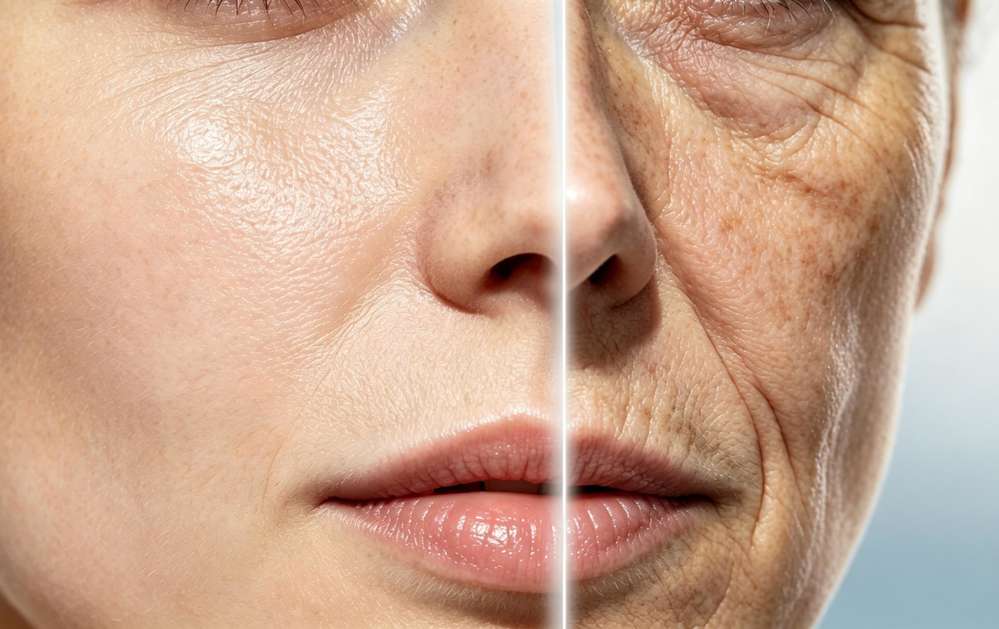
Glycation represents a spontaneous, non-enzymatic reaction where reducing sugars attach to biological macromolecules, particularly structural proteins like collagen and elastin. This process eventually yields Advanced Glycation End-products (AGEs), which are primary drivers of dermal breakdown. As AGEs accumulate, they create irreversible cross-links that render the extracellular matrix (ECM) stiff and fragile. Over time, this molecular wear manifests as visible signs of aging, such as deeper wrinkles and a dull tone. Due to rising metabolic burdens in modern lifestyles, finding ways to counter this internal aging process is a priority in therapeutic research.
Exosomes have surfaced as a promising biological tool for addressing glycation-driven damage. These tiny carriers deliver bioactive molecules that can recalibrate cellular pathways and repair the skin matrix. Creative Biolabs provides an anti-glycation testing platform offering a disciplined system for measuring how exosome candidates manage AGE-induced stress. Using Human Dermal Fibroblasts (HDFs) and sophisticated tissue models, the service generates the quantitative data required to evaluate the therapeutic potential of vesicles in preserving dermal resilience.
Consult with Our Scientists Today
The anti-glycation testing protocols are grounded in molecular biology and focus on how the skin matrix erodes under metabolic pressure. The platform centers on three core aspects of ECM stability.
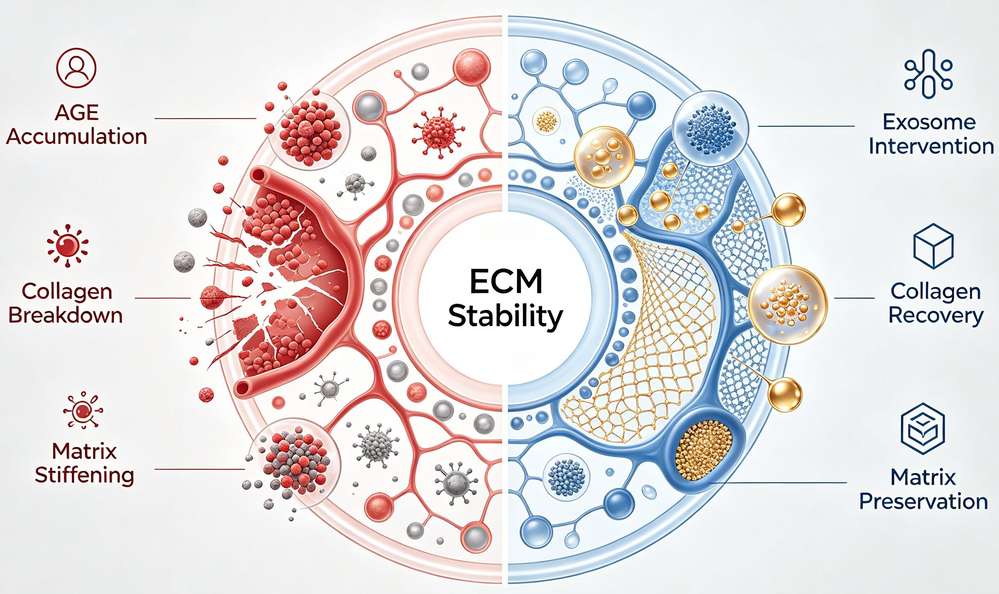
The interaction between AGEs and the Receptor for Advanced Glycation End-products (RAGE) triggers a cascade of oxidative stress. This typically results in the downregulation of genes essential for skin architecture, primarily Collagen Type I Alpha 1 (COL1A1), Elastin (ELN), and Hyaluronic Acid Synthase 2 (HAS2). The testing platform monitors how exosome candidates interfere with this signaling axis to prevent the loss of moisture-binding capacity caused by sugar-mediated damage.
Exosomes derived from Mesenchymal Stem Cells offer therapeutic potential by delivering specialized microRNAs to damaged cells. These vesicles assist in reversing markers of cellular senescence by stimulating the recovery of COL1A1 expression. This process is essential for revitalizing the skin framework, which is typically compromised during the glycation process. By quantifying the synthesis of structural proteins via Western Blot, the restorative capacity of different exosome samples can be determined.
Research indicates that the protective capacity of vesicles can be optimized by exposing parent cells to bioactive stimuli. The platform quantifies these molecular adjustments to determine the effectiveness of various candidates in shielding the dermal matrix from chronic metabolic pressure and irreversible protein cross-linking.
Access Our Scientific Briefings
Creative Biolabs utilizes a sophisticated in vitro testing environment designed to simulate chronic glycation stress. The service provides a multi-dimensional view of candidate interactions with glycated environments.
Before proceeding with efficacy studies, a rigorous characterization of all exosome samples is conducted. Nanoparticle Tracking Analysis (NTA) is employed to determine particle size and concentration. High-resolution imaging using transmission electron microscopy (TEM) is utilized to confirm the morphology of the vesicles. In addition, the presence of specific markers, including CD63 and CD81, is verified to ensure purity.
To evaluate anti-glycation effects, standardized AGEs are generated by reacting bovine serum albumin with glyceraldehyde under controlled conditions. This model replicates the protein damage observed in aging skin. After inducing stress in HDFs, exosome candidates are introduced to assess their protective capabilities.
Purification protocols, such as gel-filtration, maintain sample integrity while Enzyme-Linked Immunosorbent Assay kits quantify glycation marker concentrations. Beyond monolayer studies, we utilize three-dimensional (3D) reconstructed human epidermis to observe how candidates interact with glycated proteins in a tissue-like architecture.
Tour Our Testing Infrastructure
To ensure data integrity, a standardized process is followed for every anti-glycation study.
A baseline analysis using NTA and surface marker verification to confirm the identity of the vesicles.
HDFs are exposed to calibrated levels of AGEs to establish a baseline of damage. During this phase, the downregulation of matrix-related genes is monitored.
Stressed cells are treated with various concentrations of exosomes to establish a dose-response curve, allowing for the determination of the ideal concentration for effective protein restoration.
RT-qPCR is utilized to measure the expression of COL1A1, ELN, and HAS2. Protein levels are further quantified via immunofluorescence. Each project concludes with a detailed report featuring statistical analysis.
The Exosome Anti-Glycation Efficacy Test serves as a vital analytical bridge for organizations aiming to optimize exosomal solutions. This service provides the evidence needed to verify performance profiles and refine research strategies.



Strengthen Your Research Programs
A: Highly reactive carbonyl compounds such as glyceraldehyde or methylglyoxal are typically employed to react with proteins. This process creates standardized AGEs that effectively simulate the advanced stages of glycation-induced damage observed in human dermal tissue, providing a reliable baseline for testing candidates.
A: Yes. In addition to measuring the expression of the ELN gene, immunofluorescence staining can be performed to visualize the structural organization of elastin fibers. This allows for the assessment of how exosome application aids in the remodeling of the elastic framework within the ECM.
A: Yes. 3D reconstructed human epidermis models are utilized to study the interaction between exosomes and glycated proteins in a stratified environment. This provides an accurate representation of how vesicles penetrate the biological barrier to exert their protective effects.
A: The platform can be customized to include assays for glyoxalase system activity or other pathways involved in the detoxification of reactive intermediates. RT-qPCR and protein quantification panels can be adapted to meet the specific requirements of therapeutic research and provide detailed insights.
Get a Customized Quote for Your Research