

Skin nourishment at the cellular level involves sustained metabolic support, balanced biosynthesis, and maintenance of cellular homeostasis. Exosomes are increasingly studied for their potential role in mediating nutrient signaling and intracellular communication that supports these processes. Creative Biolabs offers the exosome nourishing efficacy test to assist basic skincare research teams in understanding how exosome samples interact with skin related cells in the context of cellular nourishment.
This service focuses on evaluating cellular vitality, biosynthetic activity, and metabolic balance rather than immediate cosmetic outcomes. Using in vitro skin cell models, Creative Biolabs examines how exosome treatments influence markers associated with protein synthesis, lipid regulation, and intracellular energy utilization. The resulting data supports early research questions and comparative studies across different exosome preparations.
| Step | Detail |
|---|---|
| Step 1 Research Objective and Sample Review |
Each study begins with a review of the research aim and the characteristics of the provided exosome samples. Source information, preparation method, and concentration range are evaluated to ensure compatibility with nourishment related assays. Creative Biolabs specialists are available to discuss feasibility at this stage. |
| Step 2 Selection of Skin Related Cell Models |
Appropriate in vitro models such as keratinocytes or fibroblasts are selected based on the nutritional pathways of interest. Culture conditions are optimized to maintain stable baseline metabolic activity. Questions regarding model relevance can be addressed with Creative Biolabs technical support. |
| Step 3 Exosome Treatment Design |
Exosome exposure is planned using defined dosing strategies and incubation periods. Both short term and extended exposure formats may be applied to observe different aspects of cellular response. Creative Biolabs project managers provide input on treatment parameters. |
| Step 4 Measurement of Nourishment Related Indicators |
Cellular readouts are collected, including indicators of metabolic activity, protein synthesis capacity, lipid handling, and overall cell viability. Multiple markers are assessed to capture a balanced view of cellular nourishment. Creative Biolabs scientists are available to explain marker relevance. |
| Step 5 Data Analysis and Reporting |
Results are organized into a structured report outlining experimental conditions, observed trends, and biological interpretation within a basic research context. Post delivery discussions with Creative Biolabs are encouraged for data clarification. |
 Focus on Cellular Vitality
The service evaluates how exosomes influence core cellular activities that support long term skin cell function rather than surface level effects.
Balanced Metabolic Assessment
Multiple metabolic indicators are used to avoid over reliance on a single readout, providing a more nuanced understanding of nourishment related responses.
Adaptable Study Design
Workflow elements can be adjusted based on exosome source, research scope, and available sample volume.
Clear and Interpretable Outputs
Reports emphasize clarity and biological relevance, making the data suitable for internal research review and early stage decision making.
Creative Biolabs works closely with clients to tailor assay design.
The test helps clarify how exosomes may contribute to maintaining cellular metabolic balance and biosynthetic capacity.
Comparative data allows researchers to assess differences between exosome sources under consistent conditions.
Insights into cellular nourishment mechanisms can inform formulation strategies at an early research stage.
Generated data may be used in internal research documentation or academic studies focused on skin cell biology.
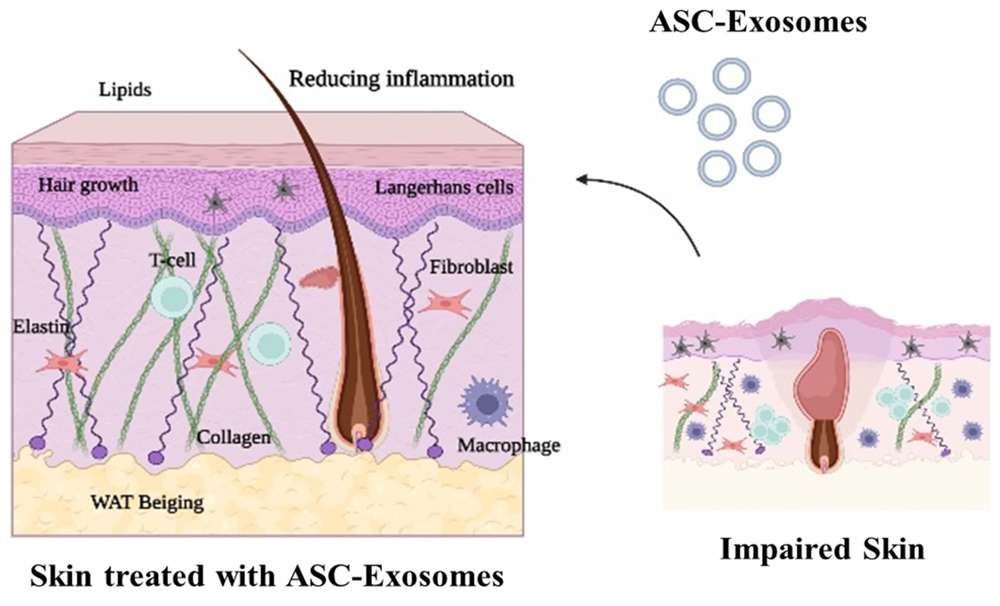 Fig.1 Therapeutic Potential of Exosomes from Adipose-Derived Stem Cells in Abnormal Skin Conditions.1
For application oriented questions, Creative Biolabs technical support is available.
"The nourishment related endpoints were clearly explained, which helped our team understand how metabolic activity was being interpreted."
"We valued the use of multiple markers instead of relying on a single viability assay. The results felt more biologically meaningful."
"Creative Biolabs was responsive when we asked about adjusting exposure time. The flexibility made the study fit our research timeline."
"The final report was structured in a way that allowed us to compare different exosome preparations easily."
"This service provided data that complemented our moisturizing studies by focusing on cellular support rather than hydration alone."
Exosome Nourishing Efficacy Test offered by Creative Biolabs supports basic research into how exosomes interact with skin cells to sustain cellular vitality and metabolic balance. By focusing on nourishment related mechanisms, this service provides a valuable complement to other skincare exosome evaluations. To discuss how this study can support your research objectives, contact Creative Biolabs and connect with a technical specialist for detailed guidance.
A: Nourishing refers to cellular level support such as metabolic activity, biosynthesis, and maintenance of healthy cell function. It does not indicate cosmetic or therapeutic outcomes.
A: Moisturizing studies focus on hydration and barrier related markers, while nourishing studies emphasize intracellular metabolic and biosynthetic indicators.
A: Yes. Many clients integrate nourishing evaluation with moisturizing or anti aging studies to build a broader research dataset.
A: Exosomes from various biological sources can be evaluated, provided they meet basic quality and concentration requirements discussed with Creative Biolabs.
A: The experimental design and reporting format support use in academic and internal research settings.
Reference