Custom Polymer-Carbohydrate Conjugation Service
Polymer-carbohydrate conjugation is a complex interdisciplinary approach that combines the unique properties of carbohydrate biomolecules with the multifunctional characteristics of synthetic polymers to create novel hybrid biomaterials with enhanced functions. At Creative Biolabs, we have pioneered advanced conjugation methods that enable the precise covalent attachment of carefully selected polymer chains to specific carbohydrate motifs, resulting in conjugates with customized physicochemical properties and enhanced biological performance.
Carbohydrate Polymers Introduction
Carbohydrate polymers are among the most abundant biomolecules in nature and play a significant role in the treatment of various human diseases. They are natural polymer molecules, typically existing as structural or storage units based on their function and the homogeneity of their monomer composition. In particular, structural polysaccharides and heteropolysaccharides have a long history of application in pharmaceutical science. In traditional medicine, they have been used as immunomodulators, antitumor adjuvants, and anti-inflammatory agents. Furthermore, various polysaccharides have attracted considerable interest from researchers due to their wide range of applications in nanotechnology. Commercially, carbohydrate polymers have been used to prepare controlled-release matrices, thin films, nanogels, hydrogels, microspheres, nanospheres, and nanostructured coatings, endowing them with numerous excellent properties, including high stability, safety, low toxicity, hydrophilicity, biocompatibility, and biodegradability.
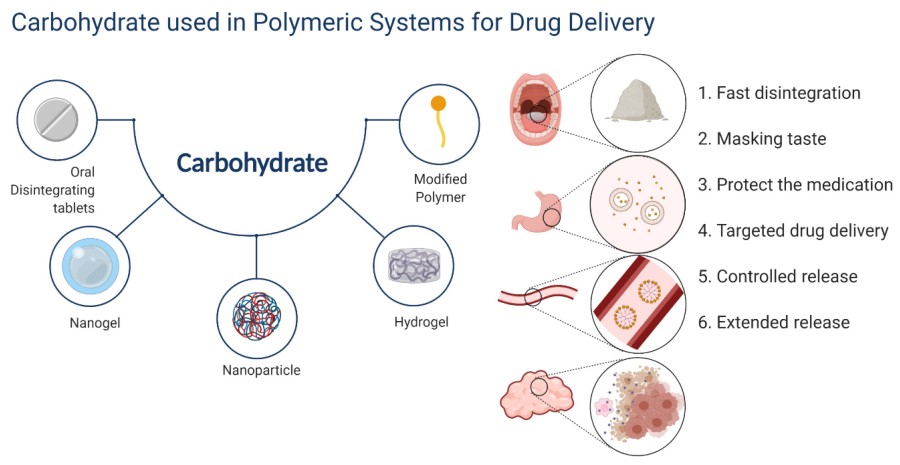 Figure 1. Carbohydrates used in polymeric systems for drug delivery.1
Applications of Carbohydrate-Polymer Conjugates
 Targeted Drug Delivery Systems
Carbohydrates are frequently used as molecular recognition elements because they can specifically bind to lectins or receptors overexpressed on diseased cells (e.g., cancer cells). For example, galactose-terminated polymers target the desialylate glycoprotein receptor (ASGPR), which is predominantly found on hepatocytes, enabling liver-specific drug delivery.
Glycoconjugate Vaccines Development
One of their main applications is the development of vaccines against bacterial pathogens. Polysaccharides in bacterial capsules are inherently weakly immunogenic, but by covalently coupling them to carrier molecules (historically proteins, but increasingly polymers), they are transformed into T-cell-dependent antigens.
Biomaterials and Tissue Engineering
Carbohydrate-modified polymers are ideal materials for constructing hydrogels and scaffolds that mimic the natural extracellular matrix (ECM). Polysaccharides such as hyaluronic acid or chondroitin sulfate, when combined with synthetic polymers, can guide cell behavior, promoting cell adhesion, proliferation, and differentiation, thus finding applications in regenerative medicine.
Diagnostics and Biosensors
Displaying carbohydrates in a multivalent form on the polymer backbone can significantly enhance their binding affinity to target receptors (cluster effect). This property has been applied in diagnostic testing for the high sensitivity and selectivity of detecting pathogens or cancer biomarkers.
What Affects Polymer Conjugation Length?
The conjugation length of the polymer directly affects the bioactivity, stability, and functionality of the resulting carbohydrate-polymer conjugates. The polymer chain length Lp can be considered the most critical variable influencing the properties of the conjugate.
| Factor | Effect on Conjugate Properties |
|---|---|
| Pharmacokinetics (t1/2) | Longer chains (higher molecular weight) lead to greater hydrodynamic volume, significantly reducing renal clearance and extending circulation time (in vivo). |
| Immunogenicity | Longer, highly flexible polymer chains, especially PEG, create a steric shield, reducing protein aggregation and minimizing recognition by the immune system (e.g., reducing the anti-drug antibody response). |
| Drug Loading | For polymer-drug conjugates, a longer polymer chain generally provides more reactive sites for drug attachment, enabling a higher drug-to-polymer ratio and, thus, greater therapeutic payload. |
| Solubility and Stability | Highly hydrophilic polymers like PEG or poly(N-(2-hydroxypropyl) methacrylamide) (HPMA) improve the aqueous solubility and conformational stability of the carbohydrate or the linked therapeutic agent. |
Overview of What Creative Biolabs Can Provide
Customized Sugar Polymer Synthesis
We specialize in the design and synthesis of novel sugar polymers—polymers containing carbohydrate motifs in their side chains, main chains, or terminal groups. Our portfolio of sugar polymers encompasses linear, branched, star-shaped, and hyperbranched structures, allowing for precise control over carbohydrate density, spatial arrangement, and polymer composition.
Physicochemical Characterization
A variety of techniques were used to comprehensively evaluate the physical properties of polymer-carbohydrate conjugates, such as gel permeation chromatography (GPC) for molecular weight distribution analysis, dynamic light scattering (DLS) for hydrodynamic size determination, zeta potential measurement for surface charge analysis, and critical micelle concentration (CMC) determination for amphiphilic conjugates.
Polysaccharide Polymer Functionalization
Polysaccharide biopolymers are natural carbon-based products suitable for a variety of modifications. The development of polysaccharide-based nanomaterials with highly efficient basic structures has been extensively studied for the controlled release of therapeutic drugs, particularly for tumor-targeting carriers and other biomedical applications.
Star-like Block Copolymer Synthesis
Creative Biolabs can utilize living polymerization to synthesize novel amphiphilic multi-arm star-shaped coil-rod diblock copolymers via click chemistry. These star polymers can be used as monomolecular micelles for the synthesis of inorganic nanoparticles and for drug and gene delivery. In particular, when using structurally well-defined star polymers as nanoreactors, it has been shown that the size, composition, and structure of monodisperse colloidal nanocrystals can be precisely controlled.
Conjugation Technology
Our coupling strategies prioritize efficiency and site specificity, employing advanced chemical approaches:
Reductive Amination (Schiff Base Formation)
This classic approach utilizes the reducing end of a carbohydrate (in equilibrium with its open-chain aldehyde form) to react with an amine-functionalized polymer. The initial Schiff base is then chemically reduced to a stable secondary amine bond. While this method is versatile, it can lack site specificity if the carbohydrate has multiple reactive groups.
This bioorthogonal chemistry exhibits excellent selectivity and high yields under mild aqueous conditions.
- ✅Copper-Catalyzed Azide-Alkyne Cycloaddition (CuAAC): Irreversible triazole bonds can be formed by modifying the polymer with alkynes and the carbohydrate with azido groups (and vice versa). Due to its stability, this method is the gold standard for many biocoupling reactions.
- ✅Strain-Promoted Azide-Alkyne Cycloaddition (SPAAC): A copper-free variant using strained octylene, crucial for processing sensitive biomolecules.
Hydrazone/oxime Linkage
This method involves introducing an aldehyde or ketone group into a carbohydrate (typically via mild periodate oxidation of a vicinal diol) and introducing a hydrazine or amino group into the polymer. These form stable hydrazone or oxime bonds, respectively. This method can selectively modify the exposed vicinal diol in the carbohydrate.
Our Services Workflow
Our streamlined workflow ensures high-quality, reproducible products from initial design to final delivery:
- Project Consultation and Design: Initial exploration of target applications, selection of optimal polymers (e.g., chain length, polydispersity index), sugar selection, and selection of the most suitable coupling chemistry methods.
- Precursor Synthesis: Custom synthesis of functionalized polymers and necessary sugar derivatives.
- Conjugation Reaction: Optimized biocoupling reactions under inert or bioorthogonal conditions.
- Purification: Multi-step purification to remove unreacted starting materials, byproducts, and coupling reagents.
- Quality Control and Analysis: Comprehensive analytical characterization.
- Product Delivery and Documentation: The final product comes with a detailed Certificate of Analysis (CoA) and a comprehensive technical report.
Frequently Asked Questions
Q: What are custom polymer-carbohydrate conjugates and their applications?
A: Polymer-carbohydrate conjugates are a complex interdisciplinary approach that combines the unique properties of carbohydrate biomolecules with the multifunctional characteristics of synthetic polymers to create novel hybrid biomaterials¹. The primary goal is to produce conjugates with customized physicochemical properties and enhanced biological performance². Carbohydrate polymers are widely used in drug delivery systems to provide advantages such as controlled or sustained release, targeted drug delivery, and enhanced stability.
Q: What are the main applications of polymer-carbohydrate conjugates in the biomedical field?
A: Polymer-carbohydrate conjugates have several important applications in the biomedical field: Targeted drug delivery: Carbohydrates, as molecular recognition elements, can specifically bind to lectins or receptors overexpressed on diseased cells (e.g., cancer cells).
Q: How does polymer chain length affect the properties of conjugates?
A: Polymer chain length is the most critical variable affecting the properties of conjugates. Longer chains bring many benefits¹:
- Pharmacokinetics: Higher molecular weights result in larger hydrodynamic volumes, significantly reducing renal clearance and prolonging in vivo circulation time (t₁/₂).
- Immunogenicity: Longer, more flexible chains (such as polyethylene glycol) create steric hindrance, thereby reducing protein aggregation and minimizing recognition by the immune system.
- Drug loading: Longer chains typically provide more reaction sites, resulting in a higher drug-to-polymer ratio and thus a greater therapeutic payload.
Conclusion
Creative Biolabs is driving innovation in the biomedical field by combining polymer science with glycobiology. Our custom polymer-carbohydrate conjugation services provide the necessary, high-precision tools for developing novel therapeutics, vaccines, and advanced biomaterials with customized in vivo properties and enhanced targeting capabilities. By combining rigorous scientific expertise with a versatile synthetic platform, we ensure your next biomedical discovery is achieved with maximum efficiency and quality. Please contact us to discuss your demands or to request a proposal.
References
- Di X, Liang X, Shen C, et al. Carbohydrates used in polymeric systems for drug delivery: from structures to applications. Pharmaceutics, 2022, 14(4): 739. https://doi.org/10.3390/pharmaceutics14040739 Distributed under Open Access license CC BY 4.0, without modification.