
Custom Polymer-Fluorophore Conjugation Service
In the ongoing exploration of visualizing and understanding biological processes at the molecular level, fluorescence-based technologies have become indispensable tools. From super-resolution microscopy that breaks the diffraction limit to in vivo imaging that tracks disease progression in real time, the quality of optical probes is crucial. At Creative Biolabs, we address these challenges head-on with our advanced custom polymer-fluorophore conjugation service. This service is more than just attaching dyes to polymers; it's a sophisticated engineering discipline that combines the unique properties of advanced polymers with the superior photophysical properties of modern fluorophores to create customized tools that enable groundbreaking discoveries.
Polymer-Fluorophore Conjugation Introduction
Polymer-fluorophore coupling is a specialized branch of bioconjugation that involves covalently linking fluorescent molecules (fluorophores) to polymer scaffolds. This process is far more than a simple chemical bond; it is a strategic engineering endeavor aimed at creating novel materials with synergistic functions. The polymer component provides key properties such as biocompatibility, high molecular weight, multivalence, enhanced cycle time (functioning in tumors through enhanced permeability and retention (EPR) effects), and a functional platform for carrying multiple payloads. The fluorophore, on the other hand, endows the material with highly sensitive optical characteristics, enabling real-time visualization and quantitative analysis. Careful selection of polymers and fluorophores, along with optimization of the coupling chemistry, determines the final material's photophysical properties, stability, and biological performance.
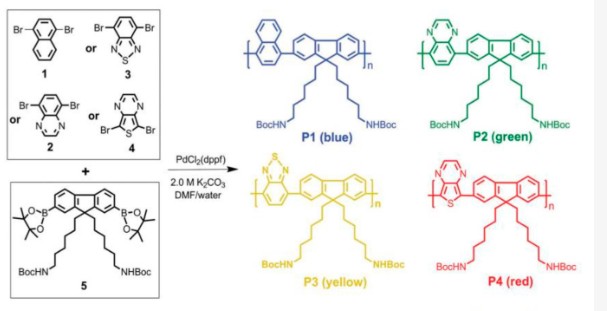 Figure 1. Chemical structure and synthesis route of conjugated polymers.1
Soft Polymer Fluorophores
Soft polymer fluorophores refer to materials where the polymer itself possesses inherent, stable fluorescent properties, or where the physical connection between the polymer and the fluorophore maintains significant chain flexibility. These materials typically contain conjugated π systems in the polymer backbone or side chains, designed to exhibit fluorescent properties. Conjugated polymer nanoparticles (CPNs) are a typical example. CPNs possess high molar absorptivity (bright signal) and photostability, making them superior to many small-molecule dyes in single-particle tracking. Their "soft" nature also gives them good solubility and the ability to self-assemble into stable nanostructures, which is crucial for systemic drug delivery.
Organic Polymer Fluorophores
Organic polymer fluorophores generally refer to the broader category of fluorescent synthetic polymers, as well as the incorporation of small-molecule organic fluorophores into synthetic or natural polymer matrices. A key challenge lies in maintaining the quantum yield of the fluorophore after coupling. Steric hindrance and aggregation-induced quenching (ACQ) significantly reduce fluorescence brightness. Strategically using hydrophilic spacers (e.g., short PEG linkers) between the polymer and the fluorophore is a proven method to mitigate ACQ and ensure that the conjugate retains high optical performance, which is crucial for high signal-to-noise ratio imaging.
Applications of Polymer-Fluorophore Conjugation
The resulting conjugates play a crucial role in numerous biomedical fields, significantly enhancing the performance of existing technologies:
Bioimaging and Diagnostics
Fluorescently labeled polymers are often designed to target specific cell surface receptors or cellular components, enabling high-resolution imaging of biological processes in living systems. For example, conjugates based on polyethylene glycol (PEG) and near-infrared (NIR) fluorophores can be used to map tumor boundaries during surgery or monitor drug release kinetics in vivo.
Drug and Gene Delivery Systems
These polymers serve as nanocarriers, encapsulating or covalently binding therapeutic agents. Conjugating fluorophores to these carriers allows for tracking the delivery system's journey to the target, assessing cellular uptake, and monitoring endosome escape, providing valuable feedback for optimizing formulation efficacy.
Biosensors and Immunoassays
The unique sensitivity of fluorophores is often utilized through techniques such as FRET (Förster resonance energy transfer), enabling polymer-fluorophore conjugates to serve as probes that indicate the presence of target molecules (such as enzymes or metal ions) through changes in fluorescence properties.
Our Services
Creative Biolabs offers a modular service suite to ensure we can meet your needs at every stage of your project:
Custom Polymer Synthesis and Modification
Synthesizing functionalized polymers with specific molecular weights, dispersibility (D), and end-group functions (e.g., -NH₂, -SH, alkynes, azides).
Fluorescent Dye Selection and Procurement
Expert guidance on selecting fluorescent dyes for specific instruments (e.g., flow cytometry, IVIS imaging, confocal microscopy) and procuring high-purity dye derivatives.
Optimized Conjugation Services
Utilizing robust bio-coupling-specific chemistry, including bioorthogonal methods for sensitive materials, to achieve high-yield coupling from small-scale to large-scale operations.
Comprehensive Characterization Services
Providing advanced analytical services to confirm coupling efficiency, purity, and photophysical properties.
Fluorophores Types: Selecting the Optimal Emissive Component
The strategic selection of fluorophores is a key factor determining the performance of any polymer-fluorophore conjugate. At Creative Biolabs, we offer a rich portfolio of fluorophores, each with unique photophysical properties, functional groups, and compatibility. We categorize commonly used fluorophores into several key classes, each with its own unique advantages.
Small Organic Fluorophores
This classic class includes well-defined dyes such as fluorescein, rhodamine, and the Cy series. These fluorophores are characterized by their relatively small molecular weight (<1 kDa), which minimizes steric hindrance when conjugated with polymers.
Fluorescent Proteins (FPs)
Although not synthetic, fluorescent proteins like green fluorescent protein (GFP) represent a unique class of genetically encoded fluorophores. Their binding to polymers is typically achieved through gene fusion into polymer-binding protein domains or through bioorthogonal chemistry methods.
Key Characteristics of Major Fluorophore Classes
| Fluorophore Class | Typical Size | Key Advantages | Common Applications | Considerations |
|---|---|---|---|---|
| Organic Dyes | Small (<1 kDa) | High brightness, various reactive groups, well-established protocols | Flow cytometry, confocal microscopy, FRET | Can be prone to photobleaching; aggregation may cause quenching |
| Fluorescent Proteins (e.g., GFP) | ~27 kDa | Genetically encodable, biocompatible, enables live-cell imaging | Intracellular biosensing, protein tagging | Lower brightness and photostability vs. synthetic dyes |
Methods to Remove Excess Fluorophore from Polymers
Removal of unbound (free) fluorophores is a critical purification step that directly impacts the specificity and safety of the final product. Residual free dye can lead to high background fluorescence, false positive signals, and unacceptable toxicity in clinical applications.
Dialysis/Dialysis Filtration
This is the most commonly used method, utilizing the significant molecular weight difference between high-molecular-weight polymer conjugates and low-molecular-weight free fluorophores. We employ tangential flow filtration (TFF) for large-scale, high-efficiency dialysis filtration, enabling rapid buffer exchange and removal of small molecules.
Size Exclusion Chromatography (SEC)
SEC, also known as gel filtration, separates molecules based on their hydrodynamic radii. This method offers excellent resolution, accurately separating single-conjugates, multi-conjugates, and unconjugates from free dyes. We use high-performance size exclusion chromatography (HPSEC) to achieve analytical-grade purity.
Precipitation/Redissolution
For some polymers, controlled precipitation in a non-solvent followed by redissolution in a selective solvent can effectively wash away residual small-molecule fluorophores. This is often used as a preliminary purification step for rapid, large-scale removal.
What Makes Creative Biolabs Your Top Choice
Creative Biolabs is a global leader in bioconjugation, providing distinct advantages:
- ✅PhD-Level Expertise: Our team consists of highly experienced chemists and materials scientists specializing in polymer chemistry and photophysics.
- ✅Versatile Polymer Library: Access to a vast array of synthetic and natural polymers, including custom-functionalized dendrimers, hydrogels, and block co-polymers.
- ✅Robust Quality Control: We adhere to strict quality standards and provide comprehensive documentation (CoA, raw data) for every project.
- ✅Scalability: We offer services ranging from milligram-scale method development to multi-gram scale production for preclinical studies.
Frequently Asked Questions
Q: What is the typical turnaround time for a custom polymer-fluorescent dye conjugation project?
A: Basic conjugation services typically ship within 10-12 business days, while more complex conjugations requiring extensive characterization or validation may take 3-4 weeks to ensure optimal performance and complete documentation. Project timelines are clearly defined during the initial scope definition phase and progress updates are provided regularly throughout the collaboration.
Q: How do I determine the appropriate degree of labelling (DOL) for my specific application?
A: The optimal degree of labelling (DOL) depends on application requirements and the specific polymer-fluorescent dye combination. We conduct systematic DOL testing to determine the antibody:dye molecule ratio that provides the maximum specific signal intensity. Our technical team provides expert guidance on DOL selection during project consultations, based on your specific research objectives.
Q: What starting materials are needed to launch a custom conjugation project?
A: Clients typically provide a complete target specification, including desired polymer properties, fluorophore preferences, and application requirements. For established polymer systems, we can usually source or synthesize suitable scaffolds; similarly, we have a large inventory of commercially available fluorophores and can procure specialized fluorophores based on project objectives.
Q: What are the advantages of polymer-fluorophore conjugates compared to traditional fluorophores used in bioimaging applications?
A: Polymer-fluorophore conjugates offer significant advantages, including higher photostability, higher brightness due to multiple fluorophores attached to each scaffold, and reduced self-quenching through controlled spatial arrangement. These properties enable them to exhibit superior performance in demanding applications such as deep tissue imaging and long-term live-cell tracking.
Q: Can you fabricate biodegradable fluorescent nanoparticles?
A: Yes, we have accumulated expertise in fully biodegradable fluorescent nanoparticles based on bioabsorbable polymers, including polyethylene oxide-block-polycaprolactone (PEO-b-PCL) and related materials. These structures address the biocompatibility and clearance issues associated with non-degradable alternatives while maintaining excellent optical performance.
Conclusion
Polymer-fluorophore conjugation technology is a powerful platform that continuously expands the boundaries of possibilities in biomedical research and diagnostics. At Creative Biolabs, we remain at the forefront of this dynamic field through continuous innovation in conjugate design, rigorous analytical characterization, and a steadfast commitment to customer success. We integrate expertise in polymer chemistry, fluorophore physics, and biological applications, employing conjugation approaches to provide customized solutions for the most challenging research problems. Please contact us to discuss your demands or to request a proposal.
Reference
- Zheng Q, Duan Z, Zhang Y, et al. Conjugated polymeric materials in biological imaging and cancer therapy. Molecules, 2023, 28(13): 5091. https://doi.org/10.3390/molecules28135091 Distributed under Open Access license CC BY 4.0, without modification.