
Liver-targeting Adenovirus Vector Construction Service
Creative Biolabs has always been committed to providing customers with professional adenoviral vector construction services. Our scientists will work with you and keep in mind the safety, efficiency, purpose of optimizing services according to your requirements. Our adenoviral vector construction platform is perfect to construct different targeted adenoviral vectors, and liver-targeted adenoviral vectors represent the leading level of current technology. No matter what difficulties you have encountered in the relevant research work, you can contact us to get your customized service.
Liver-targeting Gene Therapy
The liver plays an important role in the development of many hereditary and acquired genetic diseases and is also a drug target for the treatment of some innate metabolic diseases. However, due to the important role of the liver in the metabolism of the human body, the traditional methods of treating liver-related diseases are limited by some side effects. The emergence of gene therapy technology has provided new ideas for the treatment of liver diseases - radically cure diseases by transferring specific genes to liver cells via some vectors.
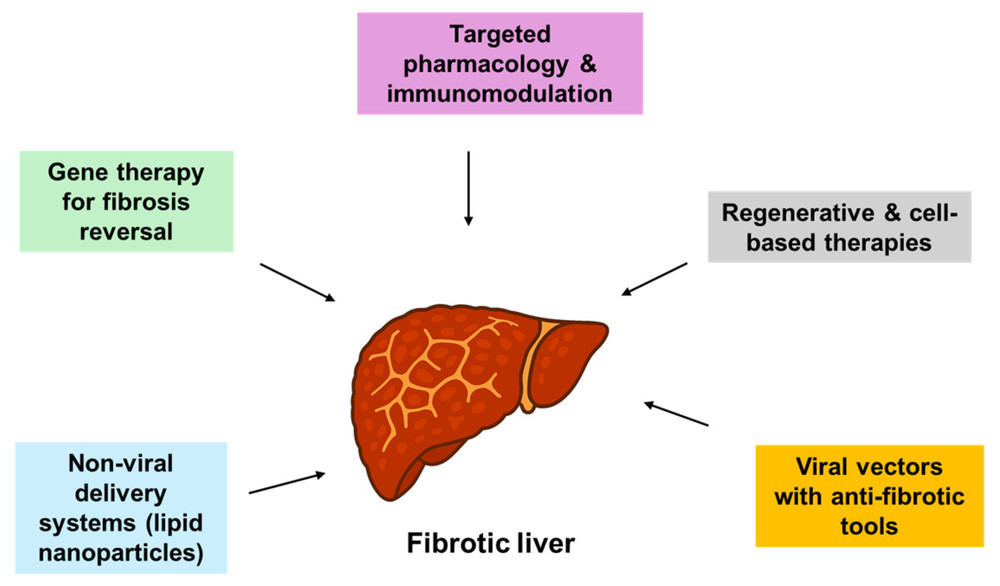 Figure 2. Technologies with the potential to target fibrosis. Advances in cell and gene therapies, regenerative medicine, and targeted pharmacology approaches, along with advancements in in vitro modeling, may help bring about novel and effective therapies for liver fibrosis.1
The specificity is the difficult point that liver-targeting gene therapy needs to solve. To selectively remove cancerous cells in treatment without affecting normal cells, it is necessary to prevent toxic exchange between tumor cells and nearby healthy cells. In vitro gene therapy for human induced pluripotent stem cells or autologous stem cells provides a promising approach to the healing of liver-related diseases. It is also possible to properly optimize and alter the gene for therapeutic delivery by targeting gene modification. In the future, once the relevant safety issues are resolved, such genetically modified stem cells can become an autologous transplant option for liver disease treatment. Although adenoviral vectors have limited efficacy in gene therapy for most liver diseases, they have shown the ability to efficiently transmit genes, which has attracted more and more scientists' attention.
Adenovirus Vector for Gene Therapy
Some of the characteristics of adenovirus make them very suitable for gene therapy. First, their existence is very common. More than 50 serotypes of adenovirus have been reported in humans. Second, adenovirus has high efficiency in infecting human cells. It can quickly express the encoded protein of the target gene to a higher level. Third, the adenovirus has higher biosafety and less threat to humans, with only some mild infection symptoms. Fourth, the adenovirus vector can accommodate larger DNA fragments with high fidelity and easy handling. At present, in the treatment of liver cancer, an oncolytic adenovirus Ad-199T has been developed which has the ability to replicate under certain conditions, and the vector introduces four copies of the miR-199 target site in the 3'UTR of the E1A gene. The expression is strictly regulated by the levels of RNA and protein in primary hepatocellular carcinoma, which can rapidly remove liver cancer cells in mice without causing significant hepatotoxicity.
Research Areas Benefiting from Liver-Targeted Adenovirus Vectors
Liver-targeted adenoviral vectors have been widely adopted across many fields of biomedical research. Their high transduction efficiency and rapid expression kinetics make them ideal tools for both in vitro and in vivo studies.
Liver Metabolic Disease Models
Researchers frequently use adenoviral vectors to introduce or suppress genes involved in metabolic pathways. These models enable scientists to investigate the molecular basis of metabolic disorders and evaluate potential therapeutic interventions.
Hepatocellular Carcinoma Research
Hepatocellular carcinoma is one of the most common and deadly forms of cancer worldwide. Adenovirus-mediated gene delivery allows investigators to manipulate oncogenes, tumor suppressors, and signaling pathways involved in liver tumor development and progression.
Viral Hepatitis Studies
Adenoviral vectors can be used to express viral proteins or modulate host immune responses, enabling the development of experimental models to study hepatitis viruses and to test antiviral therapies.
Liver Regeneration Research
The liver has a remarkable capacity for regeneration following injury. Gene delivery approaches enable scientists to investigate signaling pathways and growth factors that regulate liver regeneration.
Our Liver-Targeting Adenovirus Vector Construction Services
Creative Biolabs provides a comprehensive suite of services covering every stage of liver-targeted adenovirus vector development. Our integrated platform ensures each project is executed efficiently while maintaining the highest quality standards.
Custom Adenovirus Vector Design
The success of a gene delivery experiment begins with a well-designed viral vector. Our scientists work closely with clients to design adenoviral constructs optimized for specific research goals.
Key elements of our vector design services include:
- Gene of Interest (GOI) Cloning - We clone the desired gene sequence into adenoviral shuttle vectors with precise sequence verification.
- Vector Backbone Selection - Depending on project requirements, we select appropriate adenovirus backbones, such as replication-deficient vectors or helper-dependent systems.
- Promoter and Regulatory Element Optimization - Promoters, enhancers, and other regulatory elements are carefully chosen to achieve desired expression patterns.
- Transgene Cassette Engineering - Additional elements such as reporter genes, selection markers, and regulatory sequences can be incorporated into the expression cassette.
Liver-Specific Targeting Engineering
To maximize gene delivery efficiency in liver cells, our team applies advanced engineering strategies to enhance hepatocyte targeting.
These strategies may include:
- Capsid Modification - Alterations to adenoviral capsid proteins can modify viral tropism and improve cell-specific targeting.
- Fiber Knob Engineering - The fiber knob domain plays a key role in receptor binding. Modifying this region can alter viral entry pathways.
- Ligand-Mediated Hepatocyte Targeting - Ligands that bind to liver-specific receptors can be incorporated into viral capsids to enhance hepatocyte uptake.
- Tropism Retargeting - Engineering strategies can redirect adenoviral vectors away from non-target tissues while enhancing liver specificity.
Vector Validation and Characterization
Comprehensive quality control is essential for ensuring that viral vectors meet research standards. We provide extensive validation services to confirm vector integrity and performance.
Quality control procedures include:
- Viral Genome Sequencing - Verification of the complete vector sequence.
- Viral Titer Determination - Measurement of viral particle concentration and infectivity.
- Transgene Expression Analysis - Evaluation of gene expression levels in target cells.
- Functional Infectivity Assays - Assessment of the vector's ability to efficiently transduce hepatocytes.
Adenovirus Packaging and Production
Once the vector design is finalized, recombinant adenoviruses are generated through well-established packaging systems.
Our adenovirus production services include:
- Recombinant adenovirus rescue using packaging cell lines
- Viral amplification to achieve high titers
- Virus purification using advanced chromatography and ultracentrifugation techniques
Types of Liver-Targeted Adenovirus Vectors We Construct
Creative Biolabs supports the construction of multiple types of adenoviral vectors to accommodate diverse experimental needs.
| Vector Type | Description |
|---|---|
| Replication-deficient adenovirus | Safe and widely used vectors for gene expression studies |
| Helper-dependent adenovirus | High cloning capacity and long-term gene expression |
| Capsid-engineered adenovirus | Modified tropism for enhanced hepatocyte targeting |
| Tissue-specific promoter adenovirus | Liver-specific expression using promoters such as albumin or TTR |
| Oncolytic adenovirus | Selectively replicating vectors for liver cancer research |
Applications of Liver-Targeting Adenovirus Vectors
Liver-targeted adenoviral vectors support a wide range of research and therapeutic development applications.
- Liver Disease Modeling - Researchers can manipulate genes involved in metabolic pathways to study disease mechanisms and identify potential therapeutic targets.
- Cancer Research - Adenoviral vectors enable gene delivery to liver tumors, allowing scientists to investigate oncogenic signaling pathways and evaluate anticancer strategies.
- Functional Genomics - Gene overexpression, gene knockdown, and genome editing experiments can be efficiently performed in hepatocytes using adenoviral vectors.
- Drug Discovery - Liver-targeted gene delivery systems facilitate drug target validation, pathway analysis, and evaluation of hepatotoxic effects.
Frequently Asked Questions
Q: Can adenoviral vectors efficiently transduce primary hepatocytes?
A: Yes. Adenoviral vectors are well known for their high transduction efficiency in both primary hepatocytes and hepatocyte-derived cell lines. Due to their natural liver tropism and ability to infect both dividing and non-dividing cells, adenoviruses are widely used in liver biology studies and in vivo liver gene delivery experiments. Through capsid engineering and promoter optimisation, transduction efficiency and liver specificity can be further improved.
Q: Can adenoviral vectors be used for in vivo liver gene delivery?
A: Yes. Adenoviral vectors are commonly used for in vivo liver gene delivery, particularly in rodent models. Systemic administration through intravenous injection can result in efficient gene transfer to hepatocytes. Researchers frequently use these vectors to study liver metabolism, gene function, and therapeutic gene expression in animal models.
Q: Do you support custom vector modifications for specific research needs?
A: Absolutely. Creative Biolabs offers fully customizable adenoviral vector design services. Clients can request modifications, including:
- Liver-specific promoters
- Reporter genes
- Capsid engineering
- Targeting ligand incorporation
- CRISPR/Cas gene editing components
Our scientists work closely with clients to design vectors that best match their experimental goals.
Q: What information should I provide when initiating a project?
A: To start a liver-targeted adenovirus construction project, clients typically provide the following information:
- Gene of interest (GOI) sequence or plasmid
- Desired promoter or expression system
- Target cell type or experimental model
- Reporter gene or selection marker requirements
- Expected vector scale or titer
Providing these details helps our team design the most appropriate viral vector solution for your research.
Partner with Us
Creative Biolabs has sophisticated genetic construction techniques to build and optimize liver-directed adenoviral vectors. We can not only design a universal carrier with good applicability, but also customize additional optimization services for the vectors you need. Providing you with a safe, stable and efficient service makes us responsible. If you have any question or have any difficulty, you can contact us by email or send us an inquiry to find a complete solution.
Reference
- Nair D G, Weiskirchen R. Liver Fibrosis: Current Treatments, Bottlenecks, and Future Prospects for Translational Medicine. Sci (2413-4155), 2026, 8(1). https://doi.org/10.3390/sci8010009 Distributed under Open Access license CC BY 4.0, without modification.
