Product List Background CRP Functional Service
Background
C-reactive protein (CRP) is an acute-phase serum protein. It is a member of the pentraxin family, produced mostly by cells in the liver in response to a variety of inflammatory cytokines. The levels of CRP in the blood are closely associated with the degree of inflammatory responses. CRP levels rise rapidly in response to threats such as trauma, inflammation, and infection and fall rapidly in response to remission. Thus, CRP levels are considered as non-specific markers of inflammation, and measurement of CRP levels has important clinical significance for the diagnosis of some inflammatory diseases such as rheumatoid arthritis, lupus, and vasculitis.
CRP has been indicated a role in the innate immune system through activating complement, binding to Fc receptors, and acting as an opsonin for a variety of pathogens. CRP interacts with Fc receptors, leading to the production of pro-inflammatory cytokines that increase the inflammatory response. CRP binds to microbial polysaccharides or to the ligands exposed on damaged cells, leading to the activation of the classical complement pathway and promoting their uptake by phagocytic cells. Importantly, CRP also recognizes altered self and foreign molecules based on pattern recognition, inducing a proinflammatory signal and activating the adaptive immune system. Recent studies have also shown that CRP serves an important role in the inflammatory process, including phagocytosis, nitric oxide release, and cytokine production.
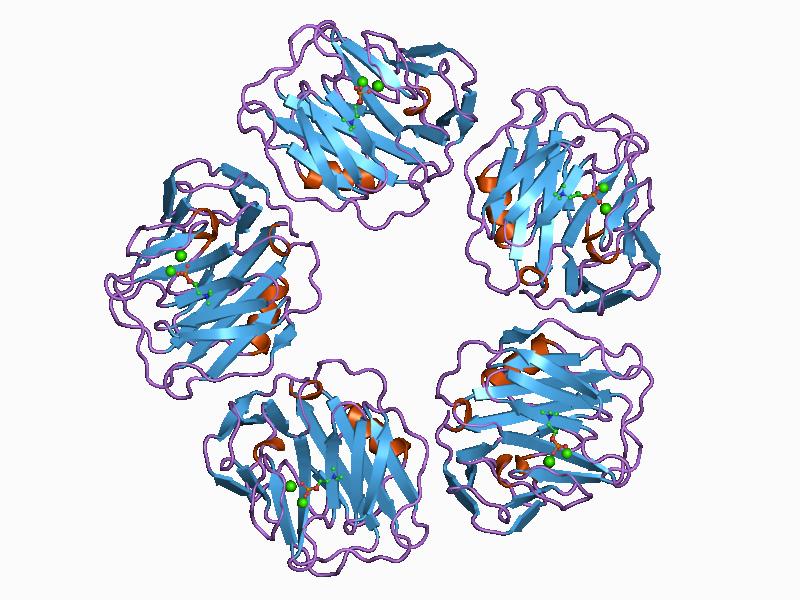 Fig.1 Structure of CRP.Distributed under public domain, from Wiki, without modification.
CRP Functional Service
Creative Biolabs supplies a diverse collection of CRP-focused offerings, which include anti-CRP antibodies, ELISA kits, and recombinant human complement CRP proteins. These meticulously developed tools are essential for advancing research initiatives aimed at designing therapeutic approaches for a variety of diseases.
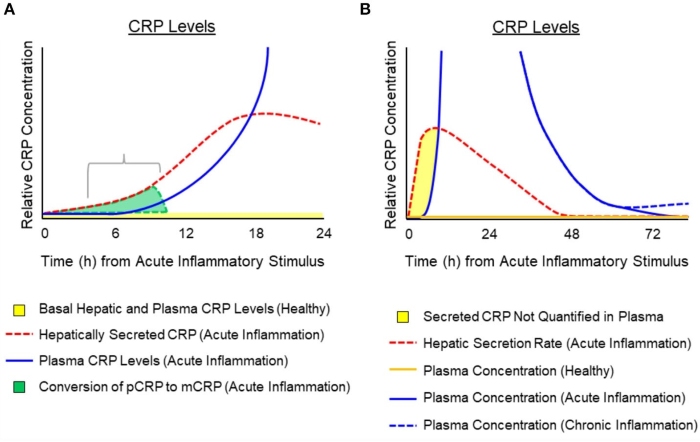 Fig.2 Diagrammatic representation of the proportional secretion of pCRP by hepatocytes upon cytokine stimulation, and its subsequent presence in the bloodstream.1
CRP acts as an acute phase protein synthesized by the liver, triggered by inflammatory signals such as interleukin-6, which are released following tissue damage. Rapid elevation in CRP levels can occur, signifying inflammation’s onset and extent, hence serving as an inflammation marker. Lacking clear biological roles, its diagnostic utility spans various diseases, indicating inflammation rather than its causative pathology. This complexity masks functional transitions wherein CRP morphs into distinct isoforms with altered biochemical characteristics. Understanding the underpinning mechanisms of CRP isoform expression and activity could refine its clinical interpretative significance in diagnosing diverse pathological states.
Creative Biolabs delivers CRP-related services, encompassing CRP-binding assessments and auxiliary functional offerings, specifically designed to support our esteemed clients in both scientific research and clinical applications.
Reference
-
Rajab, Ibraheem M., Peter C. Hart, and Lawrence A. Potempa. "How C-reactive protein structural isoforms with distinctive bioactivities affect disease progression." Frontiers in immunology 11 (2020): 2126. Distributed under Open Access license CC BY 4.0, without modification.


 INQUIRY
 Datasheet