Introduction What We Can Offer? Why Choose Us? FAQs Featured Services Featured Products
Accelerate Your Research and Development!
Are you currently facing challenges in identifying novel therapeutic targets or developing effective treatments for complex ocular diseases like Age-related Macular Degeneration (AMD) and glaucoma? Creative Biolabs' advanced Complement System Therapeutic services help you accelerate ocular drug discovery and obtain highly specific antibody-based solutions through innovative protein engineering techniques and high-throughput screening platforms, targeting critical complement pathways.
Contact our team to get an inquiry now!
Introduction
The complement system, a crucial component of the innate immune system, plays a multifaceted role in maintaining ocular health and contributing to the pathogenesis of various eye diseases. This complex cascade of proteins acts as a first line of defense against pathogens, mediates inflammation, and aids in the clearance of cellular debris. However, dysregulation or chronic activation of the complement system can lead to significant tissue damage and contribute to the progression of debilitating ocular conditions.
Click here to learn more information about a specific ophthalmology disease:
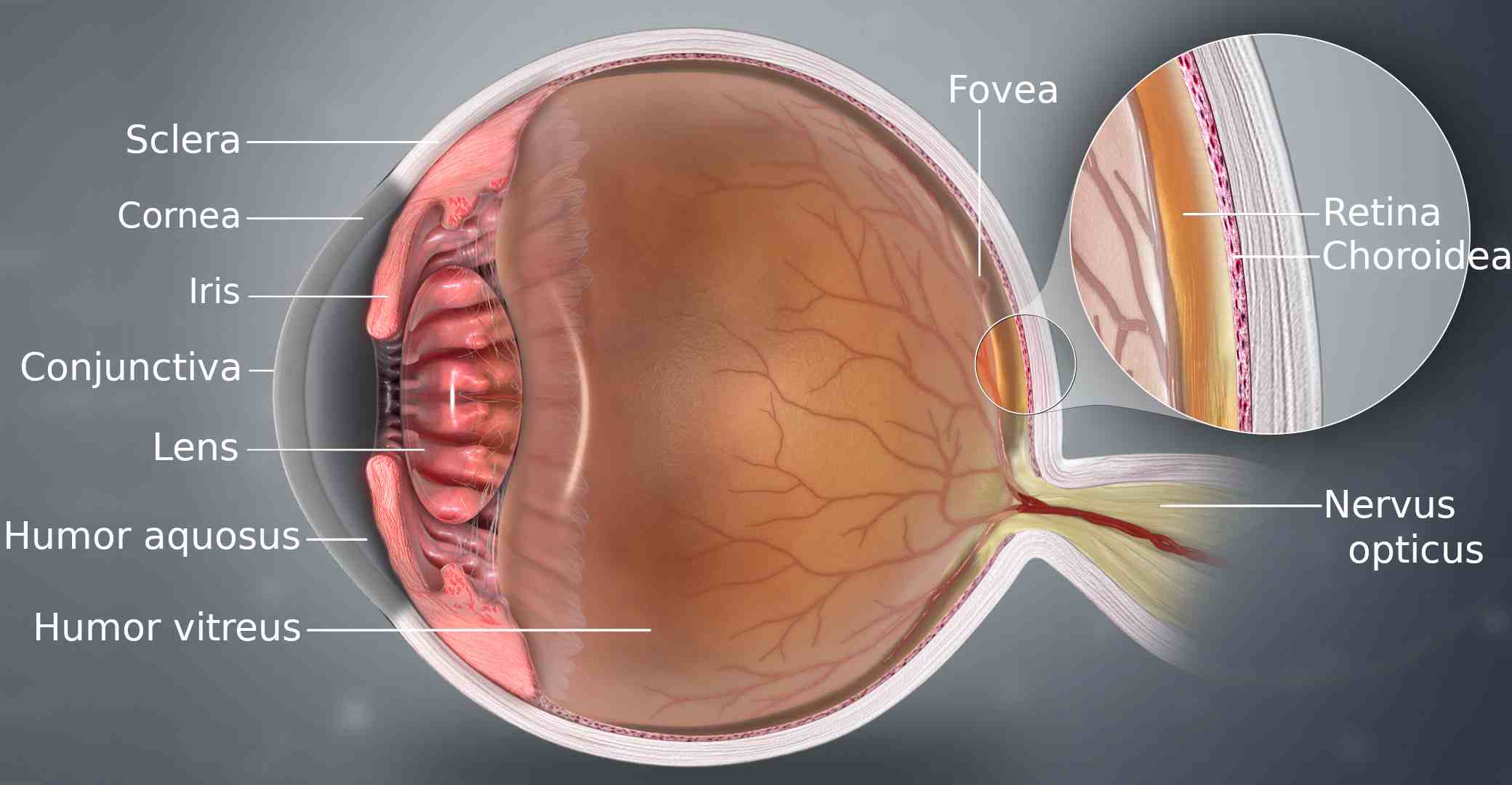 Distributed under Open Access license CC BY-SA 4.0, from Wiki,
without modification.
Distributed under Open Access license CC BY-SA 4.0, from Wiki,
without modification.
Fig.1 3D Medical Animation Eye Structure.
Research has increasingly highlighted the pivotal involvement of complement in diseases such as Age-related Macular Degeneration (AMD), a leading cause of blindness in the elderly. In AMD, genetic variants in complement regulatory genes and the accumulation of complement activation products in the retina are strongly linked to disease onset and progression. Similarly, the complement system is implicated in glaucoma, where its activation contributes to retinal ganglion cell death and optic nerve degeneration. Diabetic retinopathy, uveitis, and retinal ischemia-reperfusion injury also demonstrate significant complement involvement, where uncontrolled activation drives inflammation, vascular leakage, and neuronal damage.
What We Can Offer?
Creative Biolabs offers comprehensive products and services to advance complement system therapeutic research in ophthalmology, supporting every stage of your drug discovery and development pipeline:
-
Recombinant Complement Proteins: High-quality human and animal complement proteins (e.g., C3, C5, Factor B, Factor D) for in vitro assays and functional studies.
-
Complement Assay Kits: Kits for measuring complement activation, inhibition, and specific pathway activity (classical, alternative, lectin) for precise functional analysis.
-
Custom Antibody Development: Development of highly specific monoclonal and polyclonal antibodies targeting complement components or regulatory proteins for therapeutic/diagnostic applications.
-
Antibody Engineering Services: Optimization of antibody properties, including affinity maturation, humanization, and bispecific antibody creation, to enhance therapeutic potential.
Why Choose Us?
Choosing Creative Biolabs for your complement system therapeutic needs in ophthalmology means partnering with a leader in the field. Our dedication to research superiority, integrated with cutting-edge systems, guarantees peerless standards and trustworthiness across all endeavors.
Our key advantages include:
-
Cutting-Edge Technology: We utilize advanced antibody engineering platforms and high-throughput screening technologies to develop highly specific and potent therapeutic antibodies.
-
Comprehensive Service Portfolio: From target identification and validation to antibody discovery, optimization, and preclinical evaluation, we offer end-to-end solutions tailored to your specific project requirements.
-
Proven Track Record: Our success is built on a foundation of delivering high-quality results, as evidenced by numerous successful collaborations and Published Data demonstrating the efficacy of our complement-targeting strategies.
-
Customized Solutions: We understand that each research project is unique. Our flexible approach allows us to design bespoke strategies that precisely meet your scientific objectives and accelerate your timeline.
-
Robust Quality Control: Every step of our process adheres to stringent quality control measures, ensuring the integrity, purity, and activity of all generated antibodies and reagents.
Secure the Creative Biolabs Edge – Solicit Specifications Now
FAQs
Q: How can modulating the complement system specifically benefit ocular conditions?
A: Modulating the complement system in ocular conditions can suppress chronic inflammation and prevent the tissue damage that often drives diseases like Age-related Macular Degeneration and glaucoma. By targeting specific components, it's possible to halt disease progression and protect delicate eye structures, offering a novel therapeutic avenue.
Q: What are the primary challenges in developing complement-targeted therapies for eye diseases?
A: Key challenges include ensuring precise targeting to avoid systemic immune suppression, achieving effective delivery to the eye, and identifying the optimal window for intervention to prevent irreversible damage. Overcoming these requires sophisticated engineering and thorough preclinical validation.
Q: Are there different approaches to inhibiting the complement system, and how do they compare for ocular applications?
A: Yes, approaches vary from blocking early cascade components like C3 to inhibiting terminal pathway components like C5, or targeting upstream activators like Factor B or Factor D. The choice depends on the specific disease mechanism and desired level of inhibition, balancing efficacy with potential side effects. Every methodology possesses individualized strengths and parameters for ophthalmic administration and prolonged efficacy.
Q: How do complement-targeted therapies compare to existing treatments for ocular diseases?
A: Complement-targeted therapies offer a distinct mechanism of action compared to many existing treatments, which often focus on symptoms rather than underlying inflammatory drivers. They hold promise for addressing diseases where inflammation is a primary pathology, potentially offering more durable or effective solutions, especially for conditions with significant complement involvement.
Q: What considerations are important when designing an antibody for complement modulation in the eye?
A: When designing an antibody for ocular complement modulation, crucial considerations include its specificity for the target, its ability to penetrate ocular tissues, its half-life in the eye, and its potential for immunogenicity. The antibody's format and delivery method are also critical for achieving optimal therapeutic concentrations at the site of disease.
Creative Biolabs is your trusted partner for advancing complement system therapeutics in ophthalmology. Our comprehensive suite of services, from recombinant protein supply to advanced antibody engineering and functional assays, is designed to empower your research and accelerate the development of innovative treatments for debilitating eye diseases.
Featured Services
Feature Products
Reference
-
Ong, Joshua et al. "The Complement System as a Therapeutic Target in Retinal Disease." Medicina (Kaunas, Lithuania) vol. 60,6 945. 5 Jun. 2024, DOI:10.3390/medicina60060945. Distributed under an Open Access license CC BY 4.0, without modification.
For Research Use Only.
Related Sections: