Product List Background
Background
The COVID-19 pandemic, caused by SARS-CoV-2, continues to impact global health and the economy severely. SARS-CoV-2 spreads through fomites and droplets during close, unprotected contact. The primary symptoms include respiratory issues such as fever, dry cough, and dyspnea, with severe cases leading to sepsis, secondary infections, and organ failure. Recent studies also suggest gastrointestinal symptoms and potential fecal-oral transmission. As a positive-sense single-stranded RNA virus, SARS-CoV-2 belongs to lineage B of the Beta-coronavirus genus, with a genome size of ~29.9 kb, sharing ~78% sequence homology with SARS-CoV. The virus is likely of zoonotic origin.
Cellular Pathways of SARS-CoV-2 Life Cycle
Coronavirus virions are structured with proteins that encapsulate a single-stranded RNA genome (+ssRNA) within a nucleocapsid, while the membrane and envelope facilitate its integration into viral particles during assembly. Spike trimers extend from the viral envelope, derived from host cells, and bind to specific cellular entry receptors, facilitating viral uptake and fusion at cellular or endosomal membranes in conjunction with host factors. Upon entry, genomic RNA undergoes release and uncoating, leading to immediate translation of ORF1a and ORF1b. These translate into polyproteins pp1a and pp1ab, which are processed co- and post-translationally into non-structural proteins forming the viral replication complex. Viral replication organelles, including DMVs, CMs, and small open DMSs, provide a conducive environment for RNA replication and transcription of sg mRNAs. Newly synthesized structural proteins interact with N-encapsidated genomic RNA, bud into secretory vesicles via the ER-to-Golgi intermediate compartment, and are finally exocytosed from infected cells.
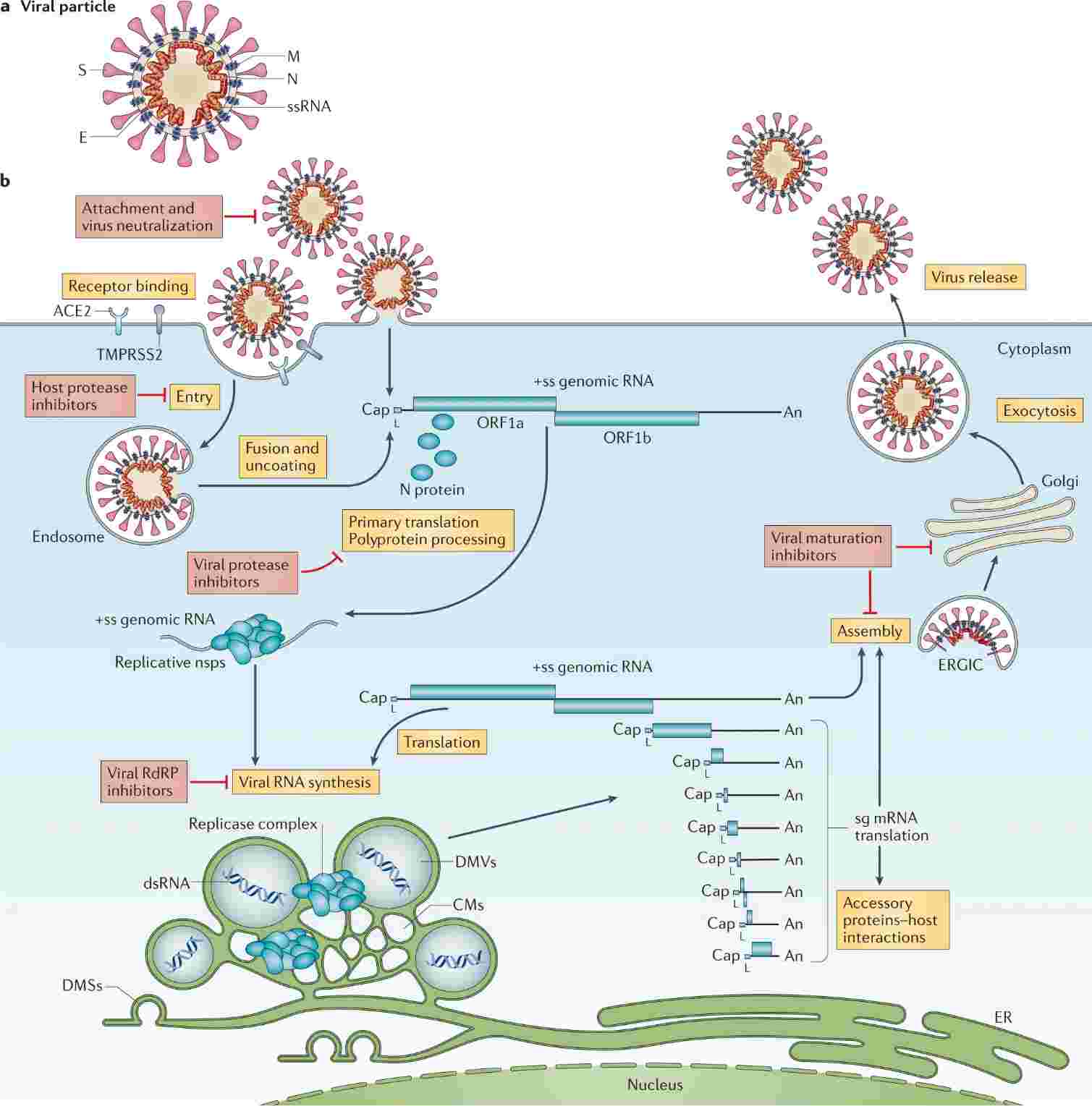 Fig.1 Schematic representation of the coronavirus virion and its life cycle.1
SARS-CoV-2-based Products Utilizations
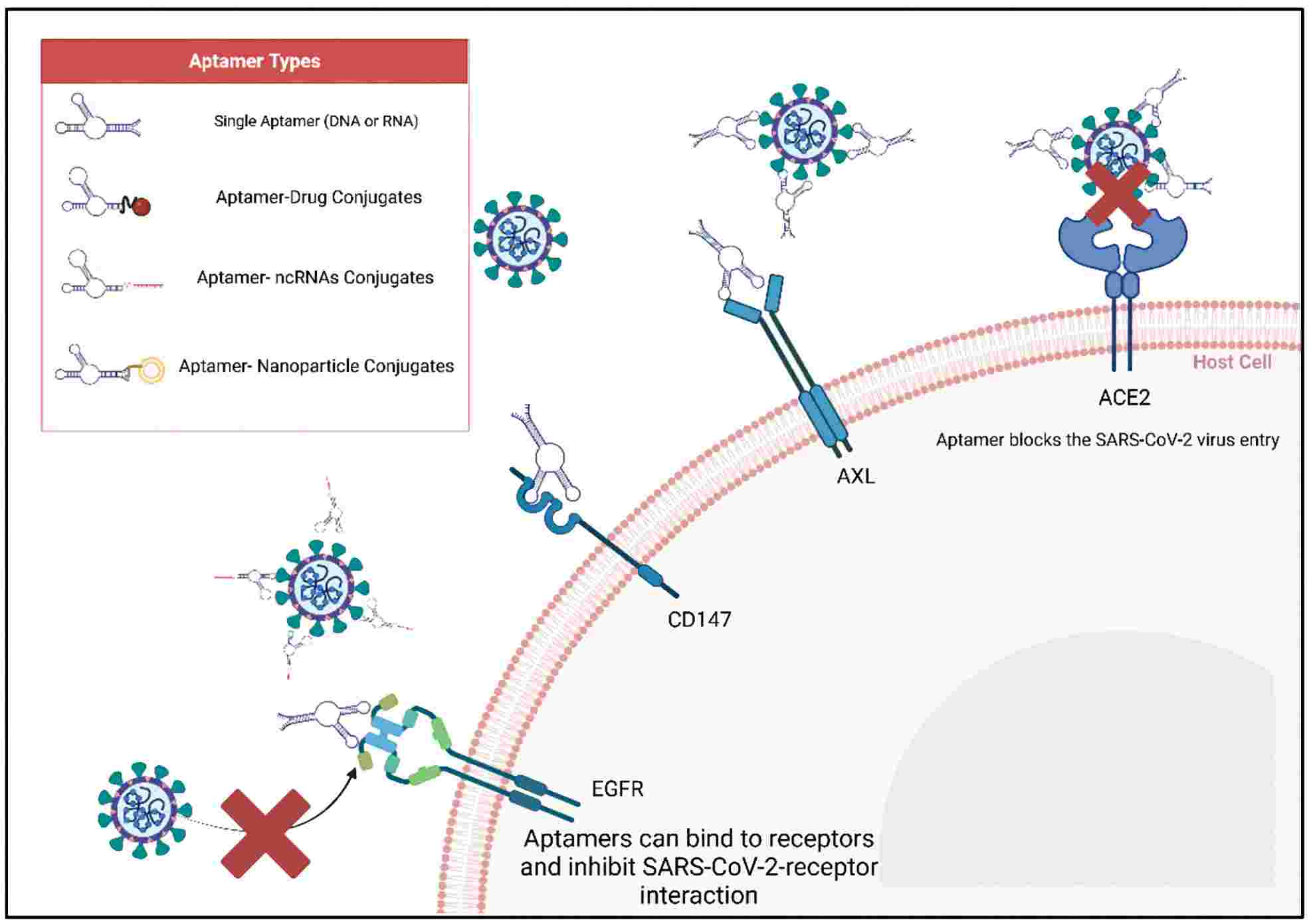 Fig.2 Schematic illustrating potential therapeutic strategies targeting SARS-CoV utilizing aptamer and aptamer chimera technologies.2
Development of a High-Affinity Aptasensor for COVID-19 Diagnosis Targeting SARS-CoV-2 N Protein
Owing to its high immunogenicity and abundant expression during infection, the SARS-CoV-2 nucleocapsid (N) protein stands out as a vital diagnostic target. Studies have aimed to develop a label-free optical aptasensor employing a novel single-stranded DNA aptamer for N protein detection. Aptamers targeting N have been identified via asymmetric-emulsion PCR-SELEX, characterized for binding affinity and cross-reactivity using biolayer interferometry. An aptamer specific to SARS-CoV-2 N protein, effective against wild-type, Delta, and Omicron variants, has demonstrated high affinity. Testing the aptamer's ability to detect N protein in human saliva highlights its potential. Mass spectrometry and molecular dynamics simulations have clarified the interaction between the aptamer and N protein, pinpointing epitope peptides in the RNA-binding domain and C terminus. These results confirm the aptamer's utility as a diagnostic tool for COVID-19.
Modified Aptamers Targeting SARS-CoV-2 Spike Protein for Diagnostic and Therapeutic Development
Some modified DNA-based aptamers selectively bind to the S1, S2, or receptor-binding domain of the SARS-CoV-2 spike protein. Several of these aptamers inhibit the spike protein's interaction with its cellular receptor, angiotensin-converting enzyme 2 (ACE2), effectively neutralizing authentic SARS-CoV-2, including all concern variants, in vitro. Enhanced nuclease resistance conferred by base modifications positions these aptamers as a promising new class of molecules for potential diagnostic or therapeutic development.
Creative Biolabs offers a comprehensive selection of SARS-CoV-2-related products, including assay kits and aptamers targeting SARS-CoV-2. Additionally, we provide custom SARS-CoV-2-specific solutions, such as tailor-made bispecific antibodies, designed to meet unique requirements and specifications.
References
-
V'kovski, Philip, et al. "Coronavirus biology and replication: implications for SARS-CoV-2." Nature Reviews Microbiology 19.3 (2021): 155-170.
-
Karadeniz Saygılı, Suna, et al. "Aptamers as Insights for Targeting SARS-CoV-2." Biologics 3.2 (2023): 116-137.


 INQUIRY
 Datasheet