Product List Background
Background
Staphylococcus aureus is a spherical gram-positive bacterium, usually observed in pairs, bunches, short chains, and grape-like clusters by microscope. They produce various virulence factors, including lethal enterotoxins and highly heat-stable polypeptides in the bacterial superantigen family, with sizes ranging between 19-26 kDa. There are more than 15 immunologically different forms of Staphylococcus enterotoxins (SEs); some common forms include A, B, C1/2/3, D, and E. All these forms of SE above can result in food poisoning when Staphylococcus bacteria-contaminated foods are consumed, and just 100-200 ng can cause emesis in humans. Among them, Staphylococcal enterotoxin A (SEA) is the most common form and is closely associated with staphylococcal food poisoning.
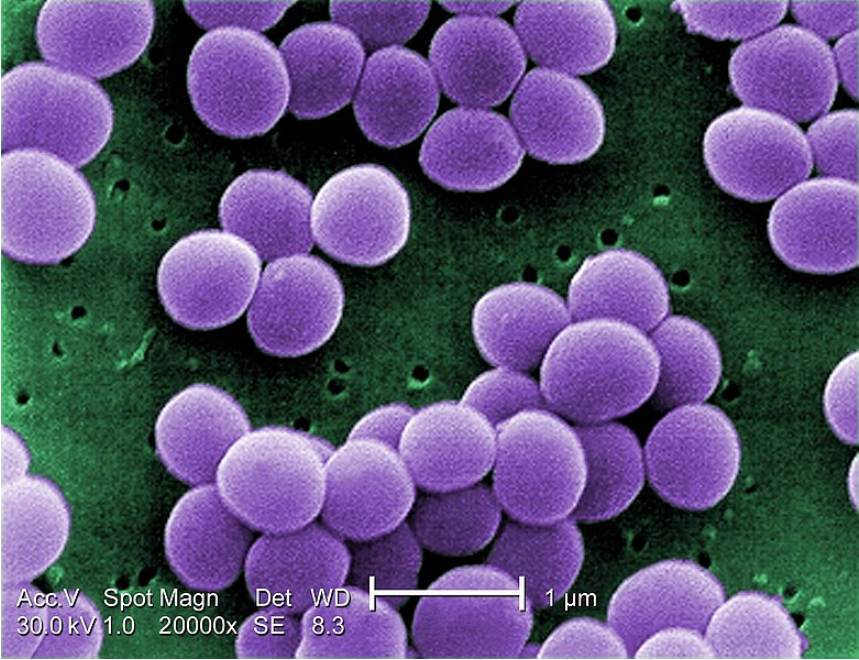 Fig.1 Scanning electron micrograph of S. aureus.
Production and Mechanisms of SEA
SEA production occurs during the logarithmic growth phase of S. aureus under the control of chromosomes. Various factors, including pH, temperature, atmospheric conditions, water activity, and the existence of other microorganisms intensively regulate it. When enterotoxigenic staphylococci proliferate in food up to 106 cfug-1, SEA can be produced and accumulated. In most food poisoning outbreak cases, enterotoxigenic staphylococci counts up to 108 cfug-1 in food, and SEs levels are detected to reach 1-5 μg g-1. However, in particularly sensitive individuals, 0.1-1 μg SEs are sufficient to cause illness.
The mechanism of SEA action in organisms is associated with massive T-cell activation, and the mode is supposed to include triggering cytokine release and cell death via apoptosis, leading to potentially toxic shock syndrome which can be lethal. SEA is reported to possess two binding sites for MHC-II, a common feature shared by SEs except for SEB and SEC. One of the sites binds to the α-chain of MHC-II, which is responsible for bindings with low affinity. In contrast, the other site depends on Zn2+, which is responsible for bindings with high affinity. Previous studies have demonstrated that SEs with two binding sites with MHC exhibit higher toxicity of 10-1000-fold than those possessing only one low-affinity binding site. Including SEA, SEs are resistant to proteolytic enzymes (e.g., trypsin and pepsin), which enables them to reach the site of action by passing through the digestive tract, causing adverse health effects, including symptoms of nausea, diarrhea, vomiting, and cramps.
Aptamers Targeting SEA
Aptamers are oligomers of artificial nucleic acid sequences or peptides with the ability to bind specific target molecules at a wide range of affinity. They have been extensively utilized in biological research and medical tests to serve as therapeutic agents, drug delivery, or controlled drug release systems, and used for detecting molecular markers of diseases and infections. Aptamers targeting SEA have been designed and studied to detect S. aureus, which is expected to be a new molecular recognition element to develop innovative biosensors for SEA detections. It holds potential in the application in medical and food safety areas.
Creative Biolabs provides a broad spectrum of products related to SEA, mainly including aptamers. We also offer customized services for other SEA-specific products according to your individualized requirements and needs.


 INQUIRY
 Datasheet