
Creative Biolabs is offering the most comprehensive services for antibody development projects. With strict regulation and effective execution, we are dedicated to providing the most valuable solutions to complete your projects.
HighlightsCreative Biolabs is offering the most comprehensive services for antibody development projects. With strict regulation and effective execution, we are dedicated to providing the most valuable solutions to complete your projects.
HighlightsCreative Biolabs has established a broad range of platforms for developing novel antibodies or equivalents. These cutting-edge technologies enable our scientists to meet your demands from different aspects and tailor the most appropriate solution that contributes to the success of your projects.
HighlightsWith deep understanding in antibody-related realms and extensive project experience, Creative Biolabs offers a variety of references to help you learn more about our capacities and achievements, including infographic, flyer, case study, peer-reviewed publications, and all kinds of knowledge that can assist your projects. You are also welcome to contact us directly for more specific solutions.
HighlightsGet a real taste of Creative Biolabs, one of the most professional custom service providers in the world. We are committed to providing highly customized comprehensive solutions with the best quality to advance your projects.
HighlightsMonoclonal antibodies are ideal for targeting diverse antigens due to their exceptional specificity and affinity. Creative Biolabs harnesses the robust rat hybridoma technology, providing clients with custom-made, high-quality antibodies tailored to their unique research and development needs. This service leverages a refined approach to antibody generation.
The rat hybridoma system presents a valuable methodology within biomedical research. Initially, hybridoma technology centered on mouse antigens. However, the field's advancement has enabled the effective development of monoclonal antibodies against antigens from various species. A pivotal moment was the creation of the rat myeloma cell line IR983 by scientists in Belgium. This breakthrough facilitated the generation of the first rat monoclonal antibodies. Rat immunoglobulins possess well-defined physicochemical and biological properties. Compared to the commonly employed mouse antibodies, rat antibodies offer distinct advantages, particularly in minimizing background cross-reaction issues during immune detection of antigens originating from a mouse background. Creative Biolabs has developed a proprietary hybridoma-generation platform. This platform enables the efficient development of rat monoclonal antibodies with high affinity and specificity.
Our rat monoclonal antibody platform allows us to offer the most comprehensive one-stop custom antibody development services in the industry. Our approach integrates advanced techniques with extensive expertise to ensure project success.
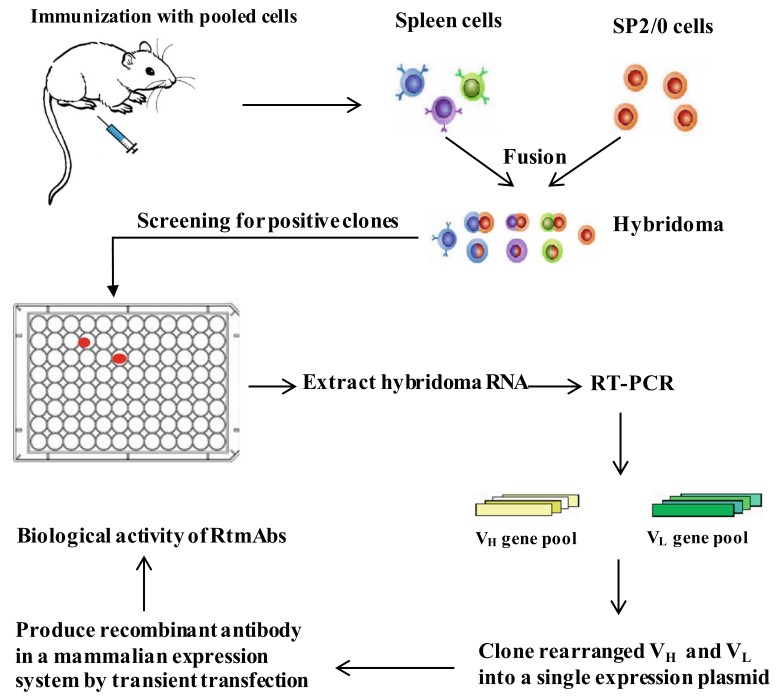 Fig.1 The schematic representation of a rapid high-throughput selection method to recombinant RtmAbs.1
We design and implement immunization programs that are specifically customized to meet each customer's unique needs. To elicit a strong immune response, we employ a variety of adjuvants, including Freund's complete and incomplete adjuvants, as well as more specialized options like those based on nanoparticles or TLR agonists. We offer a range of immunization routes, including subcutaneous, intraperitoneal, and intramuscular injections, allowing for flexibility in antigen delivery. Immunization frequency is carefully optimized, typically involving a primary immunization followed by several booster injections at predetermined intervals, often bi-weekly or tri-weekly, to achieve optimal antibody titers.
Our team employs state-of-the-art cell fusion technology to maximize the efficiency of hybridoma formation. While chemical fusion using polyethylene glycol (PEG) remains a standard, we also utilize electrofusion, a technique that applies electrical fields to create transient pores in cell membranes, thereby promoting cell fusion. Electrofusion often yields higher fusion rates and improved hybridoma viability compared to traditional chemical methods. We optimize fusion parameters, such as PEG concentration, electrical field strength, and pulse duration, to achieve the highest possible fusion efficiency and minimize cell damage.
To ensure the selection of hybridoma cells producing antibodies with the desired specificity, we employ a variety of screening methods. ELISA is a primary screening tool, offering high throughput and sensitivity for detecting antigen-specific antibodies in hybridoma supernatants. For applications requiring functional antibodies, we utilize cell-based assays such as flow cytometry, which allows us to identify clones that bind to cell surface antigens. ICC and IHC are used to screen for antibodies that recognize target antigens in tissue sections. Each screening method possesses distinct characteristics; ELISA provides rapid quantification, flow cytometry enables assessment of binding to live cells, and ICC/IHC reveals tissue distribution.
We employ stringent cloning and subcloning procedures to guarantee the monoclonality of the generated hybridoma cell lines. Limiting dilution is a standard technique, involving the serial dilution of hybridoma cells to a concentration where each well of a microplate receives, on average, less than one cell. This process isolates single cells, ensuring that all progeny cells originate from a single parent and therefore produce identical antibodies. We perform multiple rounds of subcloning to enhance stability and confirm monoclonality, with each round followed by rigorous testing to verify antibody specificity and production.
We offer both in vitro and in vivo production strategies. In vitro production involves culturing hybridoma cells in bioreactors, with scales ranging from laboratory flasks to large-scale fermenters, allowing for the generation of gram quantities of antibodies. In vivo production, or ascites generation, involves injecting hybridoma cells into the peritoneal cavity of mice, where they produce antibody-rich fluid. For antibody purification, we utilize a range of techniques, including Protein A/G affinity chromatography, which selectively binds to the Fc region of antibodies, yielding high-purity products. Ion-exchange chromatography and size-exclusion chromatography are used for further purification and to remove any remaining contaminants.
We adhere to rigorous quality control procedures to ensure the integrity and performance of both the hybridoma cell lines and the antibodies we produce. Cell viability is assessed using methods such as trypan blue exclusion or flow cytometry to ensure healthy cultures. Antibody specificity is confirmed through assays like ELISA, Western blotting, and immunohistochemistry, verifying binding to the target antigen and minimal cross-reactivity. Antibody purity is evaluated using techniques such as SDS-PAGE and HPLC, with typical purity levels exceeding 95%.
We recognize that some projects require highly specialized antibodies. We offer a range of customization options, including the selection of specific antibody isotypes (e.g., IgG1, IgG2a) to tailor effector functions. We can also incorporate specific tags or labels, such as biotin or fluorescent dyes, to facilitate downstream detection and analysis. Antibody fragmentation (e.g., Fab, F(ab')2) and antibody engineering services are available to modify antibody properties, such as valency or affinity.
|
Rat monoclonal antibodies, generated through our services, find wide applications. They serve as invaluable tools in research, including flow cytometry, ELISA, and Western blotting. In diagnostics, these antibodies are crucial for developing kits and assays for accurate disease detection. Furthermore, they play a significant role in therapeutics, driving the development of antibody-based drugs for treating various diseases. They also have a pivotal role in drug discovery, aiding in target identification and the creation of antibody-drug conjugates.
The client provided the peptide sequence, we were contracted to generate monoclonal antibodies. The project was divided into the following stages, namely peptide synthesis and biotin conjugation, rat immunization, then cell fusion, hybridoma screening and subcloning, expansion of the suitable hybridoma candidates, and antibody production.
The antibody purity was determined by SDS-PAGE respectively and the antibody integrity was good.
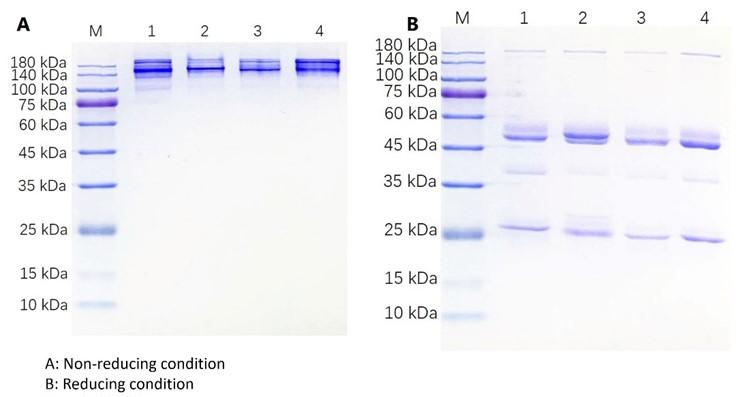 Fig.2 PAGE analysis of four purified antibodies (Lane 1-4).
The QC ELISA results.
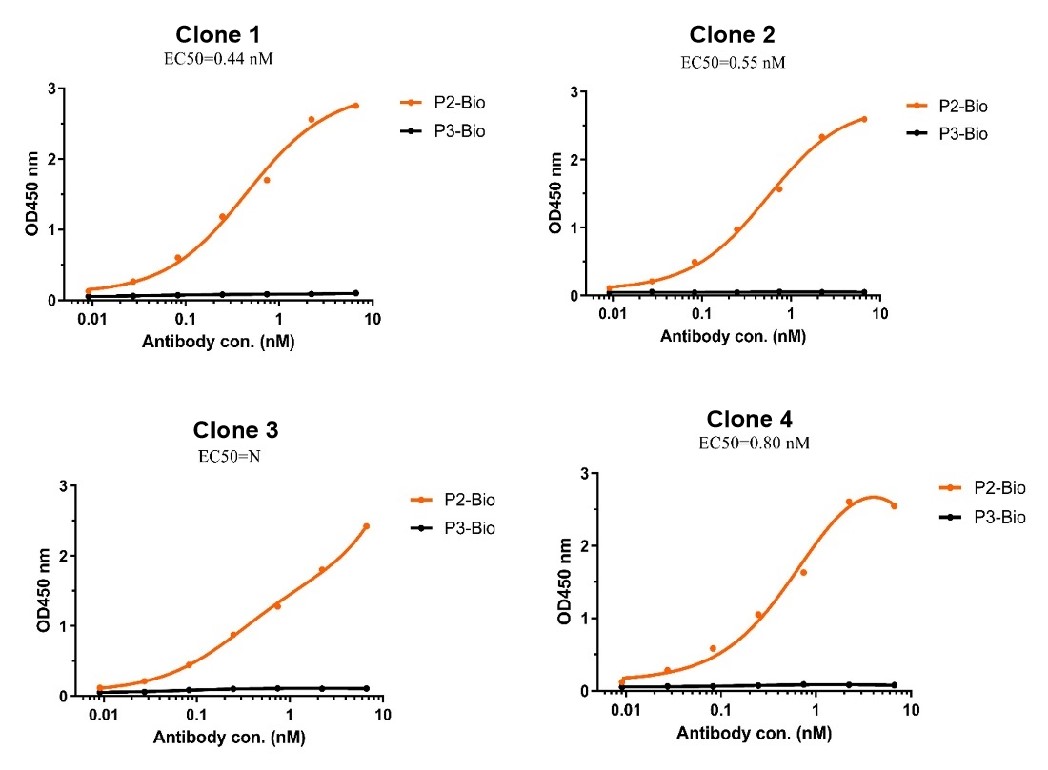 Fig.3 Affinity measurement of four clones.
A: Rat hybridomas often exhibit reduced cross-reactivity with mouse antigens, which is particularly beneficial when developing antibodies for use in mouse models or for targeting highly conserved proteins. Additionally, rats can sometimes mount a more robust immune response to certain antigens, leading to the generation of higher-affinity antibodies and a greater diversity of antibody clones.
A: We can generate rat hybridomas against a wide variety of antigens, including proteins, peptides, carbohydrates, and small molecules. We have extensive experience working with both soluble and membrane-bound antigens, as well as challenging targets such as post-translationally modified proteins. Our antigen preparation service ensures optimal immunogenicity.
A: Yes, we have extensive experience in generating antibodies against challenging targets. For membrane proteins, we employ specialized immunization techniques, such as using cell-based immunogens or liposome-encapsulated antigens. For small molecules, we utilize carrier protein conjugation strategies to enhance immunogenicity. Our expertise allows us to overcome the difficulties associated with these complex targets.
A: Yes, a comprehensive suite of post-antibody generation services is available here. These include antibody sequencing to determine the variable region sequences, antibody humanization to reduce immunogenicity for therapeutic applications, and antibody engineering (e.g., Fc modification, Fab fragment generation) to enhance antibody properties or create novel formats.
Creative Biolabs has extensive experience with case studies in hybridoma technology services and we welcome you to discuss your project difficulties and solutions at any time. Please feel free to contact us.
Reference
All listed services and products are For Research Use Only. Do Not use in any diagnostic or therapeutic applications.








