Creative Biolabs is offering the most comprehensive services for antibody development projects. With strict regulation and effective execution, we are dedicated to providing the most valuable solutions to complete your projects.
HighlightsCreative Biolabs is offering the most comprehensive services for antibody development projects. With strict regulation and effective execution, we are dedicated to providing the most valuable solutions to complete your projects.
HighlightsCreative Biolabs has established a broad range of platforms for developing novel antibodies or equivalents. These cutting-edge technologies enable our scientists to meet your demands from different aspects and tailor the most appropriate solution that contributes to the success of your projects.
HighlightsWith deep understanding in antibody-related realms and extensive project experience, Creative Biolabs offers a variety of references to help you learn more about our capacities and achievements, including infographic, flyer, case study, peer-reviewed publications, and all kinds of knowledge that can assist your projects. You are also welcome to contact us directly for more specific solutions.
HighlightsGet a real taste of Creative Biolabs, one of the most professional custom service providers in the world. We are committed to providing highly customized comprehensive solutions with the best quality to advance your projects.
HighlightsResearchers at Creative Biolabs have substantial expertise in developing anti-small molecule hybridomas, with a high success rate and guaranteed positive clones. We are dedicated to project success through comprehensive hybridoma development plans. Leveraging our knowledge, we have generated diverse antibodies targeting small molecules and heavy metals. We are confident our services and products will offer significant advantages and anticipate developing a customized strategy for your specific needs.
Small molecules, due to their limited size, typically lack the immunogenicity needed to trigger a robust immune response. Consequently, generating antibodies against them requires a specialized approach. Hybridoma technology offers a proven method for producing monoclonal antibodies (mAbs) with high specificity and affinity. This process involves conjugating the small molecule, or hapten, to a larger carrier protein to elicit an immune response. The resulting hybridomas, formed by fusing antibody-producing B cells with immortal myeloma cells, provide a continuous source of highly specific antibodies crucial for various applications.
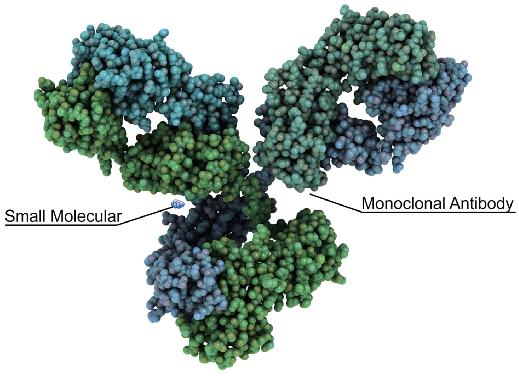 Fig.1 Comparing the size of small molecules and mAb.
We offer comprehensive custom services for generating anti-small molecule hybridomas, meticulously tailored to your specific project requirements. Our services encompass the entire workflow, beginning with antigen design and synthesis, where we carefully select carrier molecules, optimize conjugation strategies, and fine-tune spacer lengths to ensure optimal antibody response. We then proceed with animal immunization, hybridoma generation through cell fusion, and rigorous screening and selection of high-affinity antibody-secreting clones. Finally, we provide stable hybridoma cell lines and purified antibodies, delivered with detailed characterization data. Our commitment is to provide a seamless and efficient process, resulting in the generation of high-quality, application-specific antibodies.
Small molecules typically exhibit low immunogenicity due to their small size, making them poor immunogens. To elicit an immune response against small molecules, they must be conjugated to a larger carrier molecule such as keyhole limpet hemocyanin (KLH), bovine serum albumin (BSA), ovalbumin (OVA), or chicken gamma globulin (CGG). However, conjugating the small molecule to the carrier protein and then producing a strong immune response specific to the small molecule rather than the carrier protein or linker can be difficult.
Creative Biolabs recommends evaluating several immunogenic factors of the small molecule, including its chemical structure, conjugation methodologies, cross-linking to the protein carrier, the hapten's orientation on the carrier protein, and the types of linkers utilized. Furthermore, antigen presentation should mimic the orientation observed in the intended assay. We provide tailored immunization approaches to improve the immune response directed at the small molecule, integrating suitable adjuvants, immunization protocols, and timings.
Antibodies specific to small molecules are extensively employed in various fields, including environmental monitoring and food safety, for the detection of compounds such as antibiotics, pesticides, toxins, pharmaceuticals, chemicals, lipids, vitamins, and amino acids. While these molecules are typically analyzed using physicochemical techniques like chromatography or coupled chromatography-mass spectrometry, which require expensive resources and specialized personnel with interdisciplinary expertise, anti-small molecule antibodies offer a cost-effective and highly sensitive alternative for their detection, visualization, and quantification.
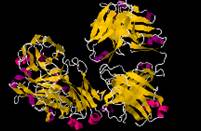
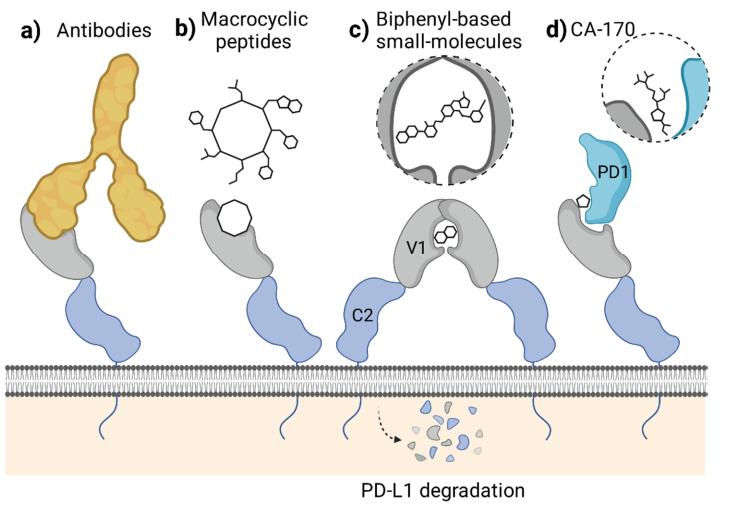 Fig.2 Mechanisms of PD-1/PD-L1 blockade attributed to different classes of molecules targeting the extracellular domain of PD-L1.1
In classical terminology, immune checkpoint blockade entails a molecule binding to a specific immunoreceptor, functioning as its antagonist, and thereby hindering the interaction with a natural ligand. Consequently, this disrupts the formation and physiological role of the checkpoint. This mechanism is exemplified by blocking antibodies, such as anti-PD-1 and anti-PD-L1 therapeutic antibodies, which effectively compete for binding sites on either PD-L1 or PD-1 proteins. In this article, the mechanisms underlying PD-1/PD-L1 blockade are attributed to various types of molecules that specifically target the extracellular domain of PD-L1. These mechanisms involve blocking the PD-L1 surface with antibodies or macrocyclic peptides, which effectively counteract the binding of PD-1. Additionally, small molecules can induce PD-L1 dimerization, resulting in the loss of PD-L1 from the cell surface due to either blockade of protein maturation or internalization processes.
Creative Biolabs offers personalized services for developing custom anti-small molecule monoclonal antibodies (mAbs) using hybridoma technology. Additionally, we provide competitively ELISA-validated hapten-carrier conjugates and antibodies.
A: Our service is designed to generate antibodies against a wide range of small molecules, including but not limited to, pharmaceuticals, environmental pollutants, toxins, metabolites, and various haptens. We have extensive experience in designing and executing strategies for diverse chemical structures, ensuring successful antibody generation even for challenging targets. Our knowledge allows us to tackle projects with unique small molecule characteristics.
A: We employ rigorous screening and selection processes to guarantee high specificity. This includes using various ELISA methods, affinity chromatography, and other advanced techniques to identify and isolate hybridoma clones that produce antibodies with minimal cross-reactivity. Furthermore, we can perform epitope mapping and competitive binding assays to characterize antibody specificity.
A: We utilize a variety of carrier proteins, such as KLH, BSA, and OVA, carefully selected based on the specific small molecule and the desired immune response. KLH is often preferred for its strong immunogenicity, while BSA and OVA are suitable for applications requiring lower background signals. Our selection process considers factors like molecular weight, solubility, and the number of conjugation sites.
A: Several critical factors influence conjugate design, including the choice of carrier protein, the conjugation chemistry (e.g., EDC, glutaraldehyde), the spacer length between the hapten and carrier, and the conjugation ratio. We optimize these parameters to maximize the immune response and ensure the resulting antibodies have high affinity and specificity for the small molecule.
A: We adhere to strict quality control standards throughout the entire process. This involves regular testing of cell cultures for viability and contamination, monitoring antibody titer and affinity, and performing ELISA and other assays to ensure the final product meets the required specifications. We also provide comprehensive documentation, including batch records and quality control reports.
A: Upon project completion, clients receive a detailed final report, purified antibodies, and characterized hybridoma cell lines. The report includes data on antibody specificity, affinity, and titer, along with detailed protocols and any relevant information. We can also supply long-term preservation of the hybridoma cell lines for future antibody production needs.
Leveraging our interdisciplinary proficiency in chemistry and biology ensures the creation and synthesis of optimal small molecule-carrier conjugates. As trailblazers in antibody development, Creative Biolabs is poised to produce anti-small molecule hybridomas and facilitate Bulk Antibody Production for clients globally. For further details, please contact us.
All listed services and products are For Research Use Only. Do Not use in any diagnostic or therapeutic applications.