Product List Background CD40LG Aptamer Analysis
Background
Creative Biolabs provides an extensive selection of top-notch aptamers targeting CD40LG to help researchers improve their experiments and research. We uphold our standards for excellence and are dedicated to supporting your research in biology.
Introduction
The CD40LG gene produces the protein CD40 ligand and is a member of the tumor necrosis factor (TNF) gene superfamily. CD40LG is mainly expressed in activated T cells and plays a vital role in regulating the activation and differentiation of B cells and the maturation of dendritic cells. CD40, found on the surface of B cells, can be bound by CD40LG. B cells produce antibodies, which help the body fight infection. When the CD40 receptor binds with CD40LG, it initiates the B cell to make different types of antibodies, such as immunoglobulin G (IgG), immunoglobulin A (IgA), and immunoglobulin E (IgE). Additionally, CD40LG is essential for T cell communication with other immune system cells and is crucial in differentiating T cells.
CD40-CD40LG is a pair of co-stimulatory molecules. After interacting on the cell surface, the intracellular domain of CD40 recruits TNFR-associated factor (TRAF) to promote intracellular signal transduction, activating different signaling pathways and participating in the body's immune response. It has been identified that it can regulate a wide range of cellular responses, including proliferation, differentiation, and cell death-binding of CD40LG to CD40 stimulates APCs (antigen-presenting cells) and leads to several downstream effects. For certain cell types, CD40 activates distinct gene expression patterns. The specific composition of the signaling complex depends mainly on the cell type, triggering various pathways, including the NF-kB, MAPK, Jak3/STAT3, and PI3K/Akt pathways.
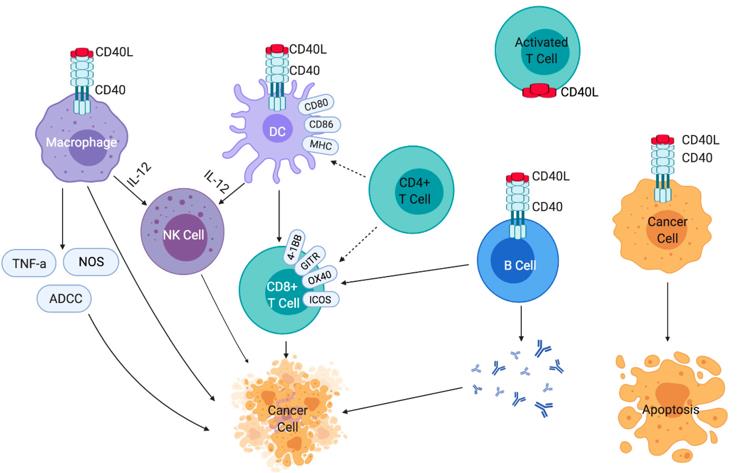 Fig.1 Effects of CD40-CD40LG signaling.1
CD40LG Gene Expression in Systemic Lupus Erythematosus
Systemic lupus erythematosus (SLE) is an autoimmune disease that affects the body's connective tissues over a long period due to the immune system's attack on its tissues. It is more common in women between the ages of 10 and 40, with the incidence rate in women being approximately nine times higher than in men. T cells in individuals with lupus show heightened levels of CD40LG expression encoded on the X chromosome. Serum levels of soluble CD40LG are elevated in both human and murine lupus, and there is an overexpression of CD40LG on T lymphocytes in both cases. Overexpression of proteins or activation of genes can occur due to the demethylation or hypomethylation of gene-specific DNA. Reactivating the silent X-chromosome CD40LG gene on T cells through DNA demethylation can result in overstimulation of B cells, leading to excessive production of autoantibodies.
CD40LG Aptamer Analysis
Creative Biolabs provides aptamers crafted with a distinct affinity for the CD40LG protein, celebrated for their accurate binding characteristics. These aptamers are pivotal in driving research and innovation in therapeutic and diagnostic approaches utilizing aptamers. Furthermore, we offer functional assays for anti-CD40LG aptamers to more effectively meet our clients' needs.
Evaluating CD40LG aptamer assays comprises several stages, starting with the selection of aptamers directed at anti-CD40LG antibodies using SELEX technology. Flow cytometry can be utilized to ascertain the Kd of the anti-CD40LG aptamer to assess binding affinity and specificity. Additionally, the stability of RNA aptamers can be examined in serum. The use of CD40LG aptamers in the biosensor-mediated detection of soluble CD40LG extends their applicability to a wide range of diseases.
Creative Biolabs is dedicated to maintaining exceptional quality standards and spearheading innovations in its suite of aptamer offerings. Utilizing cutting-edge technologies and rigorous quality control protocols, we provide reliable and effective anti-CD40LG aptamers customized to address the specific needs of our clients.
Reference
-
Djureinovic, Dijana, Meina Wang, and Harriet M. Kluger. "Agonistic CD40 antibodies in cancer treatment." Cancers 13.6 (2021): 1302. Distributed under Open Access license CC BY 4.0, without modification.


 INQUIRY
 Datasheet