Product List Background CD44 Functional Service
Background
Creative Biolabs provides a wide range of validated CD44 antibodies and assists researchers in experiments and research. We are honored to be able to help you with your projects.
Introduction
CD44 antigen is a glycoprotein on the cell surface that participates in cell-cell interaction, adhesion, and migration. The CD44 gene in humans is found on the short arm of chromosome 11, spanning approximately 50 kb in length. It consists of 20 highly conserved exons, each 70-210 bp long, separated by introns of varying lengths.
The main functions of CD44 protein include:
-
Mediating lymphocytes to pass through the blood vessel wall and return to the lymphatic tissue (through the binding of lymphocytes to tall columnar endothelial cells in the post-capillary venules).
-
Binding to matrix molecules such as hyaluronic acid and laminin in the extracellular matrix.
-
Participating in the activation process of lymphocytes.
-
Participating in cell migration.
The ability to attach to cytoskeletal proteins and contribute to the development of pseudopodia is present in it.
CD44-Mediated Signaling Pathways
CD44 can mediate multiple signaling pathways. The pathways consist of protein kinases, alterations in the cytoskeleton, proteases, intracellular pathways, and transcription factors. CD44 can promote cancer cell division, proliferation, invasion, angiogenesis, and metabolic shift. CD44 can activate protein kinases through multiple mechanisms, while CD44 lacks kinase activity. Activated CD44 can also play a role in mediating cytoskeletal changes. ERMs and adaptor proteins binding to the cytoplasmic domain of CD44 lead to alterations in the cytoskeletal structure and cellular signaling in tumor cells. Studies have shown that CD44 expression and isoforms can regulate the activities of multiple cells signaling components, which include Hippo signaling, β-catenin, TGF-β, imprint, and matrix metalloproteinases.
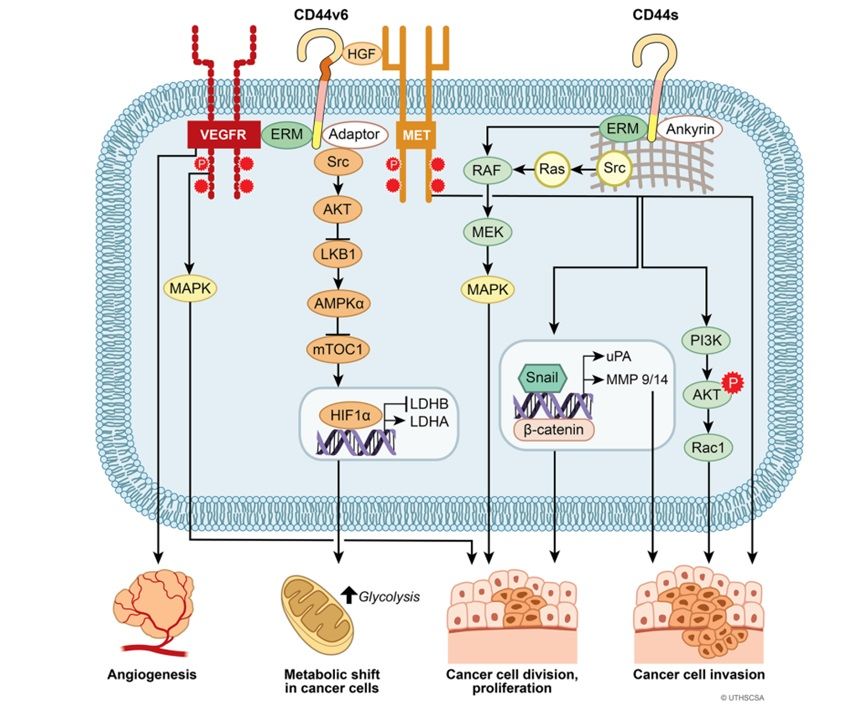 Fig.1 CD44-mediated signaling pathways.1, 3
CD44 and Tumor
There have been a lot of reports on the relationship between CD44 and tumor infiltration and metastasis. A predominant isoform, CD44S, is ubiquitous in studying various human malignant tumors. The positive expression rate of another isoform, CD44V, varies in malignant tumor tissues. Still, those with positive expression are more likely to have vascular infiltration and distant metastasis, having a short tumor-free survival period, low survival rate, and poor prognosis.
Creative Biolabs provides various CD44 products to help you improve your research and experiments. Our dedication to quality ensures reliable results, empowering researchers to produce publication-grade data.
CD44 Functional Service
Creative Biolabs provides anti-CD44 aptamers esteemed for their specific binding affinity to human CD44 protein. These aptamers have become essential tools in the broad research and innovation of aptamer-derived therapeutic and diagnostic applications.
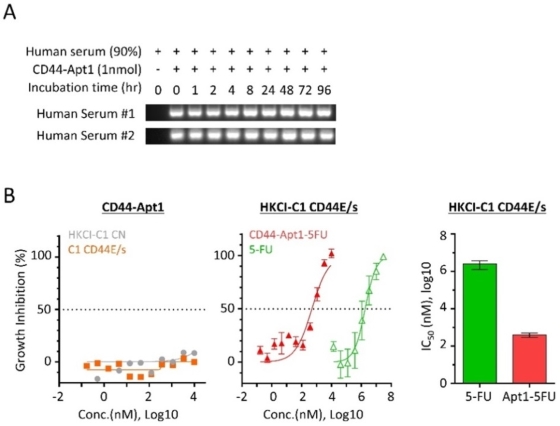 Fig.2 Stability in serum and drug delivery potential of anti-CD44 aptamer.2, 3
Hepatocellular carcinoma (HCC), the leading liver cancer subtype with high mortality rates, shows significant upregulation of CD44E and CD44s isoforms, which enhance proliferation and migration. Researchers examined these isoforms in HCC tumors, cirrhotic, and normal livers using qPCR. Through loss-gain cell-SELEX and sequencing, they identified a CD44E/s-targeting aptamer, which exhibited high affinity for CD44E and CD44s without binding the hyaluronic acid domain. Flow cytometry confirmed its selective binding to CD44-positive cells, while confocal imaging demonstrated effective cytoplasmic localization. When combined with 5-FU, CD44-Apt1 enhanced drug delivery to HCC cells, significantly increasing toxicity. Non-toxic in vitro and in vivo, CD44 aptamer efficiently targeted tumor xenografts, highlighting its potential as a nanoprobe for anti-cancer drug delivery.
Creative Biolabs offers specialized services focused on the functional characterization of CD44, encompassing the study of interaction dynamics and comprehensive functional assessments. Tailored to the specific needs of our clients, these services are crucial for progressing both clinical and scientific research efforts.
References
-
Chen, Chen, et al. "The biology and role of CD44 in cancer progression: therapeutic implications." Journal of hematology & oncology 11 (2018): 1-23.
-
Lo, Cario Wing-Sze, et al. "Development of CD44E/s dual-targeting DNA aptamer as nanoprobe to deliver treatment in hepatocellular carcinoma." Nanotheranostics 6.2 (2022): 161.
-
Distributed under Open Access license CC BY 4.0, without modification.



 INQUIRY
 Datasheet