Product List Background MAPK1 Aptamer Analysis
Background
Introduction of MAPK1
Mitogen-activated protein kinases (MAPKs), called extracellular signal-regulated kinases (ERKs), are vital integrators of diverse biochemical signals, modulating cellular processes such as differentiation, proliferation, development, and transcriptional regulation. Activation of MAPKs involves phosphorylation by upstream kinases, after which they translocate to the nucleus, where they phosphorylate nuclear targets. Studies indicate that MAPKs can act as transcriptional regulators independently of their kinase activity. MAPK1/ERK2 and MAPK3/ERK1 are pivotal in the MAPK/ERK cascade, responding to signals from activated receptors like KIT and KITLG/SCF. This signaling cascade governs cell adhesion, survival, differentiation, and growth by modulating transcription, translation, and cytoskeletal dynamics. Additionally, MAPKs influence meiosis, mitosis, and postmitotic functions by phosphorylating numerous substrates across various cellular compartments, including the nucleus, cytosol, and organelles like endosomes and Golgi apparatus, impacting processes such as lysosome processing and mitotic Golgi fragmentation.
MAPK Signaling Pathways
MAPK signaling comprises numerous evolutionarily conserved pathways critical to nearly all metazoan organisms. These signal transduction molecules regulate essential functions in host and parasite cells, including differentiation, proliferation, and apoptosis. For example, the intracellular parasite Toxoplasma gondii delivers the protein GRA24 into host cells, interacting with the host protein p38αMAPK (MAPK14). This interaction activates and translocates the host kinase to the nucleus, triggering an inflammatory response. Three family members regulate MAPK signaling: MAPKKK/MEKK/MKKK, MAPKK/MEK/MKK, and MAPK, forming three branches: ERK1/2, JNK1/2/3, and p38 MAPK. Activation follows the cascade MAPKKK → MAPKK → MAPK. MEK and ERK1/2 play roles in cell survival, proliferation, and differentiation by phosphorylating various targets, with ERK1/2 capable of activating transcription factors in the nucleus.
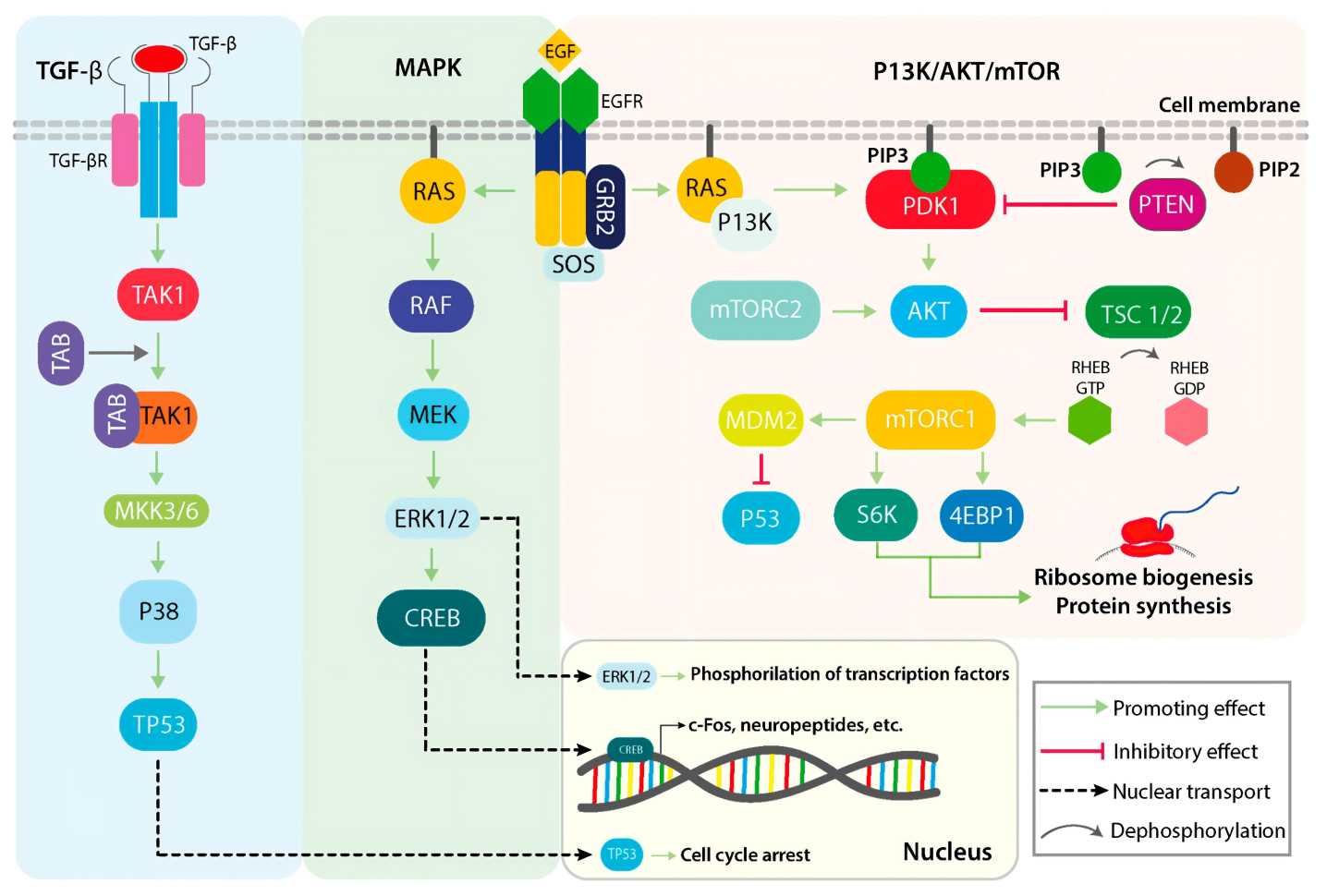 Fig. 1 MAPK signaling cascades.1,3
Utilizations of MAPK1-Related Products
-
Pathway-specific inhibition of MAPKs by RNA aptamers
Many intracellular signaling pathways in eukaryotic cells utilize closely related MAPK paralogs as critical components. Despite the potential of targeting MAPKs to modulate cellular responses, developing inhibitors that specifically affect MAPK-related pathways has been challenging. Employing an RNA combinatorial approach, researchers have identified RNA aptamers that inhibit the in vitro phosphorylation activity of ERK2. These inhibitors selectively impede ERK1 and ERK2 phosphorylation while sparing Jun N-terminal kinase and p38 MAPKs. Kinetic studies have revealed that these inhibitors act at high picomolar concentrations by sterically blocking substrate and ATP binding. Notably, a compact RNA structural domain is identified as the inhibition site. These RNA reagents can selectively target MAPKs within a single signaling pathway, offering valuable tools for analyzing and differentiating homologous effectors in distinct signaling responses.
Creative Biolabs offers a wide array of products targeting MAPK1, encompassing assay kits, antibodies, and aptamers tailored for accurate detection. Furthermore, we provide personalized solutions, including custom bispecific antibodies crafted to address unique research requirements related to MAPK1.
MAPK1 Aptamer Analysis
Creative Biolabs provides a wide range of MAPK1-related products, including anti-MAPK1 aptamer. These products can effectively help to carry out your experiments and thus play an important role in your research.
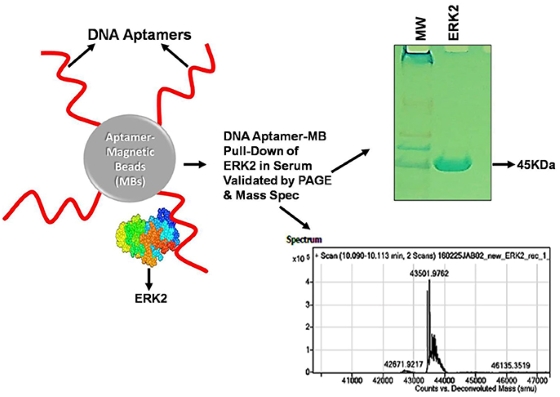 Fig. 2 Pull-down assay of ERK2 aptamer coated magnetic beads.2,3
Choosing aptamers in the intended environment and conditions helps them to perform their best. Aptamers for cancer biomarkers (ERK2) screened in human diluted serum are able to perform detection and treatment in the serum environment with high affinity and specificity. ERK2 aptamer pull-down assays were conducted in serum using aptamer-coated magnetic beads (MBs), followed by analysis through gel electrophoresis and mass spectrometry. Anti-ERK2 aptamers were attached to MBs, either by covalent or streptavidin-biotin bonds, and then captured free ERK2 in serum samples. The results showed that the mass spectrometry signature had almost no interfering signals from serum, indicating that the aptamers have strong specificity.2,3
Creative Biolabs offers MAPK1 aptamer analysis service, including SELEX service and other tailored functional services for our esteemed clients engaged in clinical and scientific research.
References
-
Braicu, Cornelia, et al. "A comprehensive review on MAPK: a promising therapeutic target in cancer." Cancers 11.10 (2019): 1618.
-
Kalra, Priya, et al. "Simple methods and rational design for enhancing aptamer sensitivity and specificity." Frontiers in Molecular Biosciences 5 (2018): 41.
-
Distributed under Open Access license CC BY 4.0, without modification.



 INQUIRY
 Datasheet