Introduction What Can We Offer? Workflow Published Data Why Choose Us? Applications FAQs Featured Services Featured Products
Creative Biolabs provides comprehensive, end-to-end development services for aptamer-drug conjugates (ApDCs), helping pharmaceutical and biotech partners overcome the limitations of traditional antibody-drug conjugates. We solve critical challenges in solid tumor penetration, manufacturing scalability, and systemic toxicity, delivering precision-engineered therapeutics from discovery to preclinical programs.
Contact our team to get an inquiry now!
Introduction of Aptamer-Drug Conjugates
ApDCs represent the next evolution in targeted oncology, often described as "chemical antibodies" equipped with a potent warhead. Unlike traditional antibody-drug conjugates (ADCs), which rely on large protein structures (~150 kDa), ApDCs utilize short, synthetic nucleic acid sequences (~15–30 kDa) to bind specific cell-surface markers with high affinity. This compact size allows them to serve as a "molecular GPS," guiding cytotoxic agents deep into the dense interstitial matrix of solid tumors that larger biologics frequently fail to penetrate.
Structurally, an ApDC consists of three critical components: the high-affinity aptamer ligand, a specialized linker, and the therapeutic payload. Because aptamers are chemically synthesized rather than biologically expressed, they offer exceptional advantages, including zero batch-to-batch variability, low immunogenicity, and the ability to tolerate harsh conjugation chemistries. By coupling these targeting ligands with advanced payloads, ranging from chemotherapeutics to gene-silencing siRNAs, ApDCs provide a versatile platform for delivering curative doses specifically to malignant cells while sparing healthy tissue.
What Is Our Service?
Aptamer-Drug Conjugate (ApDC) Development is our specialized platform for creating highly selective, chemically stable therapeutic assets. This service leverages the unique tertiary structure of aptamers as a molecular GPS to guide potent payloads directly to diseased tissue, bypassing the systemic toxicity associated with traditional chemotherapeutics. Our ApDC development is strategically categorized into 2 types:
 Fig.1 Structure of ApDC.
What Can We Offer?
Creative Biolabs offers a modular, one-stop solution for ApDC creation, ranging from high-throughput aptamer screening (SELEX) and linker optimization to chemical synthesis and biological validation, ensuring your candidate is ready for clinical translation.
Precision Aptamer Discovery
We utilize our advanced, high-efficiency Cell-SELEX platform to identify aptamers with picomolar affinity for your specific tumor antigens. If you already have a sequence, we optimize it via strategic truncation and sophisticated chemical modification (e.g., 2'-F, 2'-OMe, 2'-NH2) to ensure robust resistance to serum nucleases and improved binding thermodynamics.
Proprietary Linker Technology
The stability of the linker is the safety valve of the therapeutic. We design "smart" linkers, including acid-labile hydrazones, disulfide bonds, and enzyme-cleavable peptides (e.g., Val-Cit, Phe-Lys), that remain exceptionally stable in systemic circulation but facilitate the rapid, site-specific release of the payload instantly upon endosomal internalization or within the tumor microenvironment.
Advanced Conjugation Chemistry
We are payload-agnostic and experts in diverse bioconjugation strategies. Whether you need to conjugate hydrophobic small molecules, nucleotide analogs, or complex oligonucleotide therapeutics (siRNA, antisense oligos), our precise chemical synthesis ensures a strictly defined Drug-to-Aptamer Ratio (DAR), successfully eliminating the structural heterogeneity often seen in protein-based antibody conjugates.
Pharmacokinetic Tuning
We apply proven modification strategies (such as 40 kDa branched PEGylation, cholesterol-anchoring, and multimerization) to precisely control the renal filtration rate. This creates ApDCs with tunable circulation half-lives and enhanced biodistribution profiles tailored to your specific clinical indication and target tissue requirements.
Tailored Solutions by Therapeutic Indication
Our development platform is strategically engineered to address a broad spectrum of clinical needs. We provide bespoke ApDC design across diverse therapeutic areas, spanning high-precision oncology for solid and hematological malignancies, advanced immunomodulatory interventions for chronic inflammatory conditions, and novel anti-infective strategies for multidrug-resistant pathogens.
Regulatory-Ready Analytics
We provide more than just synthesis; we deliver complete validation packages. Every candidate is validated through rigorous SPR/BLI (binding kinetics), high-resolution LC-MS (composition confirmation), and comprehensive in vitro cytotoxicity assays (MTT/CCK-8/Annexin V) to systematically de-risk your program for successful submission to regulatory authorities and clinical entry.
Workflow
Workflow of ApDC Development
-
Required Starting Materials
-
Target Information
-
Payload Details
-
Project Goal
-
Targeted Aptamer Identification (Advanced SELEX)
-
Aptamer Optimization and Modification
-
Linker and Conjugation Chemistry Development
-
In Vitro Efficacy and Selectivity Profiling
-
Lead Candidate Nomination and Scaling
Discover How We Can Help - Request a Consultation!
Deliverables
As part of the Creative Biolabs ApDC Development Service, clients receive a comprehensive data package to support regulatory filings and preclinical advancement.
-
Final ApDC Product: Milligram-to-gram quantities of the nominated, purified Aptamer-Drug Conjugate.
-
Comprehensive Lab Report: Detailed documentation covering every stage of the process, including SELEX rounds, modification chemistries, and quality control checks.
-
Raw Data Files: Complete binding kinetics analysis (SPR data), mass spectrometry validation of conjugation, and HPLC purification chromatograms.
-
Functional Data Package: Comprehensive report on in vitro cytotoxicity, internalization rates, and stability assays.
-
Validated Protocols: Detailed step-by-step synthesis and quality control protocols for future scale-up and transfer.
Published Data
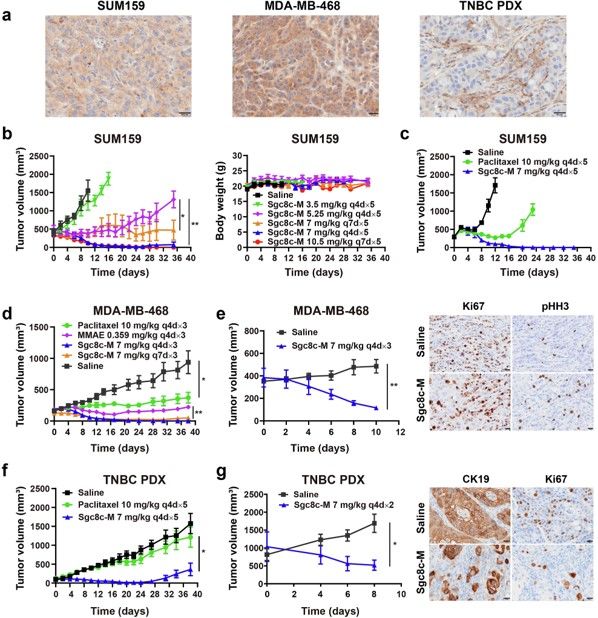 Fig.1 In vivo antitumor effect of Sgc8c-M in triple-negative breast cancer (TNBC).1
A compelling case study demonstrating the potential of ApDCs is the development of Sgc8c-MMAE, a PTK7-targeted conjugate. In this open-access research, scientists conjugated the potent antimitotic agent monomethyl auristatin E (MMAE) to the Sgc8c aptamer via a cleavable valine-citrulline linker. The resulting ApDC exhibited specific binding to PTK7-positive cancer cells and potent cytotoxicity in vitro. Crucially, in vivo studies demonstrated that Sgc8c-MMAE induced significant tumor regression in xenograft models with minimal systemic toxicity compared to free drug administration. The study highlights how ApDCs can achieve superior therapeutic indices by leveraging the "molecular GPS" effect of aptamers to deliver payloads precisely to the tumor site while sparing healthy tissues.
Why Choose Us?
-
Proprietary Linker Library: We offer a diverse library of "smart" linkers, including pH-sensitive hydrazones and protease-cleavable peptides, ensuring the drug is released exclusively within the target cell.
-
High-Fidelity Synthesis: Unlike biological production methods prone to batch variability, our chemical solid-phase synthesis guarantees 100% sequence fidelity and precise control over drug loading.
-
Scalable Manufacturing: We bridge the gap between discovery and commercialization with capabilities ranging from milligram-scale research batches to kilogram-scale production.
-
Advanced Pharmacokinetics: Our proprietary modification platform (PEGylation, lipid conjugation) allows for tunable serum half-life, solving the challenge of rapid renal clearance common to aptamers.
-
Payload Versatility: We possess the chemical expertise to conjugate a wide array of payloads, from traditional cytotoxins and radionuclides to complex gene-silencing siRNAs.
Applications of Aptamer-Drug Conjugates
-
Precision Oncology & Targeted Chemotherapy: By exploiting the high specificity of aptamers for tumor-associated antigens, ApDCs deliver potent cytotoxic agents specifically to malignant cells. This mechanism ensures maximal therapeutic impact while drastically reducing off-target effects and systemic chemotherapy complications such as neutropenia, cardiotoxicity, and hair loss.
-
Synergistic Gene Silencing Therapy: The platform facilitates the conjugation of aptamers with RNA interference (RNAi) molecules, such as siRNA or miRNA. This creates a dual-action therapeutic approach where the aptamer mediates cell-specific entry, followed by the precise silencing of oncogenic drivers or drug-resistance genes within the cytoplasm.
-
Targeted Immunomodulation: ApDCs can be engineered to deliver potent immune agonists, checkpoint inhibitors, or cytokines directly into the tumor microenvironment. This localized delivery effectively reactivates the host's immune system to recognize and destroy cancer cells with surgical precision, avoiding the inflammatory toxicities associated with systemic immunotherapy.
-
Selective Radiopharmaceutical Delivery: Aptamers serve as ideal vehicles for ferrying therapeutic radioactive isotopes to concentrated tumor sites. This application is highly effective for both targeted radiotherapy and high-contrast diagnostic imaging (PET/SPECT), ensuring lethal radiation is confined to the lesion while minimizing exposure to sensitive healthy organs.
FAQs
Q: How does the stability of ApDCs compare to traditional ADCs?
A: ApDCs exhibit superior chemical stability. As synthetic constructs, they are less prone to aggregation than biologics. Proprietary modifications (e.g., 2'-F, 2'-OMe) provide high nuclease resistance, ensuring payload delivery remains intact during systemic circulation.
Q: Can you conjugate highly hydrophobic drugs to aptamers?
A: Yes, we specialize in conjugating hydrophobic payloads. Aptamers are highly water-soluble due to their phosphate backbone, which can help solubilize hydrophobic drugs. We also employ specialized linkers and PEG spacers to maintain solubility and prevent aggregation of the final conjugate, ensuring optimal biodistribution.
Q: How do you address the rapid renal clearance of small aptamers?
A: Rapid renal filtration is a known characteristic of small nucleic acids. To extend circulation half-life, we routinely conjugate High Molecular Weight (HMW) polyethylene glycol (PEG) chains (e.g., 20 kDa or 40 kDa) or cholesterol moieties to the aptamer. This increases the hydrodynamic radius, reducing renal filtration and prolonging tumor exposure time.
Q: What types of linkers are available for ApDC development?
A: We offer both cleavable and non-cleavable linkers. Cleavable options include acid-labile linkers (triggered by low pH in endosomes), disulfide linkers (reduced in the cytosol), and enzyme-sensitive peptide linkers (cleaved by lysosomal proteases). Non-cleavable linkers are also available for applications where the entire aptamer-drug complex must remain intact until degradation.
Q: Can you develop ApDCs for targets other than cancer?
A: Absolutely. While oncology is the primary application, ApDCs are effective for any disease where specific cell-surface markers exist. We have experience developing conjugates for autoimmune diseases, infectious diseases (targeting viral proteins), and cardiovascular conditions, leveraging the versatility of the SELEX platform.
Q: Is it possible to conjugate multiple drug molecules to a single aptamer?
A: Yes, we can engineer high-loading ApDCs. By using branched linkers, dendrimers, or long DNA nanotrains, we can attach multiple drug molecules to a single aptamer ligand. This increases the drug payload delivered per binding event, significantly enhancing the therapeutic potency against resistant tumors.
Creative Biolabs is your trusted partner for next-generation therapeutic development, combining deep scientific expertise with scalable manufacturing. Contact us today to leverage our precision engineering and accelerate your aptamer-drug conjugate program from concept to clinic with confidence.
Featured Services
Featured Products
Reference
-
Su, Minhui, et al. "An aptamer-drug conjugate for promising cancer therapy with comprehensive evaluation from rodents to non-human primates." Signal Transduction and Targeted Therapy 10.1 (2025): 316. Distributed under Open Access license CC BY 4.0, without modification.
For Research Use Only.
Related Sections: