Introduction of Anticoagulant Aptamers
Coagulation is a complex process in which circulating cells and coagulation factors interface with tissue-based proteins to form insoluble clots at the site of vascular injury. Although the coagulation represents an advantageous response after localized vessel trauma, clot formation may also be undesirable in some cases, such as thrombogenesis, which is the cause of myocardial infarction and ischemic stroke. Aptamers are an emerging class of anticoagulation agents owing to their intrinsic properties. Aptamers are small single-stranded oligonucleotides that can bind to their target with high affinity and specificity. By leveraging systematic evolution of ligands by exponential enrichment (SELEX), the RNA aptamers targeting different coagulation cascade enzymes can be selected. These aptamers can reduce thrombin generation by inhibiting protein-protein interactions that are critical for coagulation cascade, thereby suppressing the formation of clot and displaying anticoagulant activity.
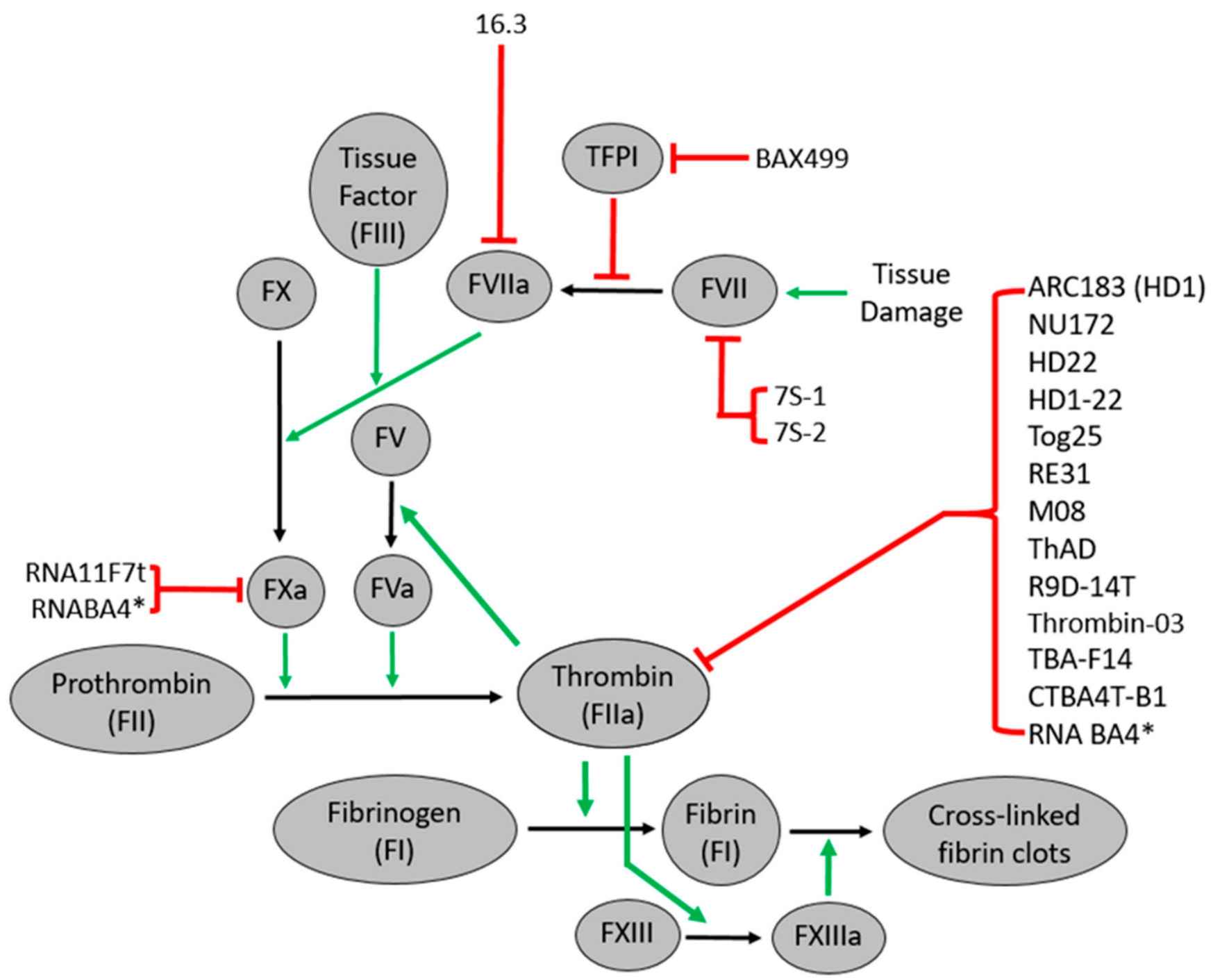 Fig. 1 Aptamers targeting coagulation factors.1, 2
Development of Anticoagulant Aptamers
Factor XIa (FIXa) is a serine protease that converts factor X to factor Xa by cleaving an arginine-isoleucine bond. It plays a critical role in tissue factor (TF)-mediated thrombin generation. FIXa is a promising target for the development of new anticoagulant drugs. Aptamers targeting FIXa have been indicated to inhibit clot formation and exhibit anticoagulant activity. However, some studies also showed individual anticoagulant aptamers are not able to achieve heparin-level anticoagulation in human blood. Interestingly, the combination of several aptamers targeting different individual coagulation enzymes may display potent anticoagulant activity as effectively as heparin. This is because it suppresses more than one step in the common pathway of coagulation. Besides, a single bivalent aptamer targeting two different coagulation enzymes has also attracted a lot of attention to anticoagulant development.
Aptamers as Reversible Antagonists of Coagulation
The aptamer-mediated anticoagulant activity can be easily reversed through sequence-specific oligonucleotide antidotes or universal antidotes. The sequence-specific oligonucleotide antidotes can bind to the aptamer sequence, which changes the conformation of aptamers and thus inhibits the function of aptamers. Alternatively, cationic universal antidotes can bind to the backbone of the aptamer through electrostatic interaction, thus suppressing the binding of aptamers to their targets and reversing aptamer activity. Antidote-mediated aptamer anticoagulant activity is very significant in clinical applications. In some cases such as surgery, anticoagulants may increase the rate of bleeding and thus increase patient mortality. Whereas antidote can reverse the anticoagulant activity of aptamer. In a clinical study, an aptamer-antidote pair targeting coagulation enzyme FIXa can inhibit clot formation during percutaneous coronary intervention and its antidote oligonucleotide can rapidly reverse the aptamer's anticoagulant activity to limit bleeding.
Aptamer Development Services at Creative Biolabs
Equipped with solid professional knowledge in aptamer development and state-of-the-art technical platforms, Creative Biolabs provides a full range of aptamer development services, including aptamer screening, validation, synthesis, modification, and characterization. We are devoted to delivering the best aptamer services to support your scientific research. If you are seeking a reliable partner for your aptamer research, please contact us for more details.
References
-
Liu, Max, Khalequz Zaman, and Yolanda M. Fortenberry. "Overview of the therapeutic potential of aptamers targeting coagulation factors." International Journal of Molecular Sciences 22.8 (2021): 3897.
-
under Open Access license CC BY 4.0, without modification
Related Product
Questions & Answer
A: Aptamers have multiple applications in coagulation research. They can be utilized as diagnostic tools to detect and quantify coagulation factors or proteins in patient samples. Aptamers can also be employed as therapeutic agents to modulate coagulation pathways by inhibiting or enhancing the activity of specific coagulation factors.
A: Aptamers have been developed for various coagulation factors and proteins involved in the coagulation cascade. Examples include aptamers targeting thrombin, factor IXa, factor Xa, tissue factor, von Willebrand factor, and activated protein C, among others. These aptamers can be used for both diagnostic and therapeutic purposes in coagulation research.
A: While aptamers offer several advantages, there are also challenges associated with their use in coagulation research. One challenge is optimizing their stability and pharmacokinetic properties to ensure sufficient half-life and bioavailability in vivo. Another challenge is the potential for immunogenicity, as aptamers derived from nucleic acids may induce immune responses in some individuals. Rigorous preclinical and clinical studies are necessary to address these challenges and ensure the safe and effective use of aptamers in coagulation research.
For Research Use Only.
Related Sections: