Product List Background Factor Ba Functional Service
Background
Complement factor B, an essential component of the alternative complement pathway, is present in circulation as a single-chain polypeptide. When the alternative pathway is activated, complement factor D cleaves factor B into two distinct fragments: Ba, non-catalytic, and Bb, the catalytic subunit. Ba plays a role in suppressing the proliferation of preactivated B lymphocytes. This genetic locus is situated within the major histocompatibility complex (MHC) class III region on chromosome 6, which includes multiple genes critical for regulating immune responses. Genetic variations in factor B have been linked to a decreased susceptibility to age-related macular degeneration, a progressive eye condition.
Its Gene ID: 629, UniProtKB ID: P00751, and OMIM ID: 138470.
Factor Ba Involved Complement Pathways
The complement system is activated via three primary pathways. In the alternative pathway, C3 undergoes constant spontaneous hydrolysis at a low level in plasma and on microbial surfaces, generating C3b. Complement factor B associates with C3b to form the C3bB complex, cleaved by complement factor D into Ba and Bb. The Bb fragment remains bound to C3b, creating the C3 convertase (C3bBb), stabilized by properdin. Subsequently, C3b combines with C3 convertase to generate C5 convertase, which cleaves C5. The C5b fragment recruits other fragments, forming the terminal MAC, leading to cell lysis. The activation of the complement system is stringently regulated to avert damage to host cells.
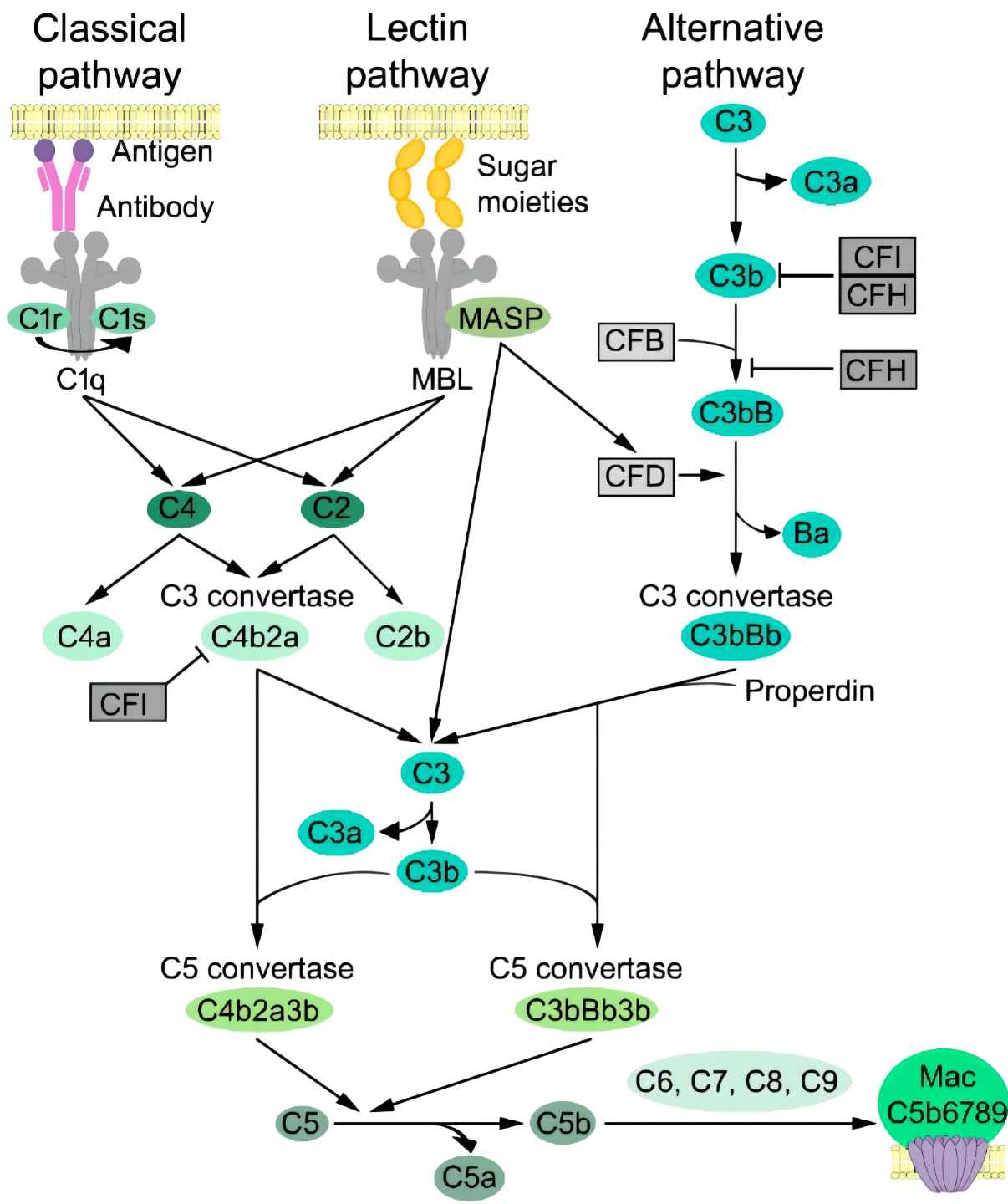 Fig.1 Three major complement cascade pathways.1, 4
Applications of Factor Ba Related Products
Factor B fragments, Ba and Bb, are implicated in various biological responses. Both bind to B lymphocyte receptors, modulating their proliferation. Ba, specifically, supports the growth of activated murine B lymphocytes but inhibits human B cell proliferation. Ba also exhibits chemotactic activity with neutrophils and macrophages, although its effect is considerably lower than that of C5a or C5adesArg, rendering it likely negligible in vivo. In investigations into smooth muscle contractility, neither Ba nor Bb elicited contractions in guinea pig ileum or triggered histamine release from rat mast cells. However, Ba increased chemotactic activity in guinea pig PMNs.
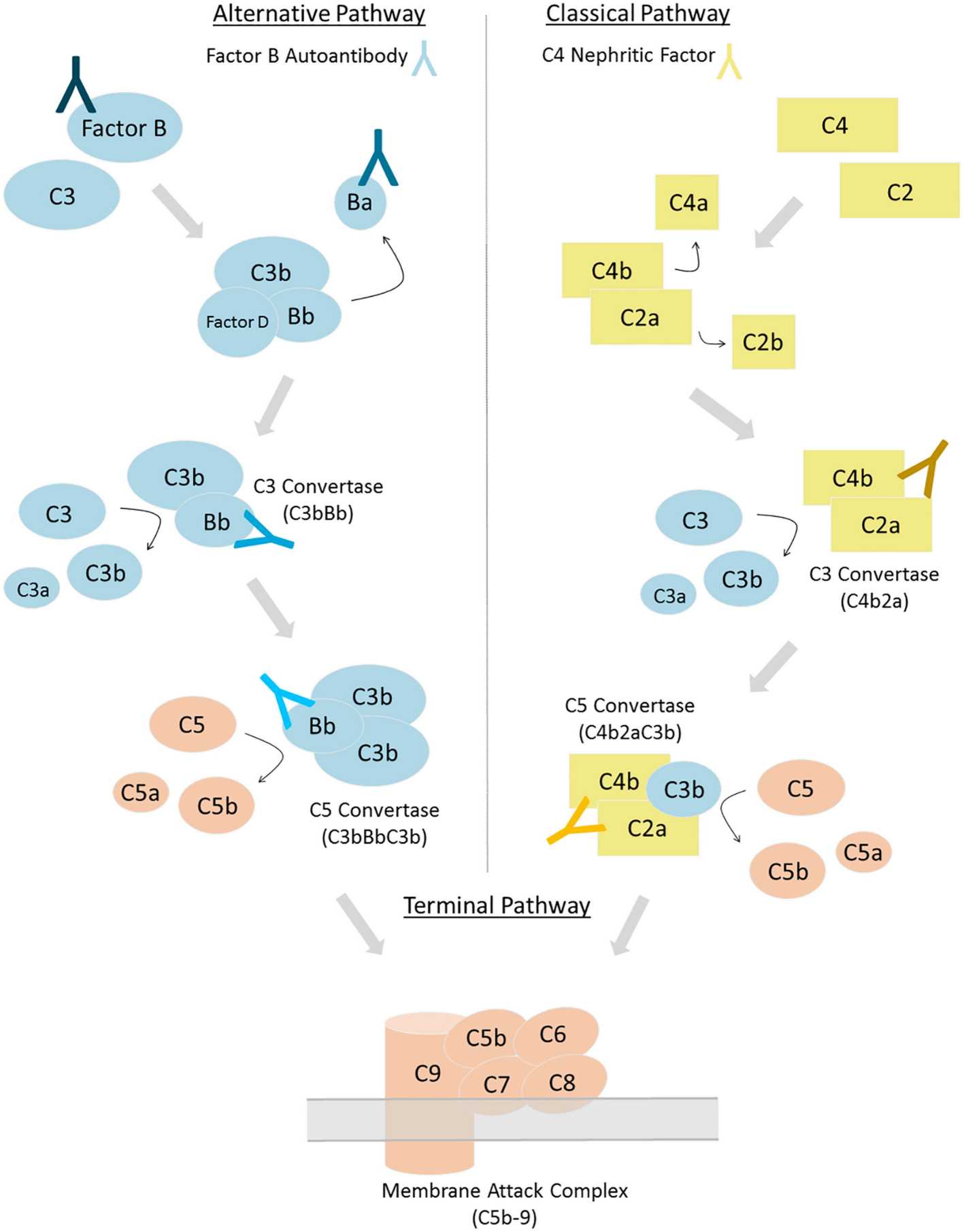 Fig.2 Varied antibody shades indicate potential antibody epitopes in the complement pathway.2, 4
Harnessing Anti-Factor Ba Antibodies for Therapeutic Investigations in Equine Recurrent Uveitis
Equine recurrent uveitis (ERU) provides a valuable natural model for investigating autoimmune uveitis in humans. Both horses and humans experience unpredictable flare-ups and persistent eye inflammation, leading to retinal damage and eventual vision loss. Initial analysis of uveitic individuals' sera indicates heightened concentrations of factor B relative to healthy controls. Following investigation, there is a substantial rise in levels of complement activation products (such as Ba, Bb, etc.) in sera from uveitic subjects. At the same time, no disparities are detected in C5b-9 levels. Immunohistochemistry of the retina using anti-Ba, anti-Bb, and anti-CD3 antibodies has demonstrated co-expression of activated factor Bb neoantigen, C3d, and CD68, indicating systemic and ocular complement system activation in ERU. Further investigation into the mechanisms regulating complement activation and its impact on immune responses in the eye is essential for understanding the underlying molecular mechanisms of this disease.
Creative Biolabs provides an extensive selection of complement factor Ba-targeted products, including assay kits, recombinant proteins, and anti-Ba antibodies. Furthermore, we offer custom services to develop factor Ba-specific products, such as tailored bispecific antibody solutions designed to meet precise individual requirements.
Factor Ba Functional Service
Creative Biolabs offers an extensive selection of Factor Ba-associated products, including anti-Factor Ba antibodies and human complement Factor Ba proteins. These products are proficient in identifying and monitoring the interaction between antibody regions and the human Factor Ba protein, making them essential tools in research targeting therapeutic interventions for diseases.
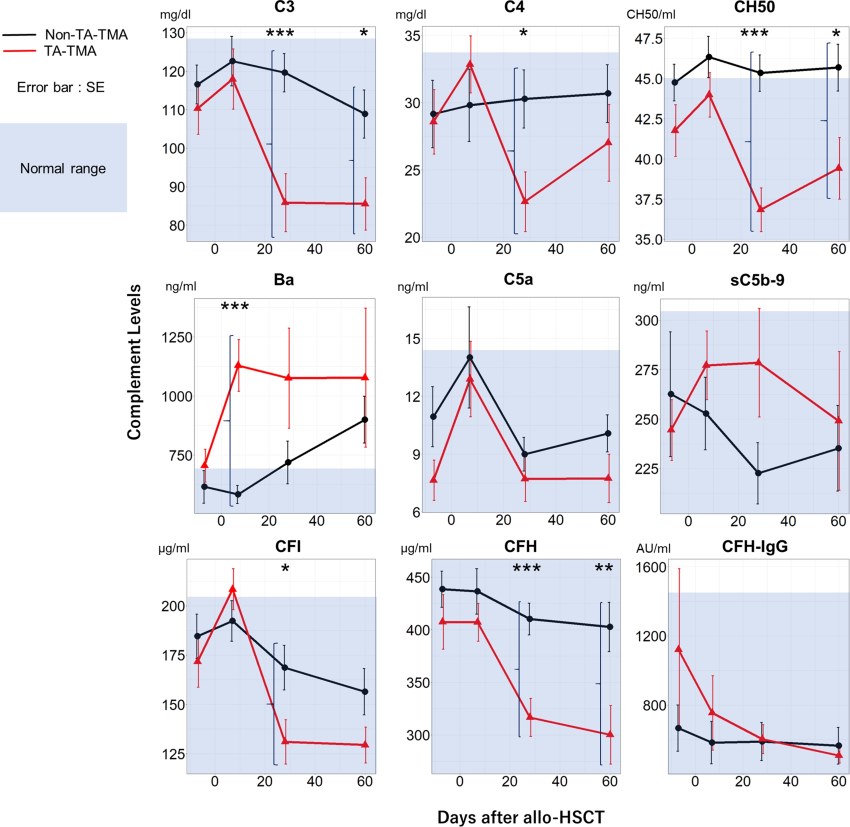 Fig.3 Comparison of complement protein dynamics over time between TA-TMA and non-TA-TMA cohorts.3, 4
Transplant-associated thrombotic microangiopathy (TA-TMA) represents a severe and potentially fatal complication that arises after allogeneic hematopoietic stem cell transplantation (allo-HSCT). Researchers have suggested that TA-TMA might result from complement activation driven by genetic variants, yet this requires confirmation in adult cases. In a nested case-control study at a single center, researchers assessed plasma complement protein levels in allo-HSCT recipients. Plasma CH50 levels were gauged via hemolysis of sensitized sheep erythrocytes. Elevated Ba protein levels on Day 7 post-transplant were notably higher in TA-TMA cases, indicating alternative pathway activation in TA-TMA. While other complement components showed no differences, lower levels of C3, C4, CH50, and factors H and I were noted in TA-TMA cases after Day 28. Ba levels on Day 7 emerged as a significant predictive marker for TA-TMA and associated mortality, while complement-related genetic variants did not predict TA-TMA development.
Creative Biolabs offers expert solutions dedicated to the study of factor Ba activity, including the analysis of interaction dynamics and various functional evaluations. These services are meticulously designed to fulfill the unique needs of esteemed clients involved in clinical and scientific research fields.
References
-
Riihilä, Pilvi, et al. "Complement system in cutaneous squamous cell carcinoma." International Journal of Molecular Sciences 20.14 (2019): 3550.
-
Hauer, Jill J., et al. "Factor B and C4B2a autoantibodies in C3 glomerulopathy." Frontiers in immunology 10 (2019): 668.
-
Okamura, Hiroshi, et al. "Early elevation of complement factor ba is a predictive biomarker for transplant-associated thrombotic microangiopathy." Frontiers in immunology 12 (2021): 695037.
-
Distributed under Open Access license CC BY 4.0, without modification.


 INQUIRY
 Datasheet