
GTOnco™ Responsive T Cell Trafficking Assay Service
Generally, Naïve T lymphocytes are programmed to recirculate predominantly in secondary lymphoid tissues and these primed T cells exert targeted effector responses by identifying specific sites of antigen located in non-lymphoid tissue. Following priming, the trafficking properties of T cells are changed and these activated and effector T cells acquire the ability to effectively and specifically home to other organs, which is mediated by tissue-selective adhesion and chemokine receptors. Based on the outstanding expertise and rich experience, Creative Biolabs provides the best-fit in vitro T cell trafficking assays to visualize organ-specific homing of T cells. GTOnco™ platform is committed to helping our clients evaluate gene therapy-based I-O drug candidates with possible properties that can affect the migration of immune cells, and in turn influence their anti-tumor ability.
Background: Solid Tumor Immunotherapy
The solid tumor microenvironment (TME) is a hostile barrier characterized by dense Extracellular Matrix (ECM), high interstitial pressure, physical exclusion (fibrosis), and a deeply immunosuppressive chemokine landscape. This landscape often features a mismatch between the chemokines expressed by the tumor and the cognate receptors required for anti-tumor effector T cell homing. Consequently, drug candidates that exhibit excellent cytotoxicity in vitro may fail in vivo due to inadequate tumor infiltration. Quantitative, responsive T cell trafficking assays are therefore indispensable for bridging the gap between benchside potency and clinical efficacy.
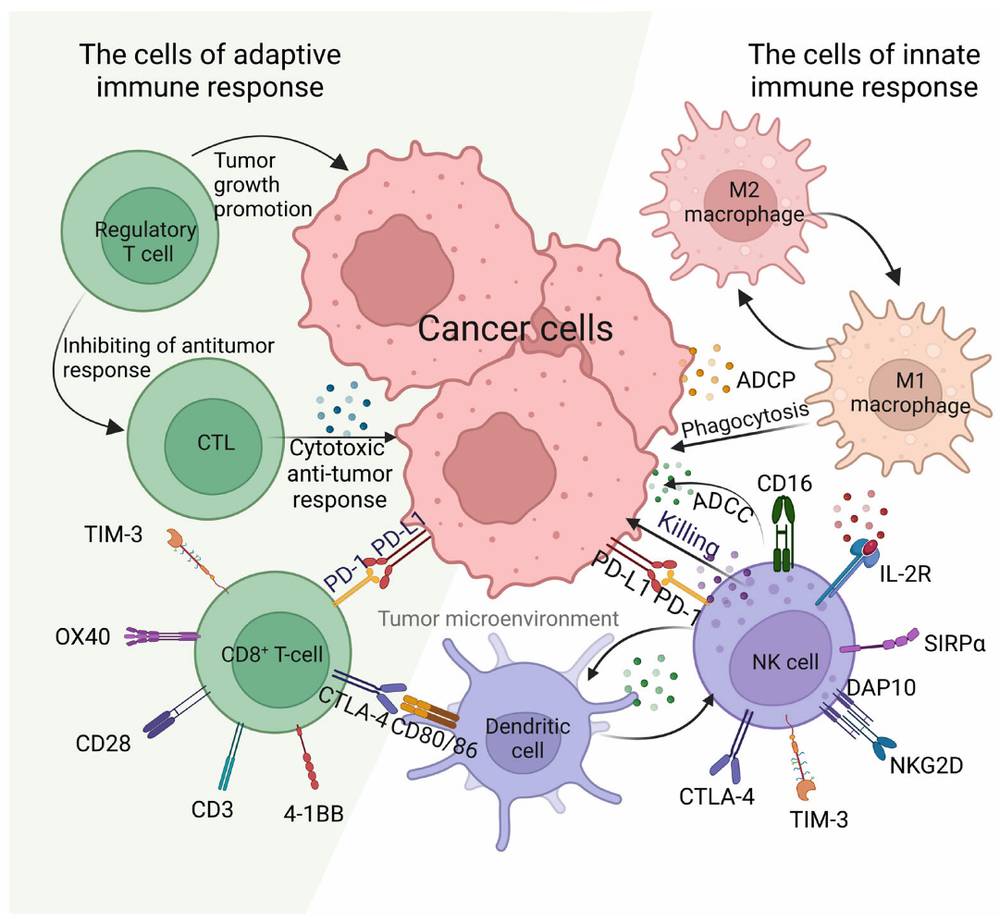 Figure 1. Schematic illustration of immune surveillance of the tumor microenvironment.1
Responsive T Cell Trafficking Assay Introduction
The success of next-generation immunotherapies, particularly adoptive cell therapy (ACT), such as chimeric antigen receptor (CAR) T cells and T cell receptor (TCR)-engineered T cells, depends on their ability to precisely and efficiently execute a complex biological process known as T cell trafficking. Trafficking encompasses all stages of T cell migration—from migration to secondary lymphoid organs (SLOs), navigation through the circulation, extravasation into the tumor microenvironment (TME), and ultimately, entry into the interstitial space to engage cancer cells. Responsive T cell trafficking assays are complex functional assays designed to quantitatively assess the response of therapeutic T cells to specific chemokines (primarily chemokines) released by tumors or surrounding stromal tissues.
How to Promote T Cell Trafficking to Lymph Nodes and Tumor Sites?
| Target Location | Key Mechanism & Receptors | Strategy (Examples) |
|---|---|---|
| Secondary Lymphoid Organs (SLOs) | Homing: Naive/central memory T cells express CCR7 (ligands: CCL19, CCL21) and the adhesion molecule L-selectin (CD62L) to navigate high endothelial venules (HEVs). | The CCR7+/CD62L+ phenotype is retained during ex vivo expansion to ensure persistence and priming capacity. |
| Solid Tumor Sites | Targeting: Effector T cells must express specific chemokine receptors that match the tumor's inflammatory chemokine signature, such as CXCR3 (ligands: CXCL9, CXCL10, CXCL11) or CCR5 (ligands: CCL3, CCL4, CCL5). | Genetic engineering: Transducing therapeutic T cells (e.g., CAR T cells) to ectopically express appropriate chemokine receptors (e.g., CXCR3, CCR2, or CCR5) to chase pro-migratory gradients. |
| Tumor Microenvironment (TME) Penetration | Interstitial migration: The intrinsic ability of cells to cross dense ECM, usually involving metalloproteinases or heparinase. | Combination therapy: Use of drugs that remodel the ECM, such as TGF-β inhibitors or oncolytic viruses that express ECM-degrading enzymes. |
Types of Responsive T Cell Trafficking
T cell trafficking encompasses multiple migration modes, influenced by specific receptor-ligand interactions, chemotactic gradients, and activation state. Understanding these distinct trafficking patterns is crucial for designing effective immunotherapies. The GTOnco™ platform specifically assesses multiple trafficking subtypes, each with distinct mechanistic and therapeutic implications.
CCR5 T Cell Trafficking
CCR5-mediated trafficking is a key mechanism for T cell recruitment to tumor sites, particularly in response to chemokines expressed in the tumor microenvironment. C-C chemokine ligand 5 (CCL5/RANTES) is the primary ligand for CCR5 and acts as a potent chemokine for multiple leukocyte populations, including memory T cells, CD4+/CD8+ T cells, NK cells, and dendritic cells.
CAR-T Cell Delivery
Chimeric antigen receptor (CAR) T cell delivery presents unique challenges distinct from endogenous T cells. While CAR-T cells have demonstrated remarkable efficacy against hematologic malignancies, their delivery to solid tumors remains suboptimal.
CD8 T Cell Trafficking
CD8+ T cell trafficking to tumors is an effector mechanism of anti-tumor immunity, and tumor-infiltrating CD8+ T cell density is closely associated with positive clinical outcomes in multiple cancer types. Recent studies have elucidated how metabolic factors within the tumor microenvironment restrict CD8+ T cell migration.
Types of Responsive T Cell Trafficking Assays
Developing superior T cell therapies requires assays that accurately mimic the in vivo migration process. The GTOnco™ platform integrates multiple advanced assays:
-
Real-Time Chemotaxis Assays
Utilizing microfluidics or modified Boyden chamber systems combined with real-time automated live-cell imaging, these assays quantify the directional migration of T cells toward a specific, titratable chemokine gradient. Key metrics include migration velocity and directionality index. -
3D Tumor Spheroid/Organoid Infiltration Assays
The most research-relevant in vitro model. T cells are tracked as they infiltrate complex 3D tumor spheroids or tumor-on-a-chip systems. This directly assesses the ability of cells to overcome chemotactic gradients and pseudo-ECM physical barriers. -
Adhesion and Extravasation Assays
Using an in vitro flow system coated with endothelial cells (mimicking the blood-brain barrier or tumor vasculature), these assays measure the sequential steps of rolling, adhesion (integrin activation), and extravasation in response to inflammatory cytokines.
Features of Our Responsive T Cell Trafficking Assay at GTOnco™ Platform
The study of T-cell migration in cancer research is of particular interest in the gene therapy-based I-O drug development. The stimulation of the recruitment of immune cells and their infiltration into the tumor masses are primordial for effective anti-tumor immune responses to counter disease progression. GTOnco™ platform offers valuable in vitro cell-based analysis system to evaluate the I-O drugs' effects on the migration of immune or cancer cells. Based on the advanced technology, our system enables automated, real-time analysis of immune cell migration profiles.
- Real-time monitor and quantify directional migration of immune cells.
- Various types of immune cells migration assays are available, including effector T cells, Th17, regulatory T cells (Treg), macrophages, neutrophils and dendritic cells.
- Rich experience and advanced cell analysis system to support your development of novel therapeutic strategies.
Core Services at Creative Biolabs
We recognize that trafficking assays represent one component of a broader therapeutic development program. Therefore, we provide:
- Consultative experimental design ensures our assays address your specific R&D questions.
- Iterative testing approaches enable incremental optimization of therapeutic candidates.
- Integrated data interpretation places transporter findings in the context of complementary functional assessments.
- Custom assay development for unique therapeutic platforms or challenging tumor types.
Why Choose Our Services?
- Kinetic and Quantitative Data: We provide real-time, time-dependent analysis of migration kinetics, capturing subtle nuances in T cell responses that are not captured by endpoint measurements.
- Physiologically Relevant Models: We utilize advanced 3D spheroids and microfluidic flow systems to provide the most accurate in vitro simulations of the solid tumor microenvironment (TME) and tumor vasculature.
- Customizable Chemokine Axis: We offer custom assay designs to test any specific chemokine/receptor axis relevant to your target tumor indication.
- High-Throughput Screening (HTS) Compatibility: This platform is scalable for screening large libraries of genetically modified T cell clones or novel small molecule adjuvants designed to enhance T cell homing.
Frequently Asked Questions
Q: What is the main advantage of a reactive T cell trafficking assay compared to a standard Transwell assay?
A: A standard Transwell assay is an endpoint measurement that only provides the total number of cells that have migrated. Reactive assays, such as real-time platforms, track the kinetics (speed, velocity) and directionality of individual cells. These functional data provide deeper insights into the intrinsic motility of T cells and their sensitivity to chemokine gradients, which are critical for clinical prediction.
Q: Can your assay services handle my unique, non-standard CAR-T cell construct?
A: Of course. Our platform is not limited by T cell source and can be customized to test responses to any recombinant chemokine or TME-derived conditioned medium relevant to your specific target antigen or tumor indication.
Q: What readouts do you provide and how should we interpret them?
A: Our standard readouts include: (1) migration kinetics (speed, directionality, persistence); (2) trafficking efficiency (percentage of cells that successfully reach the target area); (3) spatial distribution within the tumor model; (4) phenotypic evolution during migration; and (5) metabolic parameters associated with motility. We provide comparative benchmarks against reference cell types and facilitate interpretation with our extensive database of transport profiles for validated therapeutic candidates.
Q: How can you mimic the immunosuppressive tumor microenvironment in your assay?
A: We utilize multiple approaches to integrate immunosuppressive factors, including: (1) tumor-conditioned media containing immunosuppressive cytokines; (2) co-culture systems with regulatory T cells, myeloid-derived suppressor cells, or tumor-associated macrophages; (3) metabolic challenge through nutrient restriction or hypoxia; and (4) physiological levels of immunosuppressive mediators such as adenosine, PGE2, or TGF-β. These factors can be integrated modularly based on specific tumor types or treatment regimens.
Q: How does the GTOnco™ platform differ from traditional Transwell migration assays?
A: Unlike traditional Transwell migration assays, which measure simple chemotaxis across a porous membrane, the GTOnco™ platform integrates multiple physiological barriers, including the endothelial monolayer, extracellular matrix components, and stromal cell populations. Our system measures not only the initial chemotactic response but also the efficiency of transendothelial migration, matrix penetration, and persistence of migration in a 3D environment. Furthermore, we integrate live imaging and metabolic assessments to provide mechanistic insights beyond simple quantification of the number of migrating cells.
Connect with Us Anytime!
Leveraging our industry expertise, Creative Biolabs is constantly enhancing our in vitro GTOnco™ platform and provides responsive T cell trafficking assay to serve your gene therapy-based I-O drugs development. Contact us today for a proposal to support all of your immuno-oncology research needs.
Reference
- Kuznetsova A V, Glukhova X A, Popova O P, et al. Contemporary approaches to immunotherapy of solid tumors. Cancers, 2024, 16(12): 2270. https://doi.org/10.3390/cancers16122270 (Distributed under Open Access license CC BY 4.0, without modification.)
