Introduction Application Areas What Can We Offer? Workflow Published Data Why Choose Us? FAQs Featured Services Feature Products
Compstatin Development Service: Precision Inhibition at the Heart of the Complement Cascade!
Are you currently facing high plasma concentrations of C3 that overwhelm your inhibitors, poor peptide solubility, or rapid proteolytic degradation in vivo? Our Compstatin Development Service helps you obtain highly potent, stable, and soluble C3 inhibitors through our advanced SAR-guided peptide engineering and non-natural amino acid substitution platforms. By targeting the central C3 protein, Creative Biolabs empowers you to block all three activation pathways simultaneously, streamlining your journey from bench to clinic.
Contact our team to get an inquiry now!
Introduction to Compstatin Development
Structural Architecture and Discovery
Compstatin is a 13-residue peptide with the sequence Ile-Cys-Val-Val-Gln-Asp-Trp-Gly-His-His-Arg-Cys-Thr-NH2. Originally discovered via phage display technology, it stands as one of the most successful examples of a de novo peptide inhibitor transitioning into clinical application. Its core structure is uniquely stabilized by an intramolecular disulfide bridge between Cys2 and Cys12. This cross-link constrains the peptide into a critical type I β-turn involving residues Gln5 through Gly8, which serves as the primary recognition motif for its target.
Mechanism of Action: The C3 Molecular Hub
The scientific consensus, supported by extensive literature, identifies C3 as the "molecular hub" of innate immunity. Compstatin binds specifically to the macroglobulin (MG) domains 4 and 5 of native C3 and its fragments, such as C3b and C3c. Interestingly, literature indicates that Compstatin does not sterically block the C3a/C3b cleavage site directly. Instead, it binds to a structurally stable MG-ring, likely inducing a conformational "lock" or hindering the access of C3 to the C3-convertase complex (C3bBb or C4b2a). This prevents the proteolytic activation of C3 into C3a and C3b, effectively quenching the amplification loop of the complement cascade.
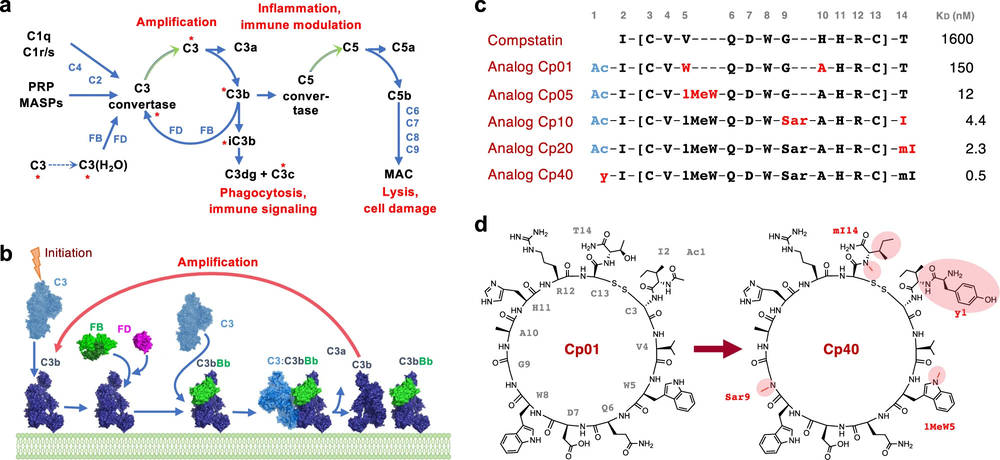 Fig.1 Overview of complement mechanisms and compstatin-based inhibitor development.1,3
Evolution of Compstatin Analogs
Recent "Published Data" has highlighted the evolution from the parent peptide to second- and third-generation analogs. Early iterations were limited by modest affinity and rapid enzymatic degradation. However, through Creative Biolabs' advanced engineering, modifications such as N-terminal acetylation, the substitution of Val3 with Ile (V3I), and the incorporation of methylated tryptophan residues have drastically improved pharmacological profiles. These optimized analogs exhibit sub-nanomolar affinity (KD in the pM to nM range), making them highly viable for treating chronic complement-mediated conditions like Age-Related Macular Degeneration (AMD) and Paroxysmal Nocturnal Hemoglobinuria (PNH).
Application Areas
Compstatin analogs developed at Creative Biolabs serve a broad spectrum of clinical and research needs, providing targeted solutions for complex complement-driven pathologies:
Ophthalmology:
These analogs are at the forefront of treating both dry and wet Age-Related Macular Degeneration (AMD). By blocking C3 activation at the ocular surface and within the subretinal space, they prevent the deposition of complement fragments that lead to drusen formation and chronic inflammation. This inhibition is critical for slowing the progression of geographic atrophy and protecting the retinal pigment epithelium from immune-mediated damage.
Hematology:
In the treatment of Paroxysmal Nocturnal Hemoglobinuria (PNH), Compstatin analogs offer a unique advantage by preventing extravascular hemolysis. While C5 inhibitors block the membrane attack complex, they do not stop C3-mediated opsonization. Upstream C3 inhibition ensures that red blood cells are not "tagged" for destruction by splenic macrophages, providing a more complete hematological response for patients who remain symptomatic on downstream therapies.
Transplantation Medicine:
Complement activation is a primary driver of hyperacute rejection and ischemia-reperfusion injury (IRI). Compstatin analogs are used to "shield" the donor organ from the recipient's innate immune response. By quenching the alternative pathway amplification loop immediately following revascularization, these peptides reduce endothelial damage, minimize inflammatory cell infiltration, and significantly improve graft survival rates and long-term organ function.
Infectious Disease and Critical Care:
During severe systemic infections or "cytokine storms," runaway complement activation can lead to vascular leakage and multi-organ failure. Compstatin serves as a potent immunomodulator in these settings, dampening the excessive inflammatory cascade without completely compromising the host's ability to clear pathogens, thereby maintaining a delicate balance in the critical care environment.
Precision Research Tools:
Beyond the clinic, high-affinity Compstatin-based probes are indispensable for structural biology. They are utilized to stabilize transient C3 complexes for X-ray crystallography and cryo-EM, and serve as gold-standard benchmarks for researchers mapping the intricate crosstalk between the complement system and other proteolytic cascades like the coagulation and kinin systems.
What Can We Offer?
We provide a comprehensive portfolio of products and services tailored to complement therapeutics:
-
Custom Compstatin Analog Synthesis: Tailored peptides with natural or non-natural amino acids.
-
PEGylation & Conjugation Services: Extending plasma residence time through 40-kDa PEG spacers or albumin-binding moieties.
-
C3 Binding Kinetics Analysis: Detailed SPR-based mapping of binding dynamics.
-
Complement Inhibition Screening: High-throughput assays for Classical, Alternative, and Lectin pathways.
-
Standard Compstatin Reagents: High-purity "Parent" and "W4A9" peptides for laboratory use.
Workflow
01
Computational Design & Structure Evaluation: By examining Compstatin-C3c molecular frameworks, our team executes detailed molecular dynamics (MD) computations to pinpoint precise amino acids requiring alteration (like Val3, Trp4, and Gly8).
02
Peptide Assembly & Customization: Utilizing SPPS methodologies, our scientists integrate artificial residues (such as 1-methyl-tryptophan) alongside N-terminal additions (including Arg-Ser-Ile), effectively boosting receptor attraction while preventing rapid enzymatic degradation.
03
Physical Property Assessment: Applying SPR and Isothermal Titration Calorimetry (ITC), we accurately measure dissociation constants (KD) alongside detailed interaction rates (ka/kd).
04
Biological Activity Evaluations: We perform alternative and classical hemolytic tests, plus ELISA C3b deposition protocols, validating physiological effectiveness in primate serum.
05
Durability & Dissolution Checks: Top candidates face rigorous metabolic breakdown assessments inside plasma, plus dissolution trials across biological liquids, guaranteeing optimal pharmaceutical traits.
Published Data
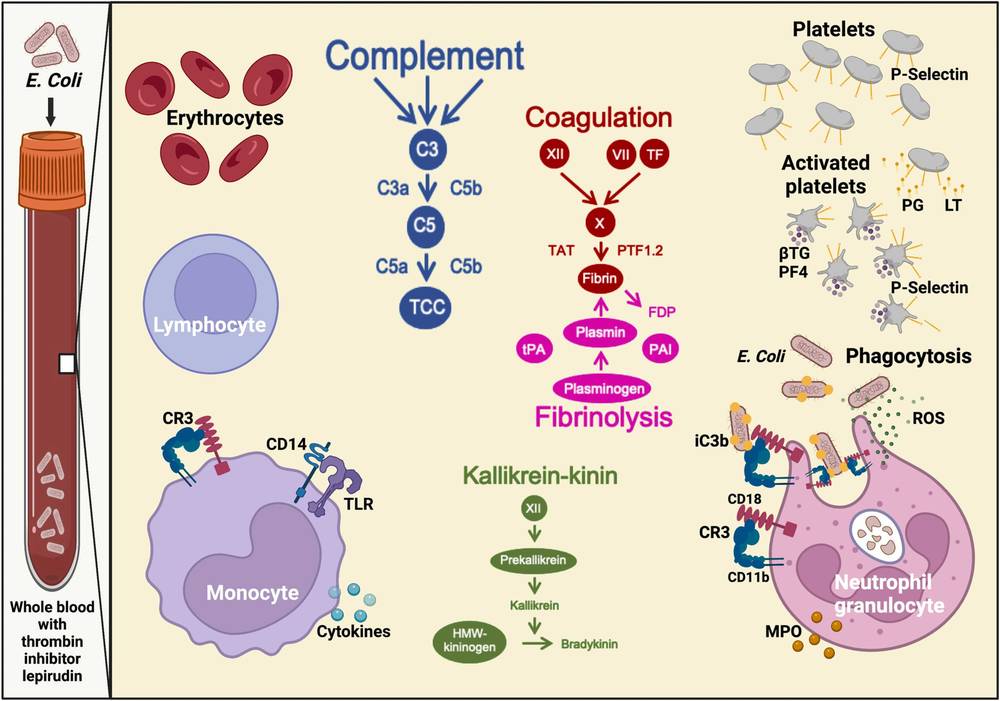 Fig.2 The lepirudin-based human whole blood model.2,3
According to a comprehensive 20-year retrospective analysis utilizing a physiologically relevant human whole-blood model, Compstatin and its advanced analogs (such as Cp40) are exceptionally potent C3 inhibitors. Research demonstrates that evaluating Compstatin in lepirudin-anticoagulated human blood, a model that perfectly preserves the natural crosstalk between the complement system, coagulation pathways, and cellular immune responses, reveals the true clinical potential of C3 blockade. Scientific data confirms that targeting the C3 molecular hub with Compstatin effectively halts all three complement activation pathways (classical, lectin, and alternative).
The findings substantiate that Compstatin robustly attenuates thromboinflammation and abolishes the release of pro-inflammatory cytokines triggered by diverse external stimuli, including bacteria and artificial biomaterials. By inhibiting complement at the C3 level, Compstatin not only prevents the generation of the inflammatory anaphylatoxins C3a and C5a but also stops C3b-mediated opsonization and the subsequent formation of the terminal membrane attack complex (MAC). This extensive ex vivo validation establishes that Compstatin analogs provide a complete, proximal blockade of the complement cascade, offering a scientifically validated foundation for their use in treating severe complement-mediated and thromboinflammatory diseases.
Why Choose Us?
Choosing Creative Biolabs means partnering with a team that understands the nuances of peptide-protein interactions at the atomic level.
-
Advanced SAR Platform: We utilize "Published Data" on V3I modifications and N-terminal polar extensions to achieve up to a 30-fold increase in target affinity compared to parent sequences.
-
Expertise in Non-Natural Amino Acids: We offer proprietary substitutions that balance hydrophobicity and polarity, significantly improving aqueous solubility.
-
Proven Stability Enhancements: Our N-acetylation and C-terminal amidation strategies effectively block major biotransformation pathways, extending half-life in human plasma.
-
Rigorous Quality Control: Every analog is verified via UPLC-ESI-MS to ensure absolute quantitation and purity.
FAQs
Q: How does Compstatin maintain its structure for optimal binding?
A: The 11-membered ring formed by the Cys2-Cys12 disulfide bond is essential. This maintains the type I β-turn (residues Gln5-Gly8), which is the primary recognition motif for the C3 MG domains.
Q: Why target C3 instead of C5?
A: Targeting C3 provides "proximal" inhibition. While C5 inhibitors block the membrane attack complex (MAC), they do not stop C3b opsonization, which can lead to extravascular hemolysis. C3 inhibition stops the cascade before these opsonins are even formed.
Q: Can these peptides be administered systemically?
A: Yes, though native peptides have short half-lives. We utilize PEGylation and chemical modifications to protect against peptidases, making subcutaneous or intravitreal administration highly effective.
Q: Does Compstatin work across different species?
A: Compstatin is highly selective for human and NHP (non-human primate) C3. It generally does not bind to rodent C3, which is why we specialize in NHP-based PK/PD validation.
Q: What is the primary cause of Compstatin degradation?
A: In human blood, the major pathway is the removal of the Ile1 residue. Our development service utilizes N-acetylation to effectively block this enzymatic cleavage.
Creative Biolabs' Compstatin Development Service provides the scientific expertise and technical infrastructure required to transform peptides into potent therapeutic leads. By optimizing affinity, solubility, and metabolic stability, we ensure your complement-targeted projects reach their full potential.
Featured Services
Feature Products
References
-
Lamers, Christina et al. "Insight into mode-of-action and structural determinants of the compstatin family of clinical complement inhibitors." Nature Communications vol. 13,1 5519. 20 Sep. 2022, https://doi.org/10.1038/s41467-022-33003-7
-
Mollnes, Tom E et al. "Application of the C3 inhibitor compstatin in a human whole blood model designed for complement research - 20 years of experience and future perspectives." Seminars in Immunology vol. 59 (2022): 101604. https://doi.org/10.1016/j.smim.2022.101604
-
Distributed under Open Access license CC BY 4.0, without modification. https://doi.org/10.3390/ijms22126351
For Research Use Only.
Related Sections: