Introduction What We Can Offer Workflow Published Data Why Choose Us? Applications FAQs Featured Services Featured Products
Creative Biolabs leads in aptamer discovery and modifications. By integrating sophisticated technologies with profound engineering expertise, we provide bespoke global modification services. Our success in navigating complex structural challenges has yielded extensive proficiency in designing optimized strategies. These strategies are rigorously tailored to enhance stability and affinity, ensuring precise alignment with the specific requirements of our collaborators.
Contact our team to get an inquiry now!
Introduction of Aptamer Modifications
Aptamers are high-affinity oligonucleotides that function as "chemical antibodies." However, native DNA or RNA aptamers face significant biological hurdles: rapid degradation by blood-borne nucleases and swift elimination through renal filtration. Chemical modification is the essential bridge between in vitro discovery and in vivo application. By strategically altering the ribose sugar, the phosphodiester backbone, or the terminal ends, we can enhance nuclease resistance, optimize thermodynamic stability, and extend circulatory half-life. These modifications ensure that the aptamer maintains its precise 3D conformation and binding affinity within complex biological matrices, enabling its successful use in targeted therapeutics, molecular imaging, and point-of-care diagnostics.
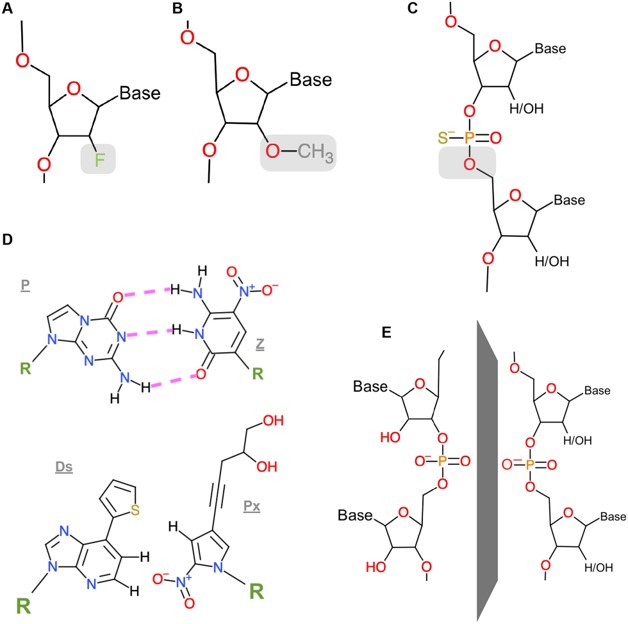 Fig.1 Chemical modification strategies of aptamers.1,3
What We Can Offer
We provide end-to-end chemical optimization for DNA and RNA aptamers, utilizing high-precision solid-phase synthesis. Our expertise allows us to tailor specific modification profiles that align with your project's unique requirements for biostability, affinity, and pharmacokinetics.
|
SERVICE ITEM
|
DESCRIPTION
|
|
2′ Fluoro (2′-F) Modifications
|
We replace the 2′-hydroxyl group with fluorine to significantly bolster resistance against endonucleases. This is our most requested service for RNA aptamers, as it provides a robust shield while often increasing the melting temperature and structural rigidity of the molecule.
|
|
2′-amino (2′-NH₂) Modifications
|
By introducing amino groups at the 2′ position of pyrimidines, we provide an alternative pathway for nuclease resistance. Our 2′-NH₂ service is ideal for clients requiring specific chemical reactivity for downstream labeling while maintaining a high degree of biostability in serum.
|
|
2′ O-methyl (OCH₃) Modifications
|
We utilize 2′-OMe nucleotides, naturally occurring and highly non-immunogenic, to prevent nuclease cleavage. We often employ a "mix-and-match" strategy, alternating 2′-OMe with 2′-F to achieve a perfect balance between stability and binding energy.
|
|
3′ Inverted Thymidine Modifications
|
To prevent exonuclease degradation from the 3′ end, we cap your sequence with an inverted deoxythymidine. This creates a unique 3′-3′ linkage that effectively "hides" the aptamer from digestive enzymes, dramatically increasing its longevity in biological fluids.
|
|
Fluorescence Modifications
|
We offer a vast palette of fluorophores (e.g., FAM, Cy3, Cy5) for terminal or internal labeling. These services are essential for high-sensitivity diagnostic assays, flow cytometry, and real-time intracellular imaging.
|
|
Biotin Modifications
|
We provide precise biotinylation at the 5′ or 3′ ends. This facilitates the seamless tethering of your aptamers to streptavidin-coated surfaces, magnetic beads, or gold nanoparticles, supporting applications in ELONA assays and biosensor development.
|
Workflow
01
Initial Consultation: We discuss your target, desired application, and current sequence data. Clients typically provide the aptamer sequence and any existing binding affinity data (Kd).
02
Feasibility & Design: Our biologists evaluate the sequence for potential structural interference. We propose a modification map (e.g., 2′-position substitutions or terminal caps).
03
Solid-Phase Synthesis: Modifications are introduced de novo during the synthesis process using high-quality phosphoramidites in our automated synthesizers.
04
Purification: Every modified aptamer undergoes rigorous HPLC or PAGE purification to ensure the removal of failed sequences.
05
Quality Control: We verify the mass and purity via ESI-MS and analytical HPLC.
06
Final Delivery: You receive the lyophilized modified aptamer, a comprehensive Certificate of Analysis (CoA), and MS/HPLC trace reports.
Published Data
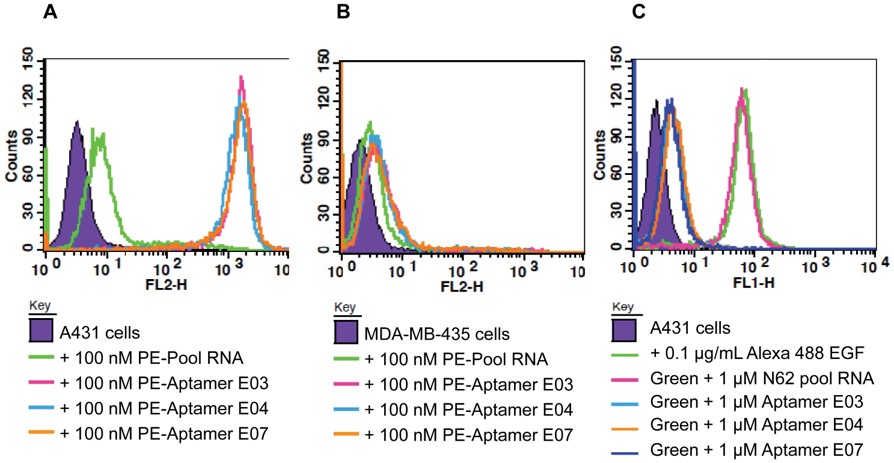 Fig.2 Binding of 2′-F modified anti-EGFR aptamers to cells expressing EGFR.2,3
In this study, researchers developed and optimized a high-affinity RNA aptamer (E07) targeting the human epidermal growth factor receptor (hEGFR). The project addressed the critical need for nuclease resistance in oncological applications. By incorporating 2′-F modifications on all pyrimidines, the team created an aptamer that bound tightly to both wild-type EGFR (Kd = 2.4 nM) and the EGFRvIII deletion mutant commonly found in glioblastoma. Project results demonstrated that these chemical modifications allowed the aptamer to remain stable in physiological conditions while successfully competing with natural EGF for receptor binding. This inhibition led to a significant reduction in the phosphorylation of downstream signaling pathways (ERK), effectively blocking cancer cell proliferation. The study highlights how terminal and sugar-ring modifications can transform a single-clone selection into a robust, clinically relevant family of therapeutic aptamers.
Why Choose Us?

Advancing Modifications
Utilizing forefront methodologies to facilitate a range of aptamer modification strategies

Ensuring Consistency
Achieving Stable and Reproducible Aptamer Products

Navigating Expertise
Immediate technical counsel offered by our adept team, drawing on extensive expertise

Stringent QC
Our aptamer modification service incorporates a rigorous QC system to ensure a stable and consistent product output.
Applications
-
Targeted Therapeutics: Modified aptamers serve as sophisticated precision-delivery vehicles. By resisting systemic degradation, they effectively transport cytotoxic payloads, small interfering RNAs (siRNAs), directly to malignant cells, significantly reducing off-target toxicity while maximizing therapeutic concentration at the tumor site.
-
In Vivo Molecular Imaging: Stabilized aptamers conjugated to high-performance fluorophores or radioisotopes provide a non-invasive window into biological processes. Their enhanced pharmacokinetics allow for the high-contrast visualization of subtle tumors or specific inflammatory markers in real-time within complex living systems.
-
Advanced Biosensor Development: The incorporation of biotinylated, thiol-modified, or amino-linked aptamers is fundamental for functionalizing nanostructured gold electrodes and optical surfaces. These modifications enable the creation of highly sensitive, reproducible biosensors capable of detecting analytes in whole blood or serum.
-
Complement System Regulation: Utilizing nuclease-resistant chemical modifications allows aptamers to serve as potent inhibitors for inflammatory cascades. By targeting key proteins like C5 or Factor B, modified aptamers can be deployed to treat diverse conditions ranging from macular degeneration to autoimmune disorders.
-
Proteomics and Biomarker Discovery: Innovative chemical modifications, such as hydrophobic aromatic groups found in SOMAmers, vastly expand the chemical space of traditional oligonucleotides. This enables high-throughput proteomic profiling and the high-affinity capture of rare biomarkers in clinical samples, which is essential for personalized medicine.
FAQs
Q: Will adding a 2′-F modification affect my aptamer's binding affinity?
A: It can, which is why we recommend rigorous affinity testing. However, 2′-F often stabilizes the 3D fold and increases melting temperature, frequently improving binding by pre-organizing the pocket and reducing the entropic penalty upon target engagement.
Q: Can I modify an existing aptamer sequence that was selected from an unmodified library?
A: Yes, this is known as "Post-SELEX" optimization. We can perform a systematic "2′-OMe scan" or "2′-F walk" to identify specific positions that tolerate modification without losing affinity, effectively hardening the molecule for biological use.
Q: Why choose PEGylation over cholesterol conjugation for extending half-life?
A: PEGylation significantly increases the hydrodynamic radius to bypass renal filtration, while cholesterol relies on albumin binding. PEG is generally superior for maintaining high systemic concentrations, though cholesterol can facilitate better intracellular entry in some tissue types.
Q: Is 3′ inverted thymidine better than 3′ Biotin for stability?
A: Absolutely. While a Biotin tag provides marginal protection, the inverted idT creates a unique 3′-3′ phosphodiester linkage that natural exonucleases cannot recognize or cleave, offering far superior protection in nuclease-rich environments like serum or cytosol.
Q: How do I know the modification was successful?
A: Every order includes electrospray ionization mass spectrometry (ESI-MS) data to confirm the exact molecular weight and analytical HPLC traces to verify chemical purity. This dual-validation ensures the identity and integrity of your modified leads.
Q: Are modified aptamers more toxic than unmodified ones?
A: Generally, no. Most sugar and backbone modifications offered by Creative Biolabs, such as 2′-OMe and 2′-F, are well-tolerated and do not trigger significant innate immune responses (TLR signaling) in preclinical models.
Q: How can you help optimize a sequence for better tissue penetration?
A: Beyond sugar modifications, we offer conjugation with cell-penetrating peptides (CPPs) or small-molecule ligands. These "shuttle" modifications are designed to enhance the transcytosis of the aptamer across biological barriers, ensuring your therapeutic reach reaches its intracellular target effectively.
Creative Biolabs combines decades of synthesis mastery with cutting-edge chemical innovation to deliver high-performance aptamers. We provide a globally recognized suite of aptamer modification services to help clients overcome the intrinsic limitations of raw nucleic acids, solving critical stability and delivery challenges.
Contact us today to discuss your modification requirements.
Featured Services
Featured Products
References
-
Niederlender, Solène, Jean-Jacques Fontaine, and Grégory Karadjian. "Potential applications of aptamers in veterinary science." Veterinary Research 52.1 (2021): 79. https://doi.org/10.1186/s13567-021-00948-4
-
Li, Na, et al. "Inhibition of cell proliferation by an anti-EGFR aptamer." PloS one 6.6 (2011): e20299. https://doi.org/10.1371/journal.pone.0020299
-
Distributed under Open Access license CC BY 4.0, without modification.
For Research Use Only.
Related Sections: