Introduction Application What Can We Offer? Workflow Published Data Why Choose Us? FAQs Featured Services Feature Products
Aptamer Development Service: Precision Targeting for Next-Generation Complement Therapeutics!
Are you currently facing high immunogenicity risks, limited tissue penetration, or prohibitive manufacturing costs with traditional antibody-based complement inhibitors? Our Aptamer Development Service helps you obtain high-affinity, "chemical antibodies" that precisely modulate the complement cascade through our advanced SELEX platforms and proprietary chemical modification techniques.
Contact our team to get an inquiry now!
Introduction to Aptamer Technology in Complement Research
Aptamers are single-stranded DNA or RNA molecules that fold into complex three-dimensional structures to bind targets with high affinity (pM to nM range). Introduced in 1990 by Ellington and Tuerk, these "chemical antibodies" mimic the specificity of monoclonal antibodies but are produced via chemical synthesis. In the context of the complement system, a complex network of over 30 proteins, aptamers offer a unique advantage: they can be engineered to target specific zymogens or active fragments (like C5a) without triggering the "hook effect" or unintended Fc-mediated effector functions.
Published data highlight that modified DNA aptamers can effectively inhibit C3 convertase formation with picomolar affinity, delivering a potent blockade of the central amplification loop of the complement cascade. By strategically neutralizing C3 or its activation fragments, these aptamers prevent the subsequent release of pro-inflammatory anaphylatoxins and the assembly of the membrane attack complex (MAC). This precision offers a promising alternative for treating chronic inflammatory conditions and rare complement-mediated disorders where traditional biologics often fail due to rapid systemic clearance, poor bioavailability in ocular or synovial tissues, or the development of anti-drug antibodies that compromise long-term efficacy.
Explore our comprehensive technical suite for the development of high-performance Aptamer Complement Component Inhibitors:
Application
Therapeutic Inhibition:
Highly specific blockade of rate-limiting enzymes such as Factor D, Factor B, or C5. This is particularly vital for managing chronic conditions like Paroxysmal Nocturnal Hemoglobinuria (PNH) or Atypical Hemolytic Uremic Syndrome (aHUS), where sustained, high-affinity binding is required to prevent intravascular hemolysis and thrombotic microangiopathy without the off-target effects often associated with systemic antibody therapy.
Molecular Imaging:
Utilizing radiolabeled or fluorescently tagged aptamers for high-resolution, real-time visualization of complement deposition. This application provides critical diagnostic insights into Ischemia-Reperfusion Injury (IRI) and transplant rejection, allowing clinicians to map early-stage tissue damage and monitor the localized efficacy of anti-complement interventions in vivo.
Advanced Diagnostics:
Developing Enzyme-Linked Oligonucleotide Assays (ELONA) and lateral flow biosensors for the rapid, ultra-sensitive quantification of complement activation products (e.g., C3a, C4d, Bb) in patient serum. These tools facilitate precise patient stratification and the identification of specific complement "signatures" associated with various autoimmune and neurodegenerative pathologies.
Targeted Drug Delivery:
Leveraging aptamers as "molecular GPS" to guide therapeutic payloads, such as siRNA, antisense oligonucleotides, or small molecule inhibitors, directly to sites of active complement-mediated inflammation. By conjugating drugs to target-specific aptamers, we can maximize local therapeutic concentration while minimizing systemic exposure and secondary toxicity.
What Can We Offer?
-
Custom SELEX Services: Protein-SELEX, Cell-SELEX, and in vivo SELEX for complement targets.
-
Aptamer-Drug Conjugates (ApDCs): Development of targeted delivery systems for potent immunomodulators.
-
Diagnostic Grade Aptamers: High-purity aptamers optimized for biosensors and lateral flow assays.
-
Regulatory Support Data: Full documentation of sequence, purity, and affinity for IND-enabling studies.
Workflow
01
Target Preparation and Library Design: We construct a high-diversity oligonucleotide library and validate target stability under selection conditions.
02
Systematic Evolution of Ligands by Exponential Enrichment (SELEX): Iterative rounds of binding, partition, and amplification are performed. We incorporate "Negative SELEX" against non-target proteins to ensure absolute specificity.
03
High-Throughput Sequencing and Bioinformatic Analysis: Enriched pools are sequenced to identify dominant motifs and consensus families.
04
Aptamer Optimization and Truncation: We minimize the sequence length to the core binding domain to enhance stability and reduce synthesis costs.
05
Chemical Modification and Validation: Strategic integration of 2'-fluoro, 2'-O-methyl, or PEGylation to enhance nuclease resistance and pharmacokinetic profiles.
Published Data
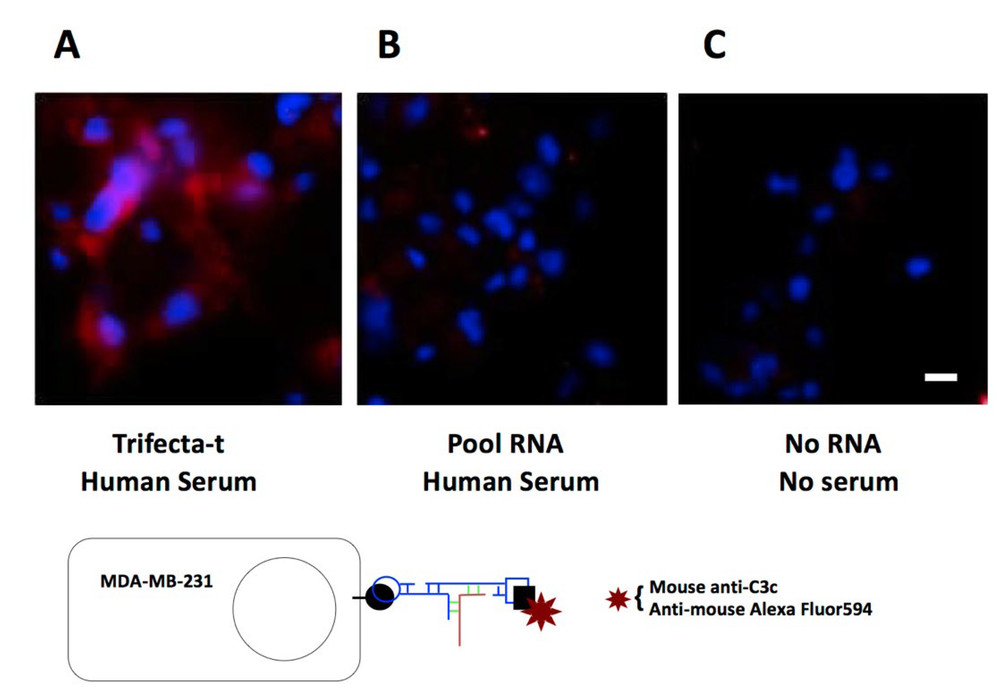 Fig.1 Aptamer-mediated cell surface deposition of C3 and its breakdown fragments.1,
The research confirms that bi-functional RNA aptamers can effectively commandeer the alternative complement pathway to induce selective cytotoxicity in EGFR-positive cancer cells. Experimental data showed that the aptamer-mediated recruitment of C3 led to significant cell death in triple-negative breast cancer (TNBC) cell lines, even in the presence of inhibitory mCRPs like CD46, CD55, and CD59. Specifically, the study highlighted that utilizing C3, the convergence point of all complement pathways, is more efficient for triggering the MAC than targeting upstream components like C1q. Furthermore, the effectiveness of the construct in both human and mouse serum suggests high potential for in vivo applications, as the aptameric adaptors remained functional without the need for exogenous protein delivery, relying entirely on the host's endogenous complement proteins.
Why Choose Us?
-
Extensive Experience: Over 20 years of expertise in complement system research and biopharmaceutical service.
-
Proprietary SELEX Platforms: Specialized "Negative Selection" and "Complex Media SELEX" protocols that ensure no cross-reactivity with structurally similar proteins.
-
High Success Rate: Our modified library designs significantly increase the probability of obtaining high-affinity binders compared to standard random libraries.
-
Scalable Chemical Synthesis: Every aptamer is produced via solid-phase synthesis, ensuring zero batch-to-batch variation, a major hurdle in antibody production.
-
Published Data Support: Our methodologies are backed by rigorous internal validation and alignment with current peer-reviewed standards in nucleic acid chemistry.
FAQs
Q: How do aptamers compare to monoclonal antibodies in terms of stability?
A: Aptamers are chemically robust and can be stored at room temperature for extended periods. Unlike antibodies, they can undergo reversible thermal denaturation; they regain their original 3D structure and binding affinity upon cooling, making them ideal for field-based diagnostics.
Q: Are aptamers safe for in vivo use given their nucleic acid nature?
A: Yes, aptamers generally exhibit very low to no immunogenicity. Because they are synthetic and lack the protein scaffolds of antibodies, they do not trigger anti-drug antibody (ADA) responses. Half-life can be precisely tuned using PEGylation or other modifications.
Q: What is the typical affinity range achieved for complement proteins?
A: We typically achieve dissociation constants (Kd) in the low nanomolar to high picomolar range. This high affinity ensures potent inhibition even in the high-protein environment of the blood.
Q: Can aptamers distinguish between the pro-form and the active form of a complement protein?
A: Absolutely. By employing "Counter SELEX" against the pro-form (e.g., C5) and positive selection against the active fragment (e.g., C5a), we can generate aptamers that are highly specific to the activated state.
Q: How do you protect aptamers from nuclease degradation in human serum?
A: We utilize various chemical modifications, such as replacing the 2'-OH group with 2'-Fluoro or 2'-O-methyl groups, and 3'-capping. These modifications render the aptamer virtually "invisible" to common exonucleases and endonucleases.
Creative Biolabs stands at the forefront of complement therapeutic innovation, offering a comprehensive Aptamer Development Service that bridges the gap between early discovery and clinical application. From initial SELEX selection to advanced in vivo analysis, we provide the scientific rigor and technical precision required to overcome the limitations of traditional protein-based inhibitors.
Featured Services
Feature Products
References
-
Lamers, Christina et al. "Insight into mode-of-action and structural determinants of the compstatin family of clinical complement inhibitors." Nature Communications vol. 13,1 5519. 20 Sep. 2022, https://doi.org/10.1038/s41467-022-33003-7
-
Mollnes, Tom E et al. "Application of the C3 inhibitor compstatin in a human whole blood model designed for complement research - 20 years of experience and future perspectives." Seminars in Immunology vol. 59 (2022): 101604. https://doi.org/10.1016/j.smim.2022.101604
-
Distributed under Open Access license CC BY 4.0, without modification. https://doi.org/10.3390/ijms22126351
For Research Use Only.
Related Sections: