Introduction Applications What Can We Offer? Workflow Published Data Why Choose Us? FAQs Featured Services Feature Products
Aptamer-based Conjugation Services: Revolutionize Your Precision Medicine Strategy!
Are you currently facing high immunogenicity, limited tissue penetration, or complex manufacturing hurdles with traditional antibody-drug conjugates? Our Aptamer-based Conjugation Services help you obtain high-affinity, site-specific therapeutic and diagnostic tools through advanced chemical synthesis and proprietary bioconjugation chemistries. We empower your drug discovery by merging the "chemical antibody" versatility of aptamers with potent payloads to overcome the limitations of conventional biologics.
Contact our team to get an inquiry now!
Introduction to Aptamer-based Conjugates
Aptamers are single-stranded DNA or RNA oligonucleotides that fold into complex 3D structures to bind targets with high specificity. Often termed "chemical antibodies," they offer distinct advantages over proteins, including thermal stability, low immunogenicity, and cost-effective chemical synthesis. Conjugating these aptamers to various moieties transforms them from simple binding ligands into sophisticated delivery vehicles or diagnostic probes.
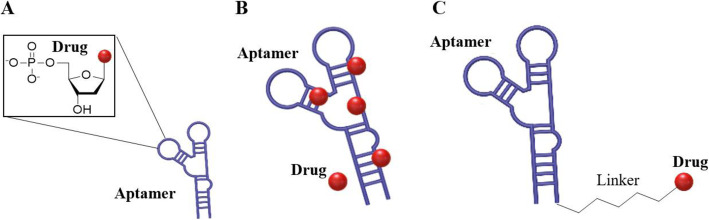 Fig.1 Aptamer-drug conjugation chemistry.1,3
Explore Our Specialized Services:
Applications of Aptamer Conjugates
Targeted Oncology:
Directing potent chemotherapeutics to tumor-specific markers (e.g., PSMA, HER2, or EGFR) to maximize anti-tumor efficacy while significantly reducing systemic toxicity. By utilizing stimuli-responsive linkers that trigger payload release only within the acidic or enzyme-rich tumor microenvironment, these conjugates ensure localized therapeutic action and a wider safety window compared to traditional chemotherapy.
In vivo Imaging and Molecular Mapping:
Conjugating radionuclides (e.g., 68Ga, 18F) or high-quantum-yield fluorescent dyes for real-time visualization and precise molecular mapping of disease sites. The rapid clearance of unbound small-molecular-weight aptamer conjugates allows for high-contrast imaging with low background noise, enabling early-stage detection and longitudinal monitoring of therapeutic response.
Anti-Infective Therapeutics:
Developing neutralizing conjugates designed to block viral entry mechanisms or neutralize bacterial exotoxins. These constructs can be engineered to bind essential surface proteins of pathogens, effectively preventing infection propagation or mitigating the inflammatory cascades triggered by microbial toxins in the host.
Point-of-Care (POC) Diagnostics:
Integrating aptamer-gold nanoparticle or enzyme conjugates into lateral flow assays and electrochemical sensors for the visible or digital detection of clinical biomarkers in complex matrices like serum or saliva. These platforms offer robust, cost-effective, and rapid diagnostic capabilities without the need for extensive laboratory infrastructure.
Targeted Gene Therapy:
Facilitating the cell-specific delivery of RNA interference (RNAi) machinery, such as siRNA or miRNA, to modulate gene expression in previously "undruggable" tissues. Through targeted conjugation, these oligonucleotides can bypass biological barriers, including the blood-brain barrier, and avoid endosomal entrapment, ensuring functional cargo delivery to the cytoplasm.
What Can We Offer?
To meet the diverse needs of global biopharmaceutical research, Creative Biolabs provides a comprehensive suite of specialized products and expert support for your conjugation projects.
-
Custom Aptamer Synthesis & Modification: A wide range of terminal modifications and internal labels.
-
Linker Library: Access to diverse cleavable (disulfide, hydrazone) and non-cleavable linkers.
-
Scale-up Production: Capability to produce gram-scale quantities for preclinical studies.
-
Bio-analytical Services: Full spectrum of affinity testing and stability assays in human serum.
-
Consultation & Design: Expert scientific support to design the optimal conjugation strategy for your specific target.
Workflow
01
Aptamer Optimization & Functionalization: We modify the 3' or 5' ends with functional groups (e.g., Amino, Thiol, Biotin, or Azide) to prepare for conjugation without disrupting the binding loop.
02
Linker Design & Selection: Based on the therapeutic goal, we design stable or stimuli-responsive (pH-sensitive or enzymatic-cleavable) linkers to ensure controlled payload release.
03
Conjugation Reaction: Utilizing bio-orthogonal chemistries such as Click Chemistry (DBCO/Azide) or Thiol-Maleimide coupling to link the aptamer to the payload.
04
Purification & Fractionation: High-performance liquid chromatography (HPLC) or Size-Exclusion Chromatography (SEC) is used to remove unconjugated materials and achieve high homogeneity.
05
Characterization & Validation: Comprehensive analysis using Mass Spectrometry (MS) and Gel Electrophoresis to confirm the Drug-to-Aptamer Ratio (DAR) and binding affinity (Kd) via SPR/BLI.
Published Data
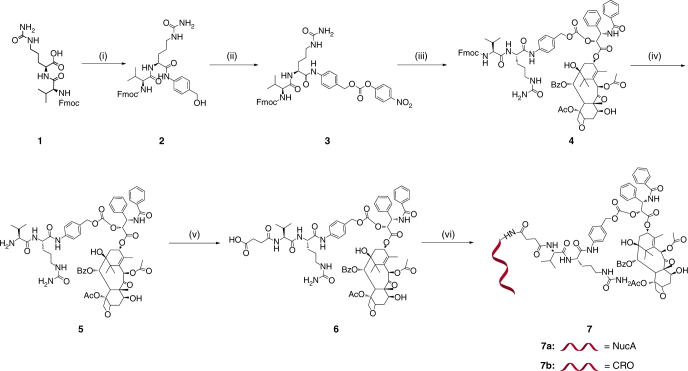 Fig.2 Synthesis of aptamer-paclitaxel conjugates.2,3,
The article describes the development of NucA-PTX, a novel therapeutic conjugate designed to overcome the poor water solubility and non-specific toxicity of Paclitaxel (PTX). Researchers linked the nucleolin-targeting aptamer to PTX via a cathepsin B-sensitive dipeptide linker. This design ensures the drug remains stable and inactive in systemic circulation but releases active PTX upon entering tumor cells through macropinocytosis. In vivo studies using human ovarian cancer xenograft models demonstrated that NucA-PTX achieves superior tumor accumulation, significantly enhanced anti-tumor efficacy, and markedly reduced systemic toxicity compared to free PTX.
Why Choose Us?
Creative Biolabs stands at the forefront of aptamer technology, offering unparalleled precision in bioconjugation.
-
Precision DAR Control: Unlike random antibody conjugation, our chemical synthesis allows for exact, 1:1 or specific drug-to-targeting-agent ratios.
-
Enhanced Stability: We utilize chemical modifications (e.g., 2'-F, 2'-OMe, or phosphorothioate backbones) to ensure resistance to nuclease degradation.
-
Superior Tissue Penetration: The small size of aptamer conjugates (typically <20 kDa) allows them to penetrate dense tissues and cross biological barriers more efficiently than 150 kDa antibodies.
FAQs
Q: How does conjugation affect the binding affinity of the aptamer?
A: The use of site-specific conjugation chemistries at the 5' or 3' termini ensures that modifications are distal to the critical binding loops. This methodology preserves the primary tertiary conformation, allowing for the retention of high binding affinity and specificity toward the target.
Q: Is it possible to conjugate aptamers to hydrophobic payloads?
A: Yes. The implementation of solubility-enhancing linkers and specialized bio-orthogonal solvent systems facilitates the stable conjugation of hydrophobic small molecules without causing oligonucleotide precipitation or loss of functional integrity.
Q: What are the primary scientific distinctions between ApDCs and ADCs?
A: Aptamer-Drug Conjugates (ApDCs) offer a lower molecular weight and negligible immunogenicity compared to Antibody-Drug Conjugates (ADCs). Furthermore, ApDCs are produced through fully synthetic in vitro processes, which ensure high homogeneity and facilitate more rapid deep-tissue penetration.
Q: What mechanisms ensure the in vivo stability of aptamer conjugates?
A: Stability is achieved through chemical modifications of the ribose ring, such as 2'-fluoro or 2'-O-methyl substitutions, as well as the use of inverted-dT caps at the termini. These alterations provide robust resistance against exonuclease and endonuclease degradation, extending the circulation half-life.
Q: Are custom sequences or de novo developments compatible with conjugation workflows?
A: Both pre-existing sequences and novel sequences identified through SELEX screening are compatible. Conjugation strategies are optimized based on the specific sequence architecture to ensure that the functionalized aptamer maintains optimal performance for the intended application.
Creative Biolabs' Aptamer-based Conjugation Services provide a robust, scalable, and highly precise alternative to traditional biologic conjugates. By leveraging our chemical expertise, you can transform your research into a potent, targeted clinical candidate with optimized pharmacokinetics and minimal off-target effects.
Featured Services
Feature Products
References
-
Kim, Do-Hun et al. "Design and clinical developments of aptamer-drug conjugates for targeted cancer therapy." Biomaterials Research vol. 25,1 42. 25 Nov. 2021, https://doi.org/10.1186/s40824-021-00244-4
-
Li, Fangfei et al. "A water-soluble nucleolin aptamer-paclitaxel conjugate for tumor-specific targeting in ovarian cancer." Nature Communications vol. 8,1 1390. 9 Nov. 2017, https://doi.org/10.1038/s41467-017-01565-6
-
Distributed under Open Access license CC BY 4.0, without modification.
For Research Use Only.
Related Sections: