Introduction What Can We Offer? Workflow Published Data Why Choose Us? Applications FAQs Featured Services Featured Products
Creative Biolabs provides industry-leading, high-resolution aptamer characterization services designed to bridge the gap between initial selection and commercial application. We help researchers validate binding mechanisms, optimize structural stability, and ensure functional potency, solving the common problem of high-affinity leads failing in complex environments.
Contact our team to get an inquiry now!
Aptamer and Aptamer Characterization
Aptamers are single-stranded oligonucleotides (DNA or RNA) that fold into complex three-dimensional architectures to bind specific targets with high affinity and selectivity. Unlike traditional protein-based binders, aptamers are chemically synthesized, offering superior batch-to-batch consistency and lower immunogenicity. However, the discovery of a sequence via SELEX is only the beginning. Aptamer characterization is the critical biophysical interrogation required to define the "Active Fraction," determine thermodynamic stability, and map binding epitopes. Recent research emphasizes that comprehensive characterization, moving beyond simple KD values to include kinetic resolution and structural "adaptive binding," is essential for ensuring that an aptamer remains functional in physiological or industrial matrices.
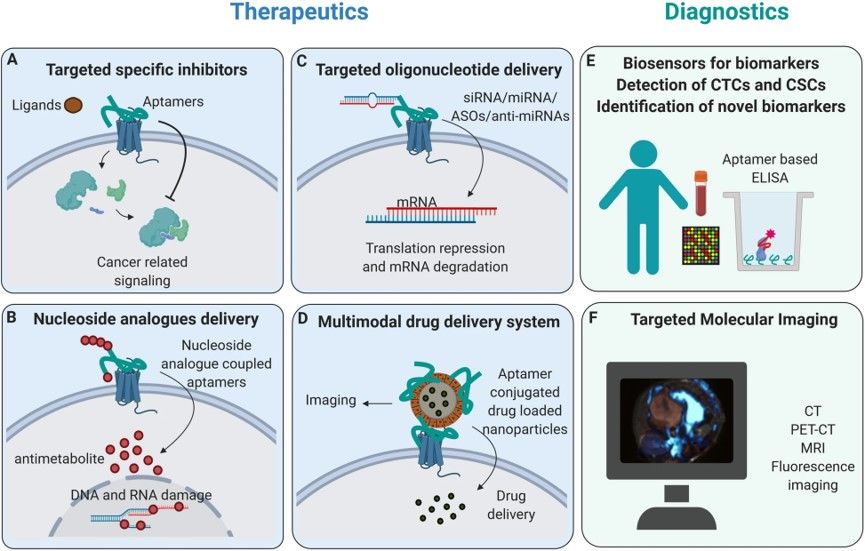 Fig.1 Some representative models of modified aptamers for disease diagnosis and therapy.1,2
What Can We Offer?
We offer a comprehensive suite of analytical modalities to transition your aptamer leads from raw sequences to validated candidates. Our workflow integrates atomic-resolution structural biology with real-time kinetic analysis to provide a multi-dimensional profile of your molecule's performance.
Tertiary structure analysis
-
Computational methods: Online software such as mfold and NUPACK employ the nearest-neighbor model to calculate the free energy of oligonucleotide structures based on base pairing to estimate the secondary structure of aptamers.
-
Circular dichroism (CD): An approach that can reveal structural information on aptamers based on their capacity to absorb circularly polarized light.
-
Nuclear magnetic resonance (NMR)spectroscopy: It uses the interaction of radio-frequency electromagnetic energy with the nuclei of atoms within the aptamer as well as the target in a strong magnetic field to determine the tertiary structure of aptamers in aqueous solution.
-
X-ray crystallography: It works by exposing a crystalline sample to X-rays and evaluating the spatial distribution and intensity of the diffracted rays to identify the three-dimensional structure of aptamers.
Binding affinity measurement
-
Based on binding-induced changes in target fluorescence: It measures differences in the fluorescence of a small-molecule ligand when it is bound to an aptamer compared to when it is free in solution to analyze aptamer affinity and specificity.
-
Fluorescence polarization: It works on the basis that receptor-ligand interaction reduces either binding partner's degrees of freedom, which can be identified by measuring the polarization of fluorescent light emitted by one of the species.
Thermodynamic profiling
-
Isothermal titration calorimetry (ITC): It may offer detailed aptamer KD values ranging from nM to M, along with ligand-binding stoichiometry, enthalpy, and entropy.
-
Surface plasmon resonance (SPR): It can characterize binding affinity and stoichiometry, kinetic metrics such as kon and koff for determining the binding parameters of aptamers.
-
Microscale thermophoresis (MST): It utilizes that bound aptamers or ligands have distinct - usually lower - diffusion rates in solution than their free counterparts to characterize the KD of aptamers for small molecules.
Competition assays
-
Bead-based binding assays: A biotinylated complementary strand immobilizes the aptamer on streptavidin-coated agarose beads. It is compatible with aptamers separated by library-immobilized SELEX.
-
Gold nanoparticle (AuNP)-based assays: It works that unmodified AuNPs can transform ligand-aptamer binding into a colorimetric signal in order to screen the binding of aptamers to specific molecules.
-
Strand-displacement assays: It works by targeting a complementary DNA strand that has been hybridized with a part of the aptamer.
Workflow
01
Technical Consultation: Our experts discuss your target type, intended application environment, and existing SELEX data to tailor the characterization strategy.
02
Sample Submission: Customers provide the specific aptamer sequence or synthesized material along with the target molecule (protein, small molecule, or cell line).
03
Feasibility & Buffer Optimization: We optimize buffer conditions, including pH and ionic strength, to precisely mimic your target site's physiological or industrial environment.
04
Multi-Modal Analysis: Execution of high-resolution biophysical assays, such as ITC, MST, SPR, and proprietary Exonuclease profiling, is performed under strict quality controls.
05
Data Integration & Bioinformatics: Our specialized bioinformaticians synthesize raw experimental data into a cohesive, multi-dimensional biophysical profile of your lead candidate.
06
Final Delivery: You receive a "Regulatory-Ready" report containing comprehensive raw data, interpreted structural insights, and expert recommendations for sequence optimization or stabilization.
Published Data
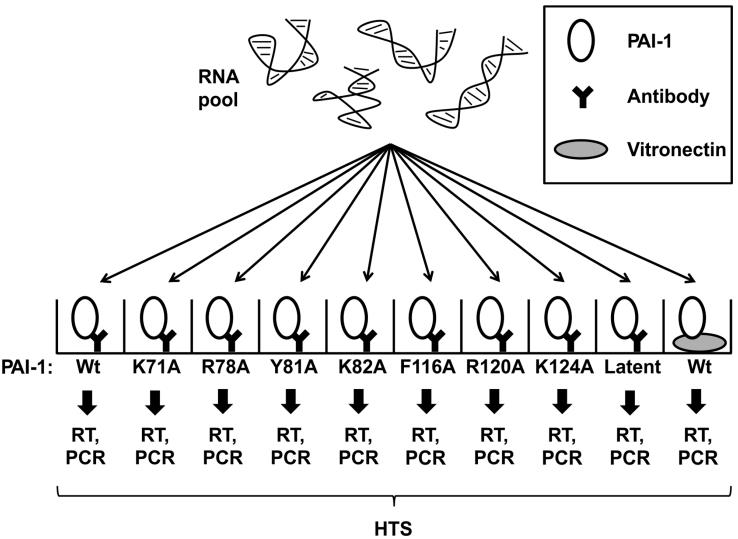 Fig.2 An overview of the method for parallelised aptamer characterisation.2,3
This study utilizes high-throughput sequencing (HTS) and branched selection to interrogate aptamer-target interactions for Plasminogen Activator Inhibitor-1 (PAI-1). By analyzing early SELEX pools (rounds 3-6), researchers used Surface Plasmon Resonance (SPR) to characterize the kinetics of diverse sequence clusters simultaneously. The characterization revealed that frequency in a pool does not always correlate with affinity; several "low-frequency" clusters exhibited superior KD values in the low-nanomolar range. Furthermore, by characterizing binding across different PAI-1 conformations (latent vs. active), the study identified aptamers with specific structural preferences. This data-driven approach allowed for the identification of the paionap-5 and -40, which were subsequently validated for their ability to inhibit PAI-1 activity in biochemical assays. This case underscores how detailed kinetic characterization and bioinformatic clustering transform complex SELEX pools into precise molecular tools.
Why Choose Us?
-
Years of Expertise: Our senior scientists have led aptamer projects since the technology's early adoption.
-
High-Density SPR Platforms: We overcome the sensitivity limits of standard labs, especially for low-molecular-weight targets.
-
Exonuclease Core Mapping: Our proprietary digestion assays save months of trial-and-error truncation.
-
In-Solution MST Validation: We eliminate false positives by validating binding without surface-immobilization artifacts.
-
Regulatory-Ready Reporting: Documentation is tailored to support intellectual property filings and regulatory submissions.
-
Adaptive Environment Mimicry: We characterize leads in the exact pH and ionic profile of your target application.
Applications
-
Therapeutic Lead Optimization: Identifying non-essential nucleotides for truncation reduces synthesis costs and allows for targeted conjugation (e.g., PEGylation) to extend half-life. Detailed structural insights further enable the development of high-precision drug delivery systems and personalized precision medicines by optimizing target engagement efficiency.
-
Diagnostic Assay Development: Characterization ensures high specificity in complex matrices like serum or soil, preventing cross-reactivity with structurally similar analogs. This rigor is fundamental for creating robust biosensors with industry-leading sensitivity and clinical diagnostic reliability, even in fluctuating biological environments.
-
Environmental Monitoring & Industrial Bioprocessing: Validating aptamer robustness across varying water temperatures and mineral contents ensures reliable performance for field-deployable sensors and real-time monitoring of industrial fermentation pathways, significantly improving process yields, product purity, and operational safety.
-
Target Discovery & Mapping: Using multi-epitope mapping to identify functional "hotspots" on proteins for future drug development. This methodology facilitates the discovery of novel regulatory sites previously unreachable by traditional antibody platforms, opening new avenues for innovative small-molecule interventions and polypharmacology.
FAQs
Q: How is aptamer specificity determined during characterization?
A: Specificity is validated through counter-screening against structural analogs and negative targets. We utilize SAR (Structure-Activity Relationship) mapping and competition assays to ensure the aptamer recognizes unique chemical moieties, distinguishing the intended target from closely related isoforms or metabolic byproducts.
Q: What is the importance of aptamer stability characterization, and how can it be assessed?
A: Stability characterization ensures the aptamer maintains its functional fold under physiological or industrial stress. We assess this using thermal melting curves via UV-Vis or CD spectroscopy and measure enzymatic resistance through serum stability assays, which determine the half-life against nuclease degradation.
Q: Can you characterize aptamers targeting toxic or non-immunogenic molecules?
A: Yes. Because aptamers are generated in vitro, we can characterize binders for highly toxic small molecules and non-immunogenic targets that are impossible to address with traditional antibody-based characterization due to biosafety or host response limitations.
Q: What is the "Active Fraction," and why does it matter?
A: The Active Fraction is the percentage of your synthesized aptamer that is actually capable of binding. Misfolding or synthesis impurities often mean only 40-70% of your molecules are "active." Knowing this is essential for calculating accurate dosing, yield, and commercial viability.
Q: How do you handle small molecule targets that are not fluorescent?
A: We utilize Microscale Thermophoresis (MST) with labeled aptamers or label-free ITC. These techniques do not require the small molecule itself to be fluorescent, allowing us to characterize virtually any ligand regardless of its intrinsic optical properties or molecular weight.
Q: Can you distinguish between different binding sites on the same protein?
A: Yes, through exosite mapping and competition assays. We can determine if multiple aptamers in your pool bind to the same epitope or if they can be used together in a "sandwich" assay format for advanced diagnostic and therapeutic development.
Q: Do you offer nuclease resistance testing during characterization?
A: Absolutely. We can perform serum stability assays to measure how long your aptamer remains intact in the presence of endogenous nucleases, providing vital data for predicting therapeutic half-life and determining the necessary chemical stabilization strategies required for in vivo success.
Q: My aptamer is G-rich; can you confirm if it forms a G-quadruplex?
A: We use Circular Dichroism (CD) and Thioflavin T (ThT) fluorescence assays specifically to identify and characterize G-quadruplex formations. These structures are known for high stability and unique mechanical properties that our scientists can precisely quantify and report for your specific project.
Creative Biolabs combines decades of expertise with cutting-edge biophysical platforms to ensure your aptamer project reaches its full potential. Our integrated technologies meet the rigorous needs of modern molecular research. Contact our expert team today for more details and a technical consultation.
Featured Services
Featured Products
References
-
Li, Q., et al. "Aptamers: a novel targeted theranostic platform for pancreatic ductal adenocarcinoma." Radiation Oncology 15.1 (2020): 189. https://doi.org/10.1186/s13014-020-01624-1
-
Dupont, Daniel M., et al. "Characterisation of aptamer-target interactions by branched selection and high-throughput sequencing of SELEX pools." Nucleic Acids Research 43.21 (2015): e139-e139. https://doi.org/10.1093/nar/gkv700
-
Distributed under Open Access license CC BY 4.0, without modification.
For Research Use Only.
Related Sections: