Product List Background TBEV NS1 Functional Service
Background
Overview of Tick-Borne Encephalitis Virus (TBEV)
TBEV is a single-stranded RNA virus that causes tick-borne encephalitis (TBE). The virus is reported to infect various hosts, including carnivores, ruminants, rodents, and humans. TBE caused by TBEV is a neurological disease with apparent symptoms of headache, fever, and sometimes semi-locked brain inflammation. Currently, TBE has posed a significant threat to global security.
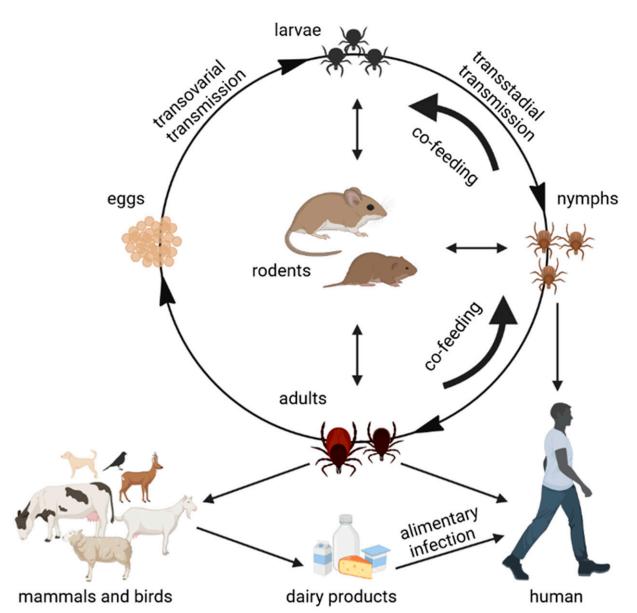 Fig.1 Routes of TBEV transmission within the life cycle of ixodid ticks.1, 3
Structure
TBEV is a typical single-stranded RNA virus in a spherical enveloped capsid with a diameter of approximately 50 nm. Consistent with other flaviviruses, the TBEV genome encodes some structural and non-structural proteins with different functions. Structural proteins include C (capsid), PrM (pre-membrane), and envelope protein (E). Nonstructural (NS) proteins involve several proteins, such as NS1, NS2A, NS3, NS4A, and NS5.
Function
For structural proteins, studies elucidate that envelope proteins are vital factors mediating receptor binding and neurovirulence. In addition, the conformation of the E protein is also altered by glycosylation during virion secretion. As a core member of non-structural proteins, TBEV NS1 is confirmed to be immunogenic, revealing the great potential of TBEV NS1 to trigger immune responses and oxidative stress. Notably, TBEV NS1 also plays an indispensable function in stimulating cytokine production.
TBEV NS1 Production
The eukaryotic expression system is a crucial approach for the production of recombinant TBEV NS1. Many facts show that the expression of TBEV NS1 protein in eukaryotic cells is successful. In addition, scientists have also tried to obtain NS1 protein in E. coli cells and achieved breakthrough progress.
Featured Products
The TBEV NS1 products we provide exist in a hexameric state, and we ensure that the products delivered to our customers are produced according to the highest quality standards.
Our TBEV NS1 ELONA Kit is compassionate and specific, allowing efficient detection of low concentrations of NS1 protein in target samples to ensure you get accurate results.
For more details on TBEV NS1 products, please contact us.
TBEV NS1 Autoantibody Functional Service
Creative Biolabs offers specialized ELISA kits tailored for the detection of TBEV NS1, featuring an antibody specific to TBEV NS1. These kits enable precise assessment of functional activity within this factor, serving as essential tools in research dedicated to crafting therapeutic strategies for disease management and intervention.
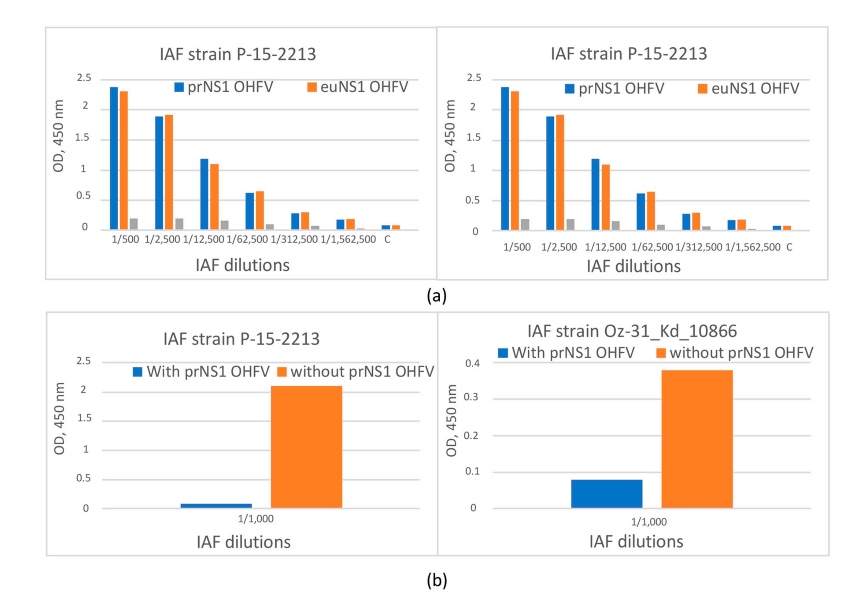 Fig.2 ELISA of serially diluted immune ascitic fluids from mice infected with OHFV strains to bind recombinant OHFV NS1 and TBEV NS1 proteins.2, 3
Omsk hemorrhagic fever virus (OHFV), a constituent of the tick-borne encephalitis virus (TBEV) complex within the Flaviviridae family, has sparked research interest due to its expanding geographic presence, necessitating understanding of antibody cross-reactivity with TBEV's NS1 proteins. Analysis revealed that anti-TBEV NS1 monoclonal antibodies did not cross-react with OHFV NS1. Furthermore, Researchers employed ELISA to evaluate sera from individuals diagnosed with tick-borne encephalitis (TBE), using recombinant NS1 proteins from both OHFV and TBEV as antigens, sera from TBE patients exhibited antibodies to TBEV NS1 but lacked cross-reactive antibodies to OHFV NS1, marking a novel discovery.
Creative Biolabs delivers expert analysis of TBEV NS1 functionality through comprehensive evaluations of interaction dynamics and in-depth functional assessments. These advanced services open novel avenues for patient diagnostics and exploration of the relationship between diseases and TBEV NS1. Tailored to meet the distinct needs of esteemed clients, these offerings significantly advance clinical and scientific research, aiding in the development of therapeutic strategies for combatting lethal TBEV challenge infections.
References
-
Ličková, Martina, et al. "Alimentary infections by tick-borne encephalitis virus." Viruses 14.1 (2021): 56.
-
Kravchuk, Bogdana I., et al. "Cross-Reactive Antibodies to the NS1 Protein of Omsk Hemorrhagic Fever Virus Are Absent in the Sera of Patients with Tick-Borne Encephalitis." Viruses 16.7 (2024): 1032.
-
Distributed under Open Access license CC BY 4.0, without modification.



 INQUIRY
 Datasheet