
Angiogenesis is a tightly regulated process that supports tissue development, regeneration, and cellular communication through the formation of new vascular structures. Exosomes have emerged as important mediators in this process by transferring proteins, lipids, and nucleic acids that influence endothelial cell behavior, including tube formation, migration, and signaling activation.
Creative Biolabs offers the exosome induced angiogenesis promotion assay service to support in vitro investigations into how exosomes modulate vascular related cellular responses. The assay focuses on endothelial models and evaluates changes in network formation, branching complexity, and structural stability under defined experimental conditions.
| Step | Detail |
|---|---|
| Step 1. Study Design and Endothelial Cell Selection | Creative Biolabs reviews the research goal and recommends suitable endothelial cell types along with optimized assay formats. |
| Step 2. Cell Seeding and Matrix Preparation | Cells are seeded onto specialized substrates that support vascular structure formation and are allowed to stabilize before treatment. |
| Step 3. Exosome Treatment Optimization | Exosome concentration, exposure time, and treatment conditions are adjusted to match the expected biological response. |
| Step 4. Angiogenesis Induction Phase | Cells are cultured under conditions that promote network formation, allowing exosome driven effects to emerge. |
| Step 5. Imaging and Structural Capture | Time dependent imaging is performed to document tube formation, branching points, and network connectivity. |
| Step 6. Quantitative Analysis | Creative Biolabs measures parameters such as total tube length, node number, and mesh formation to quantify angiogenic activity. |
| Step 7. Data Normalization and Interpretation | Results are processed to ensure consistency across replicates and compared between control and treated groups. |
| Step 8. Final Report Delivery | Clients receive organized datasets along with annotated images and clear analytical summaries. |
If you would like to adapt this workflow for your project, Creative Biolabs specialists are ready to assist.
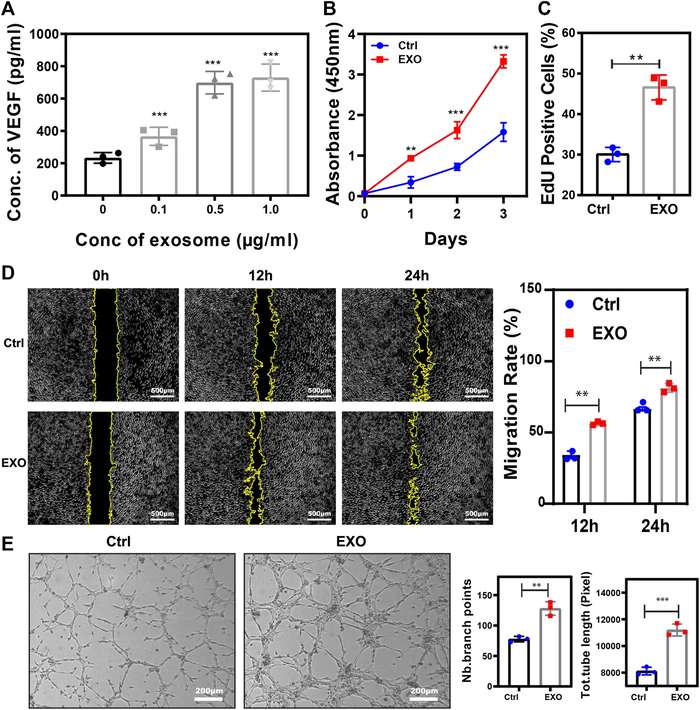 Fig.1 M2 derived exosomes promote angiogenesis.1
Reveals how extracellular vesicles influence endothelial behavior and communication.
Supports evaluation of different exosome preparations and their angiogenic potential.
Provides insight into how cells coordinate structural organization through signaling transfer.
Helps establish in vitro systems that reflect vascular formation processes.
Researchers seeking deeper insight into angiogenesis mechanisms can consult Creative Biolabs for technical input.
 Robust Endothelial Model Systems
Well established cell models support reproducible angiogenesis studies.
Quantitative Network Analysis
Multiple parameters provide objective assessment of angiogenic changes.
Flexible Experimental Setup
Conditions can be adjusted for different exosome sources and study aims.
Correlation with Functional Assays
Results can be integrated with migration or proliferation data for broader interpretation.
For further details about available options, reaching out to Creative Biolabs is encouraged.
For similar study needs, working with Creative Biolabs can simplify your experimental process.
Angiogenesis remains a key aspect of cellular communication and structural organization in vitro. With reliable experimental design and consistent data output, Creative Biolabs supports researchers in generating meaningful insights into exosome driven vascular responses. To discuss your project or request a customized assay, reaching out to Creative Biolabs is always a good starting point.
A: Endothelial cells are commonly used due to their role in vascular formation. The specific cell type can be selected based on your research focus.
A: Yes. Time dependent imaging allows detection of initial structural changes as well as later stage network formation.
A: Parameters such as tube length, branching points, and network complexity are measured using image based analysis tools.
A: Parallel experimental groups can be designed to evaluate differences between various exosome sources under identical conditions.
A: Variables such as cell density, matrix composition, and incubation time can affect outcomes. These are carefully controlled by Creative Biolabs.
A: Yes. Data can be combined with migration, proliferation, or signaling studies to provide a more complete understanding of cellular responses.
Reference