

Cellular senescence represents a stable state of cell cycle arrest accompanied by distinct morphological and biochemical changes. It plays a key role in aging, stress responses, and tissue homeostasis. Exosomes have been shown to influence senescence by transferring signaling molecules that affect pathways related to DNA damage response, metabolic regulation, and secretory phenotypes.
The exosome regulated cellular senescence assay service from Creative Biolabs is designed for in vitro studies that investigate how exosomes alter the onset and progression of senescence. By combining established senescence markers with functional readouts, this assay enables clear identification of whether exosome exposure promotes, delays, or reshapes senescence related phenotypes.
| Step | Detail |
|---|---|
| Step 1. Study Goal Definition and Model Selection | Creative Biolabs works with researchers to determine whether the focus is on senescence induction, suppression, or phenotype modulation, followed by selection of appropriate cell systems. |
| Step 2. Cell Preparation and Baseline Conditioning | Cells are cultured under controlled conditions to establish stable baseline states, minimizing variability before treatment. |
| Step 3. Induction Strategy Setup | Where required, senescence inducing conditions such as replicative stress or chemical stimulation are introduced to create a measurable model. |
| Step 4. Exosome Treatment Design | Exosomes are applied at defined concentrations and time points, with treatment schedules tailored to capture early and late responses. |
| Step 5. Senescence Marker Detection | Key markers including enzymatic activity, protein expression, and morphological changes are measured using validated methods. |
| Step 6. Imaging and Phenotype Characterization | Cell morphology, size, and structural changes are documented to complement quantitative data. |
| Step 7. Data Analysis and Interpretation | Creative Biolabs provides normalized results, statistical comparisons, and structured outputs for clear evaluation. |
| Step 8. Report Preparation and Delivery | Final deliverables include detailed datasets, visual documentation, and methodological descriptions. |
To fine tune any step or include additional endpoints, you can reach out to Creative Biolabs technical specialists.
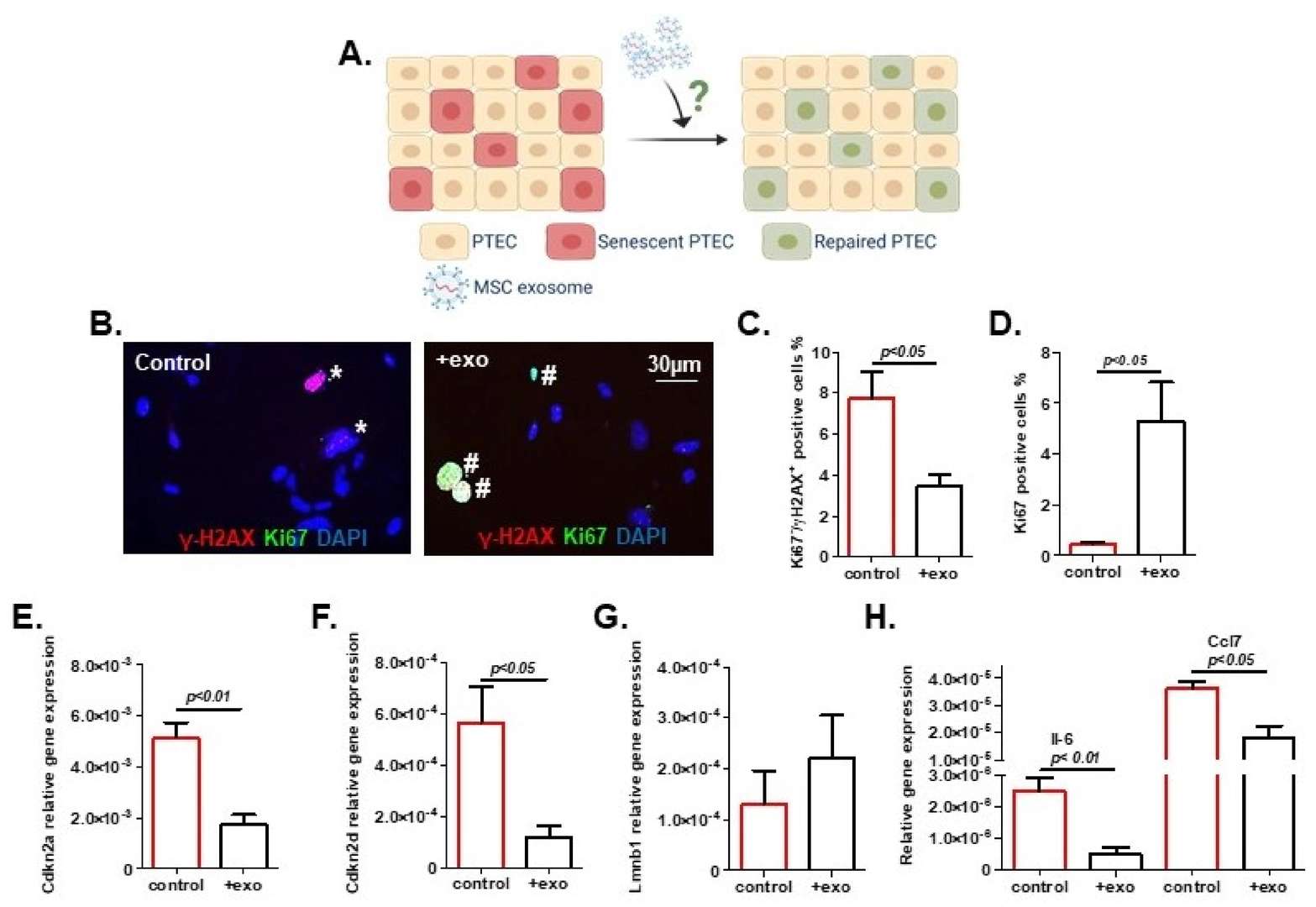 Fig.1 Exosome therapy decreased senescence in primary tubular epithelial cells (PTECs).1
Senescence assays provide insight into how exosomes influence long term cellular behavior and stability.
Changes in senescence markers reflect how cells respond to internal and external stress signals.
Exosomes may alter the profile of factors released by senescent cells, influencing surrounding cells.
Different exosome preparations can be assessed for their ability to regulate senescence pathways.
Researchers planning senescence related studies can connect with Creative Biolabs for technical input.
 Multi Parameter Senescence Assessment
Combines enzymatic, molecular, and morphological indicators for reliable interpretation.
Flexible Induction Models
Supports both naturally occurring and experimentally induced senescence systems.
Integration with Functional Readouts
Data can be aligned with proliferation, apoptosis, or metabolic studies.
Adaptation to Various Cell Types
Protocols are optimized for different cell origins and growth characteristics.
If you are considering how to configure this assay, Creative Biolabs scientists are ready to assist.
For similar support and project outcomes, reaching out to Creative Biolabs is a good starting point.
Cellular senescence represents a critical aspect of how cells respond to stress and maintain long term stability. With carefully controlled experimental conditions and reliable detection strategies, Creative Biolabs delivers data that support detailed in vitro research on exosome mediated regulation. For customized assay design or to begin your project, contacting Creative Biolabs is highly recommended.
A: Creative Biolabs combines multiple markers, including enzymatic activity and morphology, to distinguish stable senescence from transient cell cycle arrest. Time dependent analysis further supports accurate interpretation.
A: Yes. The design allows comparison between treated and control groups to determine whether exosomes promote or reduce senescence related changes.
A: Common markers include senescence associated enzymatic activity, expression of regulatory proteins, and characteristic morphological features. Selection depends on the study design.
A: Time course studies can be implemented to observe how senescence develops or resolves over time following exosome exposure.
A: Protocols are adjusted based on cell growth characteristics and baseline behavior to ensure consistent and interpretable results.
A: Yes. Senescence data can be integrated with proliferation, apoptosis, or metabolic assays to provide a broader understanding of cellular response.
Reference