

Oxidative stress, caused by an imbalance between reactive oxygen species (ROS) and antioxidant defenses, plays a critical role in various diseases and aging processes. Exosomes, as carriers of bioactive molecules, have been implicated in regulating cellular stress responses and enhancing cellular survival under challenging conditions. Creative Biolabs' assay allows researchers to investigate how exosome treatment impacts cell viability, oxidative stress tolerance, and the activation of cellular defense mechanisms.
| Step | Detail |
|---|---|
| Step 1. Study Design and Objective Definition | At the beginning of the study, Creative Biolabs works with researchers to define the specific objectives, such as assessing the effect of exosomes on cell survival under oxidative stress or identifying cellular pathways activated by exosome treatment. |
| Step 2. Cell Preparation and Treatment Setup | To simulate oxidative stress, cells may be exposed to ROS-inducing agents such as hydrogen peroxide (H2O2) or other pro-oxidant compounds. |
| Step 3. Exosome Treatment and Stress Induction | Exosomes are applied to the cells, and oxidative stress is induced by exposure to ROS-generating agents. |
| Step 4. Measurement of Cellular Responses | Cell viability, apoptosis, and oxidative stress markers are measured after treatment. Creative Biolabs offers a range of techniques for quantifying cellular responses, including MTT assays for viability, flow cytometry for apoptosis, and specific assays for antioxidant enzyme activity and ROS levels. |
| Step 5. Data Analysis and Statistical Evaluation | Creative Biolabs' team processes the data to provide both qualitative and quantitative results. The analysis includes the comparison of cell survival and ROS levels between treated and control groups. Statistical methods are used to determine significant differences and validate the findings. |
For any additional questions or to modify the assay according to your research needs, Creative Biolabs' technical support team is available to assist.
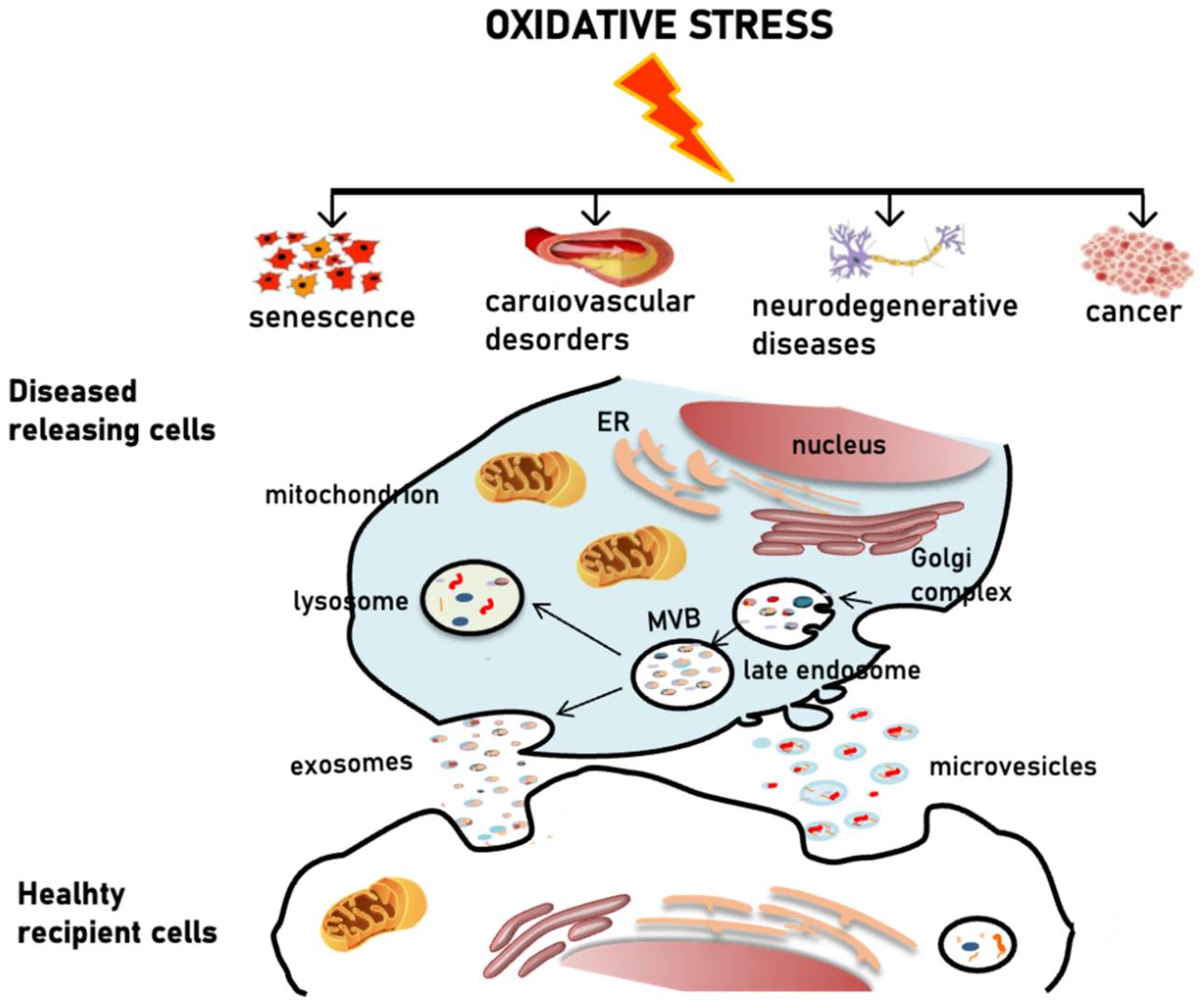 Fig.1 EVs and their role in oxidative stress-related diseases.1
This assay is essential for understanding how exosomes influence cellular resilience to oxidative stress, which is a key factor in aging, cancer, neurodegenerative diseases, and other conditions where cellular damage from ROS plays a significant role.
Exosomes can potentially be used to enhance cellular protection in oxidative stress conditions. Studying this process can help identify therapeutic strategies for preventing cell damage associated with various diseases, including cardiovascular diseases and inflammatory disorders.
Exosome treatment may modulate antioxidant enzyme activity, which could be studied using this assay. Understanding how exosomes regulate these pathways offers insights into how they can be leveraged to promote cell survival in stressful environments.
Since oxidative stress is a critical factor in aging and many chronic diseases, understanding how exosomes can influence stress resistance may provide important clues for developing novel treatments or prevention strategies.
For more information on how this assay can contribute to your research, Creative Biolabs' technical team is available to provide further assistance and discuss your study's specific needs.
 Customizable Experimental Design
The assay can be tailored to study various cell types, exosome sources, and oxidative stress conditions, providing flexibility for a wide range of research applications.
Multiple Detection Methods
Creative Biolabs provides several techniques for assessing oxidative stress and cellular responses, including MTT assays, flow cytometry, ROS detection kits, and antioxidant activity assays, allowing researchers to select the most appropriate methods for their study.
Time-Dependent Analysis
The assay can be conducted over different time points to assess both immediate and long-term effects of exosome treatment on oxidative stress resistance, providing a dynamic view of cellular responses.
Scalable for Different Cell Models
This assay supports various cell types, including primary cells and immortalized cell lines, and can be used for both acute and chronic oxidative stress models, enabling broader applicability for different research areas.
For further customization or technical support, Creative Biolabs' scientific team is ready to assist you with your specific needs.
For additional inquiries or to get started with your study, Creative Biolabs' team is available for consultation and to guide you through the process.
Creative Biolabs provides an essential tool for researchers investigating the role of exosomes in cellular stress resistance. With the ability to customize protocols and analyze oxidative stress responses in different cell types, this service offers valuable insights into exosome-driven cellular protection. For more information or assistance with your study, contact our team today.
A: Exosomes are believed to transfer protective molecules, such as antioxidants and signaling proteins, that help cells resist oxidative damage. This assay helps identify how exosome treatment enhances cellular survival under oxidative stress conditions.
A: Yes. The assay can be customized to assess resistance to various types of oxidative stress, such as induced by hydrogen peroxide, UV radiation, or other ROS-generating agents, depending on the specific research question.
A: Yes. The assay can be set up to study both acute responses (short-term exposure) and chronic responses (long-term exposure), providing insights into how cells adapt over time.
A: The assay works with a range of cell types, including primary cells, stem cells, and immortalized cell lines. The choice of cell type is based on the research objectives and the desired model for studying oxidative stress.
Reference