

Extracellular matrix remodeling is a dynamic process that shapes tissue structure and regulates cell behavior. It involves coordinated deposition, degradation, and reorganization of matrix components such as collagen, fibronectin, and proteoglycans. Exosomes contribute to this process by transferring enzymes, regulatory proteins, and nucleic acids that influence matrix turnover and cellular interactions with the surrounding environment.
The exosome driven extracellular matrix remodeling assay service from Creative Biolabs supports in vitro studies focused on how exosomes alter matrix composition and remodeling activity. By integrating quantitative analysis of matrix related proteins with functional readouts, this assay provides insight into how exosome mediated signaling reshapes the extracellular landscape. Experimental parameters are tailored to match the biological system under investigation, ensuring reliable and interpretable outcomes.
| Step | Detail |
|---|---|
| Step 1. Research Objective Definition and Matrix Model Selection | Creative Biolabs reviews the study focus to determine whether matrix deposition, degradation, or structural reorganization is the primary endpoint, followed by selection of suitable matrix systems. |
| Step 2. Substrate Preparation and Conditioning | Matrix coated surfaces or three dimensional culture systems are prepared under controlled conditions to ensure consistency across experiments. |
| Step 3. Cell Seeding and Preconditioning | Cells are introduced into the prepared system and allowed to establish stable interactions with the matrix before treatment. |
| Step 4. Exosome Exposure Design | Exosomes are applied at defined concentrations and time points, with optional inclusion of environmental factors that influence remodeling activity. |
| Step 5. Matrix Remodeling Assessment | Changes in matrix composition are evaluated through detection of key proteins, enzymatic activity assays, or structural analysis. |
| Step 6. Imaging and Structural Evaluation | Microscopy based methods are used to observe matrix organization, fiber alignment, and cell matrix interactions. |
| Step 7. Data Analysis and Interpretation | Creative Biolabs provides normalized quantitative data along with visual outputs to support clear comparison between conditions. |
| Step 8. Final Reporting and Data Delivery | Results are organized into structured reports that include raw data, processed outputs, and methodological details. |
For adjustments to experimental design or additional analytical options, you can connect directly with Creative Biolabs specialists.
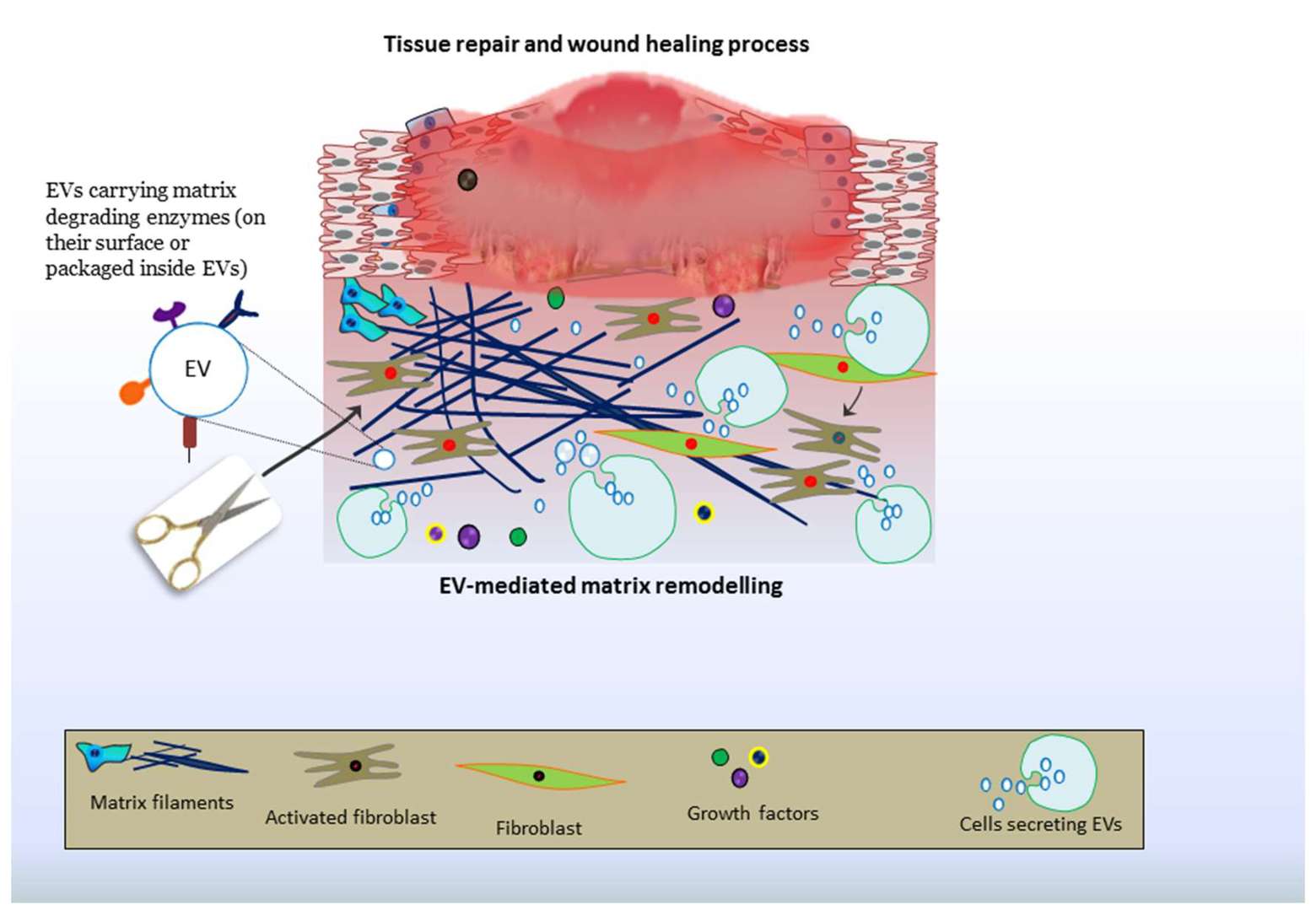 Fig.1 EV-associated MMPs facilitate tissue repair by promoting matrix remodeling.1
Remodeling assays reveal how exosomes regulate the balance between matrix synthesis and degradation.
Alterations in matrix structure can influence adhesion, migration, and signaling pathways.
Comparative analysis highlights how different exosome preparations affect matrix dynamics.
Matrix remodeling data contribute to understanding how cells shape their microenvironment in vitro.
Researchers interested in applying this assay to their systems can reach out to Creative Biolabs for technical input.
 Support for Multiple Matrix Systems
Compatible with two dimensional coatings and three dimensional matrix models depending on study requirements.
Quantitative and Structural Readouts
Combines biochemical measurements with imaging based evaluation of matrix organization.
Detection of Remodeling Enzyme Activity
Assesses activity of enzymes involved in matrix turnover, providing functional insight.
Integration with Cellular Behavior Studies
Matrix remodeling data can be correlated with adhesion, migration, or proliferation assays.
If you would like guidance on selecting suitable features, Creative Biolabs scientists are ready to help.
For comparable research support, contacting Creative Biolabs is a practical option.
Extracellular matrix remodeling reflects a critical aspect of how cells interact with and reshape their environment. Through carefully controlled experimental design and reliable analytical methods, Creative Biolabs provides data that support in depth understanding of exosome driven effects in vitro. To initiate your study or discuss customization options, reaching out to Creative Biolabs is highly recommended.
A: The assay can include analysis of proteins such as collagen, fibronectin, and laminin, as well as enzymes involved in matrix turnover. Creative Biolabs selects targets based on the research objective.
A: Yes. By combining protein quantification with enzyme activity measurements, the assay can differentiate between increased synthesis and enhanced breakdown of matrix components.
A: Three dimensional models can be incorporated to better reflect complex matrix environments. These systems allow more realistic evaluation of remodeling behavior.
A: Imaging techniques are used to assess fiber organization, density, and spatial distribution. These observations complement quantitative data.
A: Yes. Matrix remodeling data are often interpreted alongside functional assays to provide a more complete understanding of cell behavior.
A: Factors such as matrix uniformity, cell density, and treatment timing can affect outcomes. Creative Biolabs applies standardized procedures to maintain consistency.
Reference