
Immune modulation involves the regulation of immune cell activation, signaling, and interaction within a defined environment. Exosomes are increasingly recognized as key mediators in this process, carrying bioactive molecules that can influence immune cell behavior, including activation status, cytokine production, and intercellular communication.
Creative Biolabs provides the exosome immune modulation capacity assay service to support in vitro studies focused on evaluating how exosomes shape immune responses. This assay examines changes in immune cell phenotype, signaling activity, and secreted factors following exosome exposure. By combining quantitative measurement with functional readouts, the service enables clear assessment of how exosomes alter immune related cellular behavior under controlled experimental conditions.
| Step | Detail |
|---|---|
| Step 1. Study Planning and Immune Model Selection | Creative Biolabs works with researchers to define the immune context, selecting appropriate cell types such as macrophages, T cells, or other relevant models. |
| Step 2. Cell Preparation and Baseline Conditioning | Immune cells are cultured under standardized conditions to ensure stable baseline activity prior to treatment. |
| Step 3. Exosome Treatment Design | Exosomes are introduced at defined concentrations and incubation periods, with optional co stimulation conditions if required. |
| Step 4. Immune Response Induction Setup | Cells may be exposed to defined stimuli to evaluate modulation of activation or suppression pathways. |
| Step 5. Marker Detection and Functional Readouts | Key immune markers, cytokine levels, and signaling indicators are measured using validated analytical methods. |
| Step 6. Data Acquisition and Quantification | Creative Biolabs quantifies changes in immune activity and compares treated versus control conditions. |
| Step 7. Data Analysis and Interpretation | Results are normalized and statistically evaluated to highlight meaningful differences. |
| Step 8. Reporting and Data Delivery | Clients receive organized datasets, graphical outputs, and clear interpretation of immune modulation effects. |
To adapt this workflow to your research needs, Creative Biolabs specialists are ready to provide guidance.
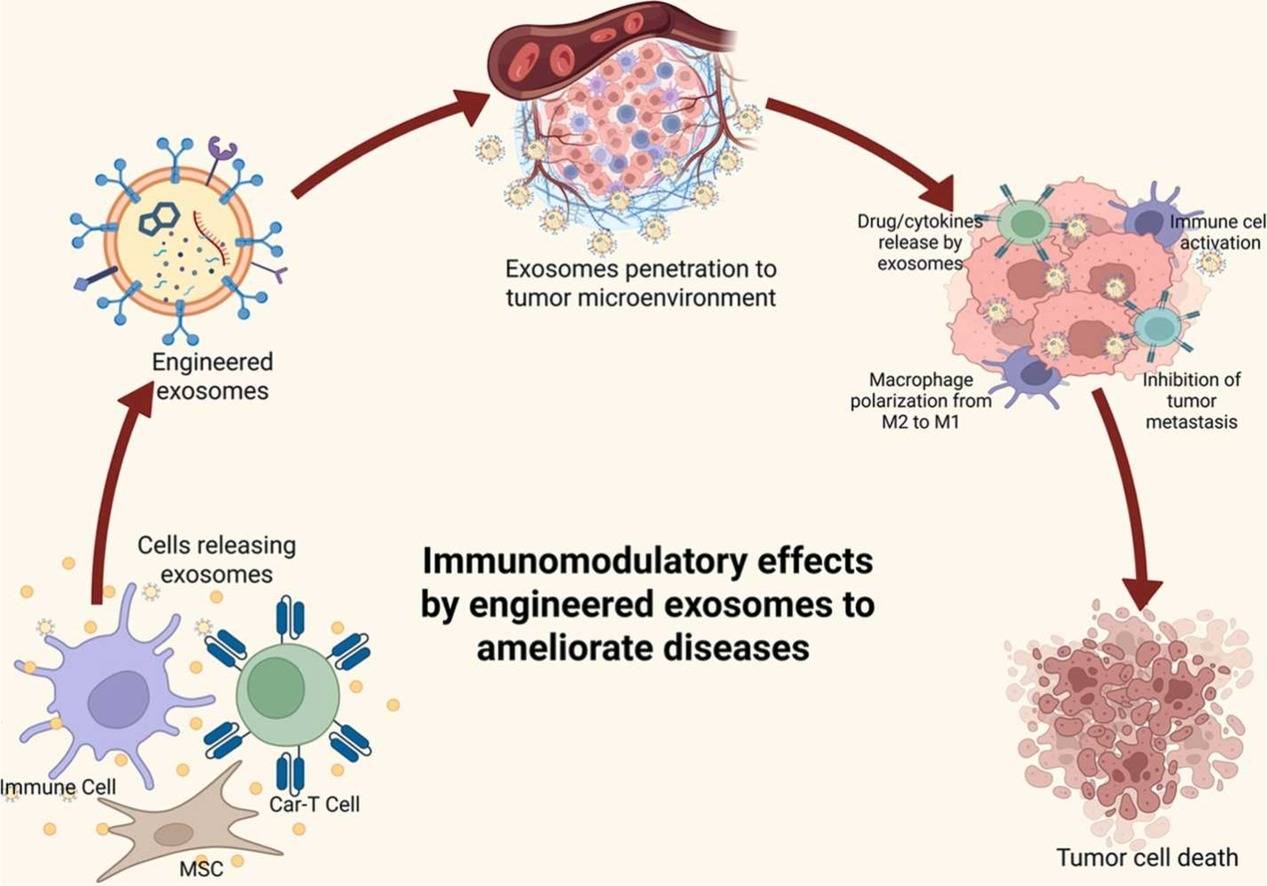 Fig.1 Engineered exosomes exert immunomodulatory functions that help alleviate disease conditions.1
Reveals how exosomes influence activation and suppression pathways in immune cells.
Supports comparison of immune modulation capacity across samples.
Connects molecular level changes with functional immune behavior.
Provides insight into how immune cells interact through exosome mediated signaling.
Researchers interested in immune related assays can reach out to Creative Biolabs for technical input.
 Support for Diverse Immune Cell Types
Compatible with multiple immune cell systems depending on study objectives.
Multi Parameter Immune Analysis
Measures cytokines, surface markers, and signaling changes in a single study.
Quantitative and Functional Outputs
Provides both measurable data and functional interpretation.
Integration with Related Assays
Can be aligned with inflammation, viability, or signaling studies.
If you need help selecting the right setup, Creative Biolabs scientists are available for consultation.
For similar project outcomes, contacting Creative Biolabs is a practical next step.
Understanding how exosomes regulate immune responses is essential for studying cellular communication and signaling in vitro. With carefully controlled experimental design and reliable analytical methods, Creative Biolabs delivers data that support meaningful investigation of immune modulation capacity. To initiate your study or discuss customization options, reaching out to Creative Biolabs is highly recommended.
A: The assay supports a range of immune cell types, including macrophages and lymphocytes. Selection depends on the research objective and desired immune response.
A: Yes. The assay design allows measurement of increased or decreased immune activity relative to control conditions.
A: Quantification is based on cytokine levels, marker expression, and signaling changes measured through established methods.
A: Defined stimuli can be incorporated to evaluate how exosomes modulate immune responses under activated conditions.
A: Cell type, treatment timing, and experimental conditions can affect results. Creative Biolabs standardizes these variables to ensure reliable data.
A: Yes. Immune modulation data can be combined with inflammation, proliferation, or signaling studies for broader interpretation.
Reference