

Phenotypic transition describes the process by which cells shift from one functional state to another, often involving coordinated changes in morphology, gene expression, and behavior. This includes transitions such as epithelial to mesenchymal states or activation related changes in specialized cell types. Exosomes contribute to these transitions by transferring regulatory cargo that influences signaling pathways and cellular identity.
Creative Biolabs offers the exosome mediated phenotypic transition assay service to support in vitro research focused on how exosomes drive or modulate these dynamic cellular changes. The assay integrates marker analysis, morphological observation, and functional readouts to capture the progression of phenotypic shifts under controlled conditions.
| Step | Detail |
|---|---|
| Step 1. Study Objective Clarification and Model Selection | Creative Biolabs works with researchers to define the specific phenotypic transition of interest and selects suitable cell systems. |
| Step 2. Baseline Culture Establishment | Cells are maintained under standardized conditions to ensure a stable starting phenotype before treatment. |
| Step 3. Transition Induction Design | If required, defined stimuli are introduced to initiate or enhance phenotypic transition processes. |
| Step 4. Exosome Treatment Planning | Exosomes are applied at selected time points to evaluate their influence on initiation or progression of the transition. |
| Step 5. Marker Detection and Profiling | Cells are analyzed for changes in key markers associated with the target phenotype using validated detection methods. |
| Step 6. Morphological Monitoring | Imaging is used to observe structural changes that reflect phenotypic shifts. |
| Step 7. Quantitative Data Analysis | Creative Biolabs measures marker expression levels and evaluates the extent of transition across experimental groups. |
| Step 8. Reporting and Data Delivery | Final outputs include structured datasets, representative images, and clear interpretation. |
To tailor this workflow to your experimental needs, Creative Biolabs specialists are available for consultation.
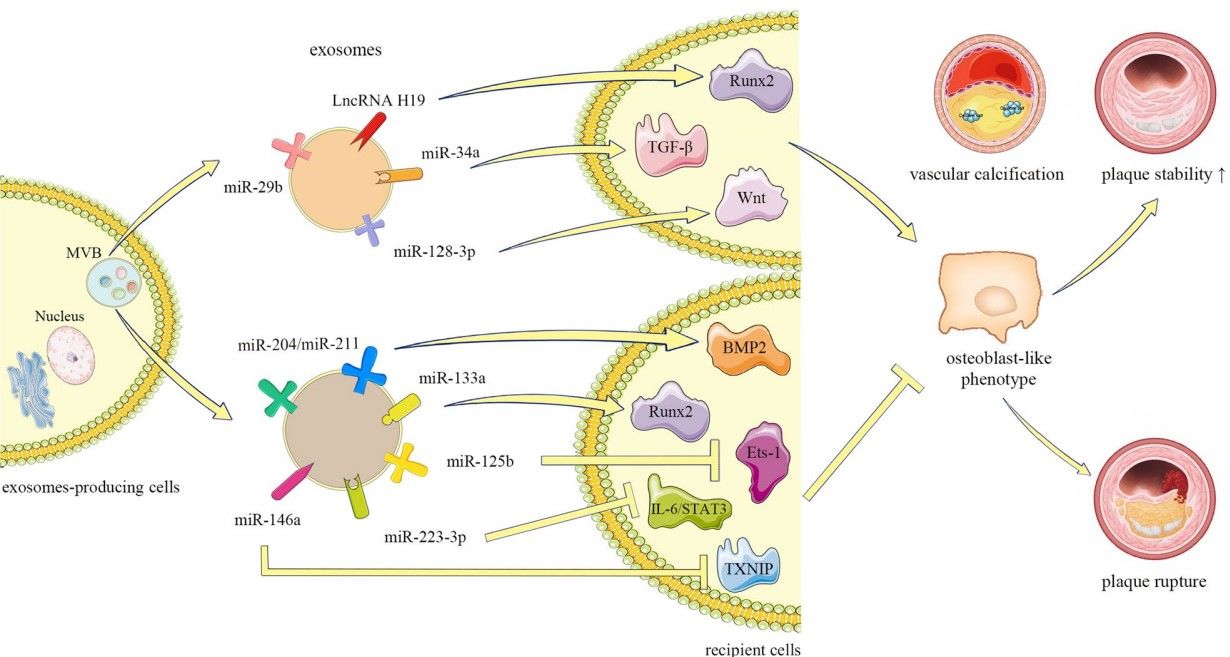 Fig.1 Exosomal Modulation of Osteogenic Phenotypes and Plaque Stability in Vascular Smooth Muscle Cells.1
Phenotypic transition assays reveal how cells adapt to changing signals and environments.
Provides insight into how extracellular vesicles influence shifts in cell state.
Supports evaluation of variability in transition induction across samples.
Helps interpret how structural and molecular changes impact overall cellular function.
Researchers interested in applying this assay to their systems can connect with Creative Biolabs for technical guidance.
 Support for Multiple Transition Models
Suitable for studying a range of phenotypic changes across different cell types.
Combined Molecular and Morphological Analysis
Provides both marker based and visual evidence of cellular transitions.
Flexible Experimental Design
Allows adjustment of induction conditions and exosome treatment strategies.
Compatibility with Functional Assays
Data can be linked with migration, adhesion, or signaling studies.
For advice on configuring these features, Creative Biolabs scientists are ready to assist.
For similar project support, contacting Creative Biolabs is a practical next step.
Phenotypic transition reflects the dynamic nature of cellular identity and response to external signals. With carefully structured experimental design and reliable analytical methods, Creative Biolabs supports in depth investigation of exosome mediated cellular changes. To begin your study or discuss customization options, reaching out to Creative Biolabs is highly recommended.
A: The assay can be adapted to different transition models depending on the research objective. Creative Biolabs works with clients to define suitable systems and markers.
A: Quantification is based on changes in marker expression and morphological characteristics, allowing objective comparison across conditions.
A: Yes. The assay design supports detection of both enhanced and reduced transition responses relative to controls.
A: Time course studies can be incorporated to track progression and timing of phenotypic changes following exosome exposure.
A: Variables such as cell type, induction conditions, and treatment timing can affect results. Creative Biolabs carefully standardizes these parameters.
A: Yes. Phenotypic transition data can be integrated with proliferation, migration, or signaling studies to provide a broader understanding.
Reference