

The exosome stimulated cell invasion and migration assay service at Creative Biolabs supports in vitro studies focused on how exosomes influence cellular movement and invasive behavior. Cell migration and invasion are key biological processes that reflect dynamic changes in cytoskeletal organization, cell adhesion, and interaction with the surrounding environment. Evaluating these responses after exosome treatment provides important insight into functional mechanisms that regulate cell motility.
Creative Biolabs offers carefully designed assay systems that measure both directional movement and the ability of cells to traverse defined barriers. Experimental conditions are tailored according to cell type, exosome source, and study objectives, ensuring that observed changes in migration or invasion are directly linked to exosome mediated effects. Quantitative analysis combined with imaging based validation supports reliable and interpretable results.
| Step | Detail |
|---|---|
| Step 1. Study Design and Assay Selection | Creative Biolabs works with researchers to determine whether migration, invasion, or both should be evaluated. The choice between wound closure models and transwell based systems is guided by the biological question and cell characteristics. |
| Step 2. Cell Preparation and Condition Optimization | Cells are cultured under standardized conditions to ensure consistent baseline motility. Cell density, serum levels, and pre treatment conditions are carefully controlled. |
| Step 3. Exosome Treatment Setup | Exosomes are applied at defined concentrations, either prior to or during the assay depending on the experimental design. Timing is selected to capture relevant changes in motility behavior. |
| Step 4. Assay Execution | For migration studies, scratch based models are used to monitor collective cell movement over time. For invasion analysis, cells are assessed for their ability to pass through matrix coated membranes. Both approaches provide complementary information. |
| Step 5. Imaging and Quantitative Measurement | Cell movement is recorded using imaging systems at defined time points. Quantitative metrics such as migration distance, closure rate, or number of invading cells are calculated. |
| Step 6. Data Analysis and Interpretation | Creative Biolabs processes data to compare treated and control groups, providing statistical evaluation and graphical summaries. Results are organized to highlight trends and differences in motility behavior. |
| Step 7. Reporting and Data Delivery | Final outputs include raw measurements, processed data, and representative images. Documentation supports integration into broader functional studies. |
For customization of assay conditions or inclusion of additional parameters, clients may contact Creative Biolabs technical support team.
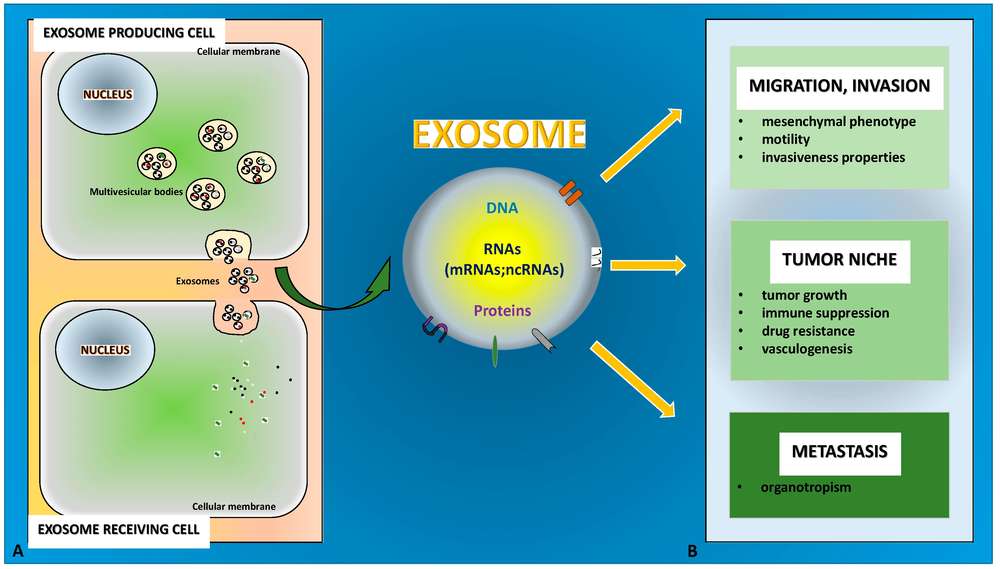 Fig.1 Exosomes in Epithelial-to-Mesenchymal Transition (EMT) and Tumor Progression.1
Migration assays reveal how exosomes influence directional movement and cellular coordination.
Invasion analysis provides insight into the ability of cells to interact with and move through extracellular barriers.
Different exosome preparations can be assessed for their relative impact on motility behavior.
Observed movement patterns can be connected to underlying changes in cytoskeletal organization.
Researchers interested in integrating motility analysis into their studies are encouraged to reach out to Creative Biolabs for technical discussion.
 Multiple Assay Formats
Both wound closure and transwell systems are available to assess different aspects of cell movement.
Quantitative and Visual Readouts
Data include measurable metrics as well as imaging based validation to support interpretation.
Adaptation to Cell Type Characteristics
Protocols are adjusted based on adherence properties and baseline motility of the selected cells.
Compatibility with Mechanistic Studies
Migration and invasion data can be correlated with cytoskeletal, signaling, or gene expression analyses.
For assistance in selecting the most appropriate assay configuration, Creative Biolabs specialists are available to provide input.
For similar project outcomes, Creative Biolabs welcomes direct communication to discuss your research needs.
Careful assessment of cell migration and invasion provides valuable insight into how exosomes influence dynamic cellular behavior. Through controlled experimental design and reliable measurement approaches, Creative Biolabs delivers data that support detailed mechanistic studies. Researchers seeking a trusted partner for motility related assays are encouraged to contact us for tailored support and collaborative project planning.
A: The choice depends on the research objective. Migration assays focus on cell movement across a surface, while invasion assays evaluate the ability to pass through a matrix barrier. Creative Biolabs reviews the study goals and recommends the most appropriate approach or a combination of both.
A: Yes. Many studies benefit from combining migration and invasion analysis to provide a broader view of cell motility. Creative Biolabs can design coordinated experiments that generate comparable data across formats.
A: Standardized culture conditions, consistent cell seeding, and controlled assay timing help minimize variability. Replicates are included to ensure reliable measurement of trends.
A: Factors include initial cell density, uniformity of the scratch area in wound based assays, and consistency of imaging intervals. Creative Biolabs applies validated procedures to maintain accuracy and reproducibility.
A: Yes. The analysis is designed to capture directional changes relative to control conditions, allowing identification of both enhanced and reduced movement.
A: No. This service is designed strictly for in vitro research. The data support mechanistic understanding and are not suitable for clinical evaluation.
Reference