Using gold-standard X-ray crystallography, our assay determines the atomic-resolution binding sites of cancer peptides to immune receptors, which is critical for targeted cancer immunotherapy.
Learn More →B Cell based Small-Angle Scattering Assay Service
Creative Biolabs provides specific deliverables that empower you to make data-driven decisions at the earliest stages of biotherapeutic development. You can expect to receive comprehensive structural insights that predict an antibody's stability and function, allowing you to de-risk your pipeline and focus on the most promising candidates. Our service delivers low-resolution 3D models of your antibodies in their native solution state and critical data on their conformational flexibility and aggregation behavior. By identifying potential issues early, we help you avoid costly failures in later development phases.
Introduction What We Can Offer Workflow Why Creative Biolabs Customer Reviews FAQs Related Services Contact Us
Brief Summary of Small-angle Scattering Assay
Small-angle X-ray scattering (SAXS) is a valuable structure analysis technique applied to acquire data on the shape, structure changes, and size of macromolecules in solution. SAXS is typically used to study the interactions between macromolecules and the functional mechanisms of molecules in cells. This method can offer low-resolution structural graphs of bound proteins, such as an antigen-antibody complex, on the shape, conformation, and binding state.
To explore how our assay can be applied to your research objectives - Request a consultation.
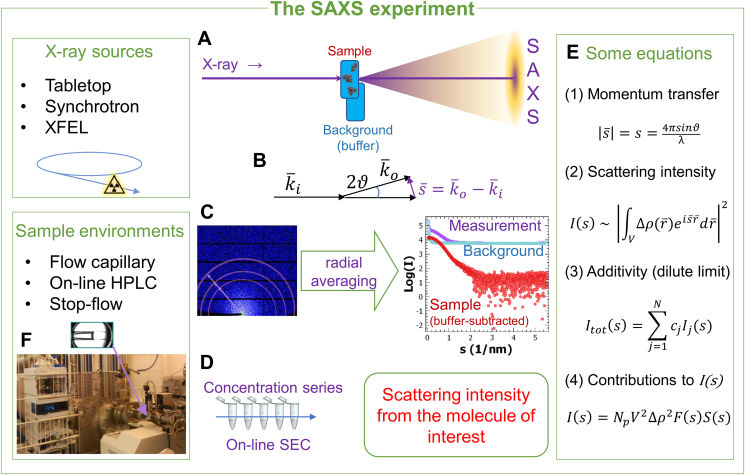 Fig.1 Schematic representation of a SAXS experiment. 1
What We Can Offer
- Data Analysis Software on Our Instrument
| Function | Software | Description |
|---|---|---|
| Experimental data processing | PRIMUS, GNOM, CHROMIXS | Primary data processing |
| Ab initio modeling | MONSA, GASBOR, DAMMMIN, DAMMIF | Determine shape using dummy atom model |
| Rigid body modeling | CORAL, SASREF, BUNCH, GLOBSYMM | Model the multiple motif ensembled complexes |
| Structure refines | SREFLEX | Refine high-resolution protein models |
| Model evaluation and manipulation | CRYSOL, SRYSON, CIFSUP, DAMAVER, SASpy | Computationally model the scattering pattern |
- Our Capabilities
| Primary Data | p(r) | Modeling |
|---|---|---|
| Provide primary SAXS data and size determination of single antibody and antigen, as well as the formed complex. | Pair distance distribution function p(r) of single antigen, antibody, and antibody-antigen complex. |
Ab initio shape determination of the antibody-antigen complex. Rigid body modeling of antibody in complex with antigen. |
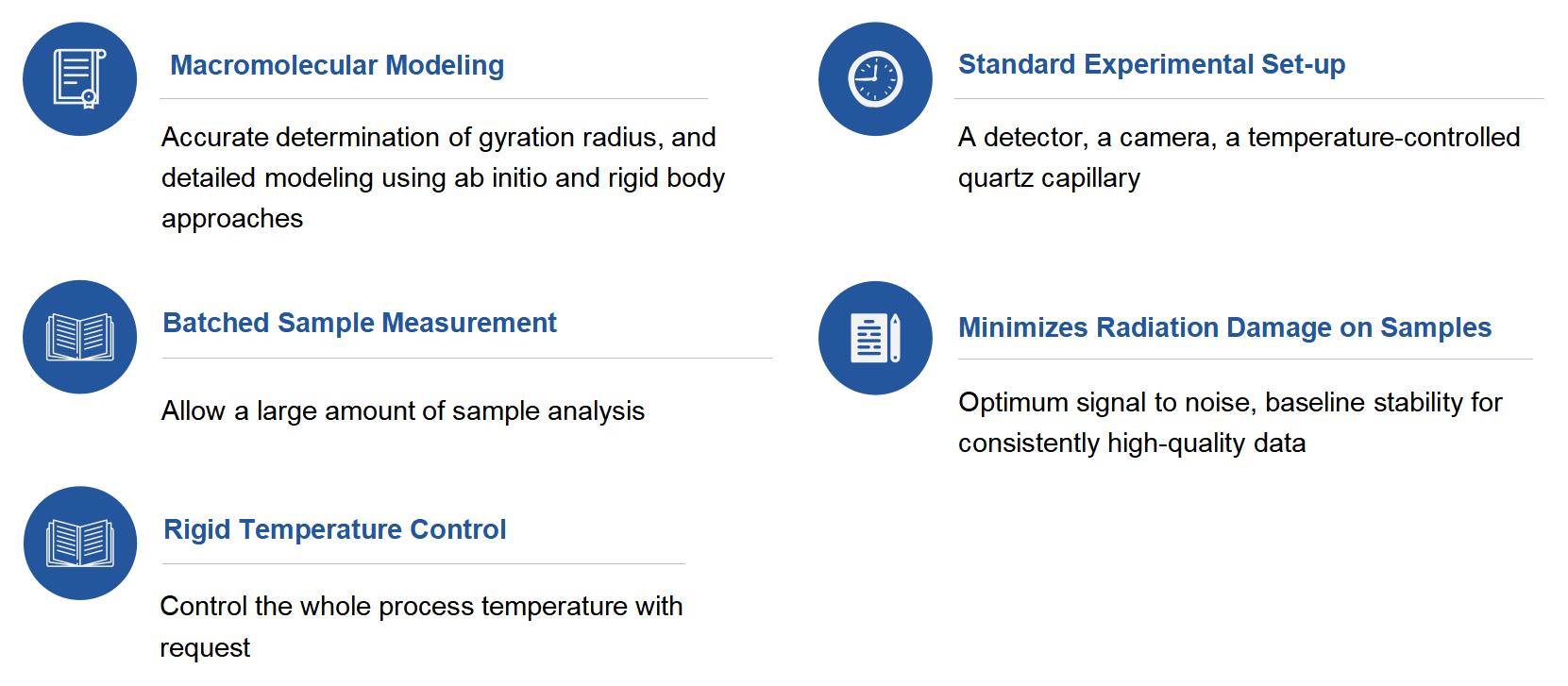
- Key Features of the Small-angle Scattering Assay
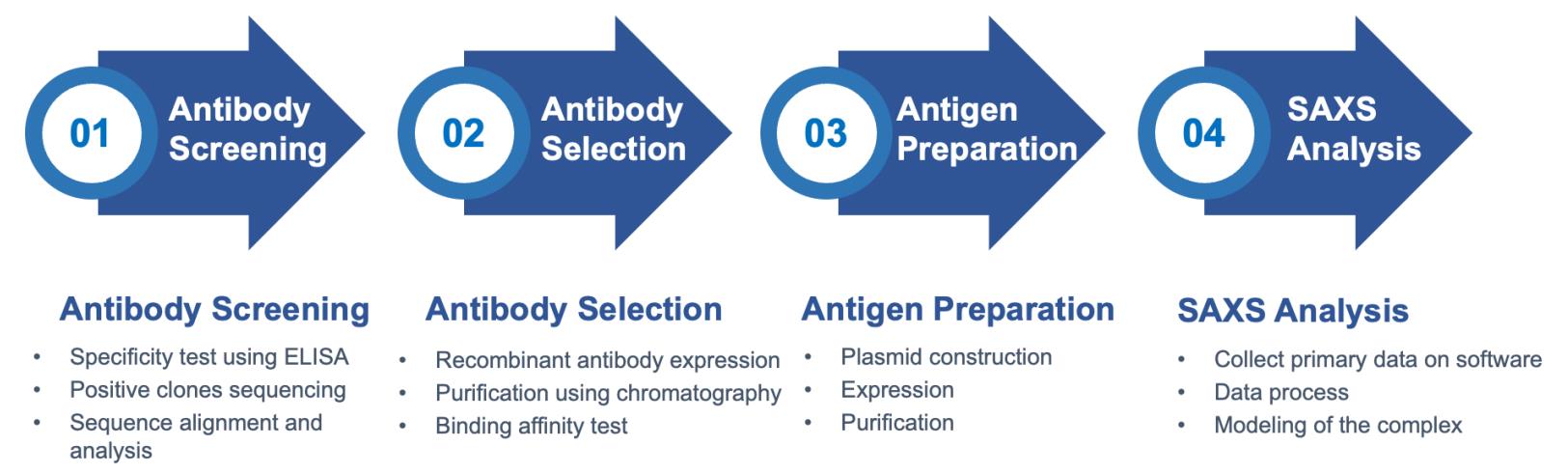
Workflow of Cell-based Small-angle Scattering Assay Service
The powerful X-ray scattering techniques provided us an insight into the complex interaction between the specific antibody and peptides. A SAS model of the antibody and peptides complex could indicate the shape information on the spatial arrangement of antibodies on an antigen, antibody binding sites, and conformation.
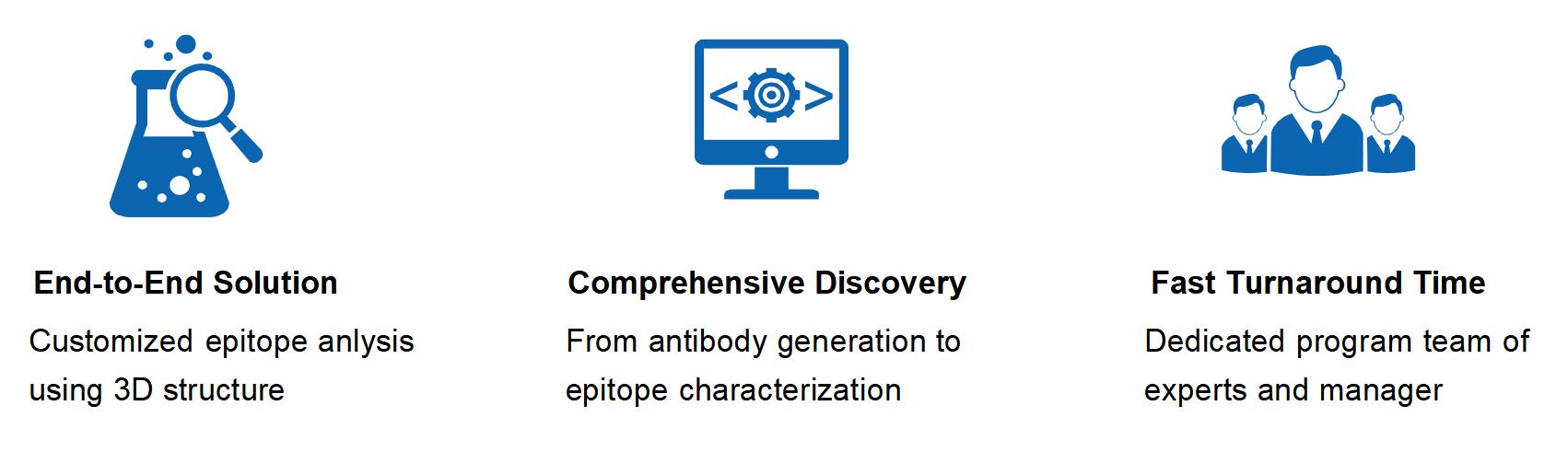
Highlights
Discover how a partnership with us can streamline your research - Get a quote today.
Customer Reviews
-
Streamlined Workflow.
Creative Biolabs' assay facilitated our antibody development by providing critical data on aggregation and conformation from minimal samples, avoiding the need for extensive protein purification. This saved us a lot of time and resources compared to our previous methods. - L***a. -
Unparalleled In-Solution Insight
We were able to confirm our antibody's native-state structure and how it interacts with its antigen using the Creative Biolabs assay. This in-solution data gave us a confidence boost we couldn't get from crystallography alone, helping us choose the best candidates to move forward. - K***n.
FAQs
What is the main advantage of using a B cell-based SAS assay over other structural methods like crystallography?
Our assay provides crucial structural information from samples in their native solution state, without the need for crystallization. This allows us to analyze flexible or unstable molecules that are not suitable for crystallography and to gain insights into their behavior in a more biologically relevant environment.
Can this assay be used for my specific type of antibody or protein?
Absolutely. Our platform is designed to be highly versatile. As long as you can provide the required sample material, our assay can be adapted to characterize a wide range of antibody types, as well as protein-protein and antigen-antibody complexes.
Related Services
T and B Cell-based X-ray Crystallography Assay
Antibody Screening and Characterization
We offer a full range of high-throughput screening services and biochemical characterization using methods like ELISA and FACS to accelerate lead identification.
Learn More →How to Contact Us
Creative Biolabs provides the cutting-edge insights you need to get ahead in biotherapeutic development. Our B cell-based small-angle scattering assay is a strategic asset for a more efficient and de-risked pipeline. Please contact us for more detailed information.
Reference
- Da Vela, Stefano, and Dmitri I Svergun. "Methods, development and applications of small-angle X-ray scattering to characterize biological macromolecules in solution." Current research in structural biology vol. 2 164-170. 27 Aug. 2020. Distributed under an Open Access license CC BY 4.0, without modification. https://doi.org/10.1016/j.crstbi.2020.08.004
 Download our brochure
Loading case studies...
Online Inquiry