Drug Interaction Analysis Service
In the current landscape of anticancer drug development, the issue of cardiotoxicity arising from drug interactions has emerged as a critical and pressing concern. Creative Biolabs offers pharmaceutical companies and research institutions comprehensive analysis services for cardiotoxicity to ensure the safety and efficacy of candidate leads. By utilizing high-throughput screening technologies, we can swiftly evaluate the effects of various drug combinations on cardiac cells, significantly enhancing experimental efficiency. Meanwhile, Integrating knowledge from disciplines such as bioinformatics, medicinal chemistry, and cardiac physiology, we conduct a wide range of studies on the mechanisms of cardiotoxicity resulting from drug interactions, ensuring the accuracy of our analytical results.
Introduction
The complexity of cancer treatment is on the rise, particularly concerning the interactions of drugs within the body and their impact on patient health. As the variety of cancer medications expands, the issue of cardiotoxicity resulting from drug interactions is gaining increasing attention. This poses challenges not only to drug safety but also to the efficacy and feasibility of new therapies.
In response to this pressing issue, Creative Biolabs is introducing a CRO analysis service focusing on cardiotoxicity caused by interactions between cancer drugs. We aim to provide clients with a comprehensive and expert analysis of drug interactions to maximize safety during the new drug development process. Through meticulous pharmacological research, Creative Biolabs can assist clients in understanding the mechanisms of interaction among different cancer drugs, predict potential cardiotoxic risks, and offer appropriate solutions.
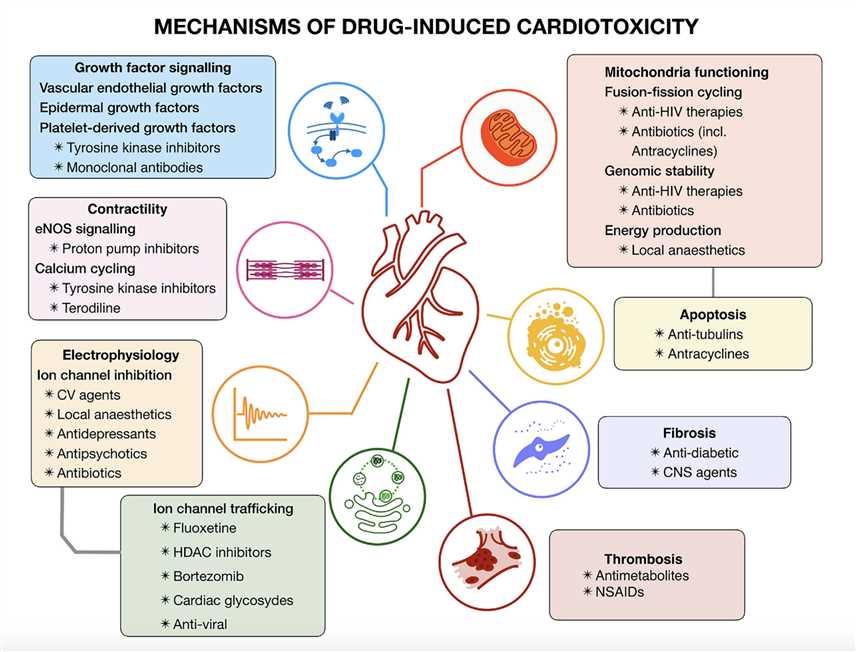 Fig.1 Drug-induced Cardiotoxicity.1,3
Services
Over the past decade, many studies have indicated that anticancer drugs may interact with each other through various metabolic pathways. When one drug affects the metabolism or excretion of another, it can lead to increased blood levels of the latter, thereby raising the risk of cardiotoxicity.
In recent years, Creative Biolabs has combined high-throughput drug screening with interaction assessment analysis to create an efficient and comprehensive platform for cardiotoxicity evaluation. Our innovative approach not only allows for the rapid identification of drug candidates but also facilitates a mature analysis of the complex interactions between drugs, helping clients avoid potential cardiotoxicity risks at an early stage. Furthermore, through meticulous interaction analysis, we can accurately identify effective drug combinations, providing a solid data foundation for the development of new cancer therapies.
- Computational Models: Our scientists have harnessed machine learning and deep learning techniques to create various predictive models for drug interactions. By analyzing existing drug data, Our models can forecast the interactions of new drug combinations, significantly enhancing the accuracy and efficiency of the analysis.
- Preparation of Compound Library: We gather and synthesize a diverse selection of compounds, encompassing known drugs, natural products, and their chemical derivatives. By constructing and refining our compound library, we ensure it is adequately representative and varied.
- Target Selection: We assist our clients in identifying the biological targets for evaluation, such as enzymes, receptors, or transport proteins, and we develop appropriate bioassay models for these targets.
- Experimental Design: In our labs, we design experiments using multi-well plates, creating both control and experimental groups to assess drug interactions. Utilizing suitable detection methods, such as fluorescence, luminescence, or mass spectrometry, we efficiently monitor the outcomes of the reactions.
- High-Throughput Screening: We employ automated systems for the addition of compounds and monitoring of reactions, enabling large-scale parallel testing. We then compile the data and conduct preliminary analyses.
- In Vitro Testing: Creative Biolabs conducts analyses of drug interactions in tumors using cell culture and biochemical techniques. To date, we have developed testing systems that focus on enzyme inhibition and induction, as well as transporter functionality. Our protocol is relatively straightforward, and controlling various variables is easy, enabling clients to swiftly obtain preliminary experimental data.
- Biological Model Development: We are dedicated to the biological model testing and analysis of the processes of drug absorption, distribution, metabolism, and excretion (ADME). The biological models we create more accurately replicate the physiological environment within a living organism, making the experimental results more relevant and reliable in comparison to actual conditions.
- Data Processing and Analysis: Using bioinformatics tools and statistical methods, our team performs a comprehensive analysis of the screening results to identify potential patterns of drug interactions and evaluate their biological significance.
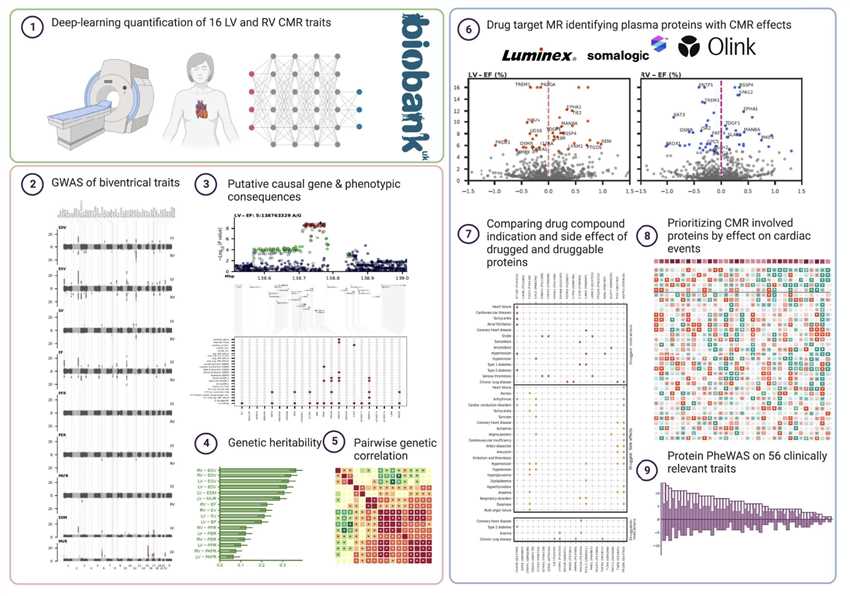 Fig.2 A Biventricular CMR Data and GWAS Analysis to Identify and Prioritize Plasma Proteins that Influence Cardiac Outcomes.2,3
Case Study
We recently assisted a client in evaluating the cardiac toxicity associated with the combined use of a novel anti-tumor agent (Drug A) and a commonly used antiviral medication (Drug B).
Healthy adult male rats were selected as test subjects and divided into four groups: a control group (given saline), a group receiving Drug A alone, a group receiving Drug B alone, and a combination therapy group (Drug A + Drug B). The experiment spanned four weeks, during which we assessed heart rate, electrocardiogram (ECG) parameters, and cardiac function metrics for all groups weekly.
Notably, the combination therapy group exhibited a significant prolongation of the QT interval on the ECG (P<0.01), markedly higher than that observed in the groups receiving either drug alone. Moreover, there was a significant reduction in heart rate variability within the combination group, indicating a diminished regulatory capacity of the autonomic nervous system. Echocardiographic examinations revealed mild ventricular hypertrophy in this group. Furthermore, histopathological analysis of cardiac tissue showed signs of mild edema and apoptosis in cardiomyocytes, along with a marked increase in the expression levels of sodium channels within the heart, heightening the sensitivity to Drug A.
Consequently, our analysis suggests that the combined use of Drug A and Drug B may increase the risk of cardiac toxicity due to the extended QT interval. It appears that Drug B influences the cardiac electrophysiological response to Drug A, exacerbating adverse effects.
Creative Biolabs provides not only in vitro cell experiments but also solutions utilizing animal models, implementing a multi-tiered experimental design to analyze cardiotoxicity. By employing contemporary statistical techniques and machine learning methods, we analyze the quantitative relationship between drug concentration and cardiotoxicity, allowing us to create predictive models that will guide future drug development efforts. We warmly invite all customers to contact us for more information about our cardiotoxicity analysis services related to drug interactions.
References
- Mamoshina, Polina, Blanca Rodriguez, and Alfonso Bueno-Orovio. "Toward a broader view of mechanisms of drug cardiotoxicity." Cell Reports Medicine 2.3 (2021).
- Schmidt, Amand F., et al. "Druggable proteins influencing cardiac structure and function: Implications for heart failure therapies and cancer cardiotoxicity." Science Advances 9.17 (2023): eadd4984.
- Distributed under Open Access license CC BY 4.0, without modification.
 Download our brochure