Overview of the Complement C1 Complex
The C1 complex is the first functional unit of the classical complement pathway. It integrates a recognition module, C1q, with a protease module composed of two C1r and two C1s molecules. C1q recognizes specific/activating molecular structures, most commonly clustered Fc regions on antigen-bound IgM or IgG, but it may also interact with other classical pathway activators such as apoptotic cell-associated structures, pentraxins, pathogen-associated surfaces, and immune complexes. Once C1q binds to an activating surface, conformational changes promote C1r activation, followed by C1s activation. Activated C1s then cleaves C4 and C2, creating the C4b2a classical pathway C3 convertase and initiating downstream complement amplification.
This early activation step is biologically important because small changes in C1 recognition or protease activity can produce large differences in downstream complement outcomes. Therefore, a robust C1 complex activity assay should not be limited to a single endpoint. It should be able to distinguish recognition, activation, cleavage, deposition, amplification, and inhibition mechanisms.
Creative Biolabs develops customized C1 complex activity assays around this principle. We can help clients ask precise questions such as:
-
Does a candidate antibody recruit functional C1?
-
Does an inhibitor suppress C1 complex activation upstream of C4 cleavage?
-
Does a patient sample contain abnormal classical pathway activity?
-
Does a biologic trigger unwanted complement activation?
-
Does an engineered Fc modification improve or reduce C1-dependent function?
-
Does a disease-associated variant affect C1 assembly, C1r/C1s activation, or downstream classical pathway signaling?
Great Minds Choose Creative Biolabs
Workflow of Complement C1 Complex Activity Assay
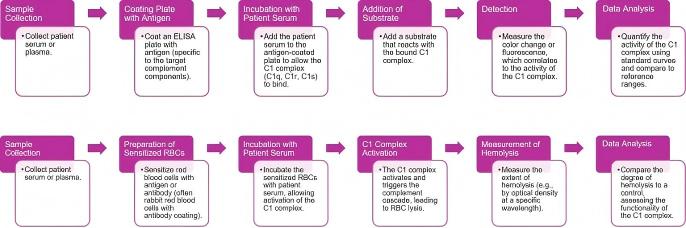 Fig. 1 The workflow of C1 complex ELISA (upper) and hemolytic assay (lower).
Design Your Workflow
Applications of Complement C1 Complex Activity Assays
|
Application
|
Description
|
|
Therapeutic Antibody Development
|
C1 complex activity testing is highly relevant for therapeutic antibodies. Antibody-mediated complement activation depends on antigen density, antibody subclass, Fc structure, Fc clustering, target-cell surface properties, and local complement regulation. Creative Biolabs can evaluate whether antibody candidates recruit C1q, activate C1, induce C4/C3 deposition, form terminal complement complexes, or mediate complement-dependent cytotoxicity.
|
|
Complement Inhibitor Discovery
|
C1 complex activity assays can be used to screen and characterize inhibitors targeting C1q, C1r, C1s, C1 complex assembly, or classical pathway initiation. Creative Biolabs can design dose-response assays, pathway-selectivity panels, species cross-reactivity studies, serum matrix evaluations, and mechanism-of-action experiments. These services can help clients prioritize candidates and understand whether inhibition occurs at the recognition, activation, protease, or downstream cleavage level.
|
|
Autoimmune and Immune-Complex Disease Research
|
The classical pathway is closely associated with immune-complex biology. C1 complex activity assays can be used to study complement activation induced by patient-derived immune complexes, autoantibodies, disease-associated sera, or experimental immune-complex models. These assays may support research related to systemic lupus erythematosus, immune-complex vasculitis, glomerulonephritis, antibody-mediated transplant injury, autoimmune cytopenias, and other complement-associated diseases.
|
|
Biologics Safety Assessment
|
Biologics, nanoparticles, cell therapy products, and engineered protein constructs can activate complement under certain conditions. C1 complex activity assays can help determine whether a test material triggers classical pathway activation and whether activation is dependent on antibodies, immune complexes, aggregation, Fc-mediated recognition, or surface-associated factors. This information can support risk assessment, formulation optimization, and preclinical development.
|
|
C1-INH and Classical Pathway Regulation Studies
|
C1 inhibitor is a key regulator of C1r and C1s activity. Creative Biolabs can support studies evaluating C1-INH function, C1-INH replacement products, C1-INH-related inhibition, and dysregulated C1 activity. Assays can be configured to measure suppression of C1 activation, C4 cleavage, C4d generation, and downstream classical pathway activity.
|
|
Disease Biomarker and Translational Research
|
C1 complex activity readouts can contribute to translational research by linking serum complement function, immune-complex burden, pathway activation, and therapeutic response. Creative Biolabs can help develop fit-for-purpose assays for exploratory biomarker studies, sample stratification, pharmacodynamic monitoring, and preclinical-to-clinical assay transition planning.
|
Design Your Customization
Case Studies
Case 1
Quantitative Visualization of the Interaction between Complement Component C1 and Immunoglobulin G
Immunoglobulin G (IgG) adopts a modular multidomain structure that mediates antigen recognition and effector functions, such as complement-dependent cytotoxicity. IgG molecules are self-assembled into a hexameric ring on antigen-containing membranes, recruiting the complement component C1q. In order to provide deeper insights into the initial step of the complement pathway, the researchers reported a high-speed atomic force microscopy study for the quantitative visualization of the interaction between mouse IgG and the C1 complex composed of C1q, C1r, and C1s.
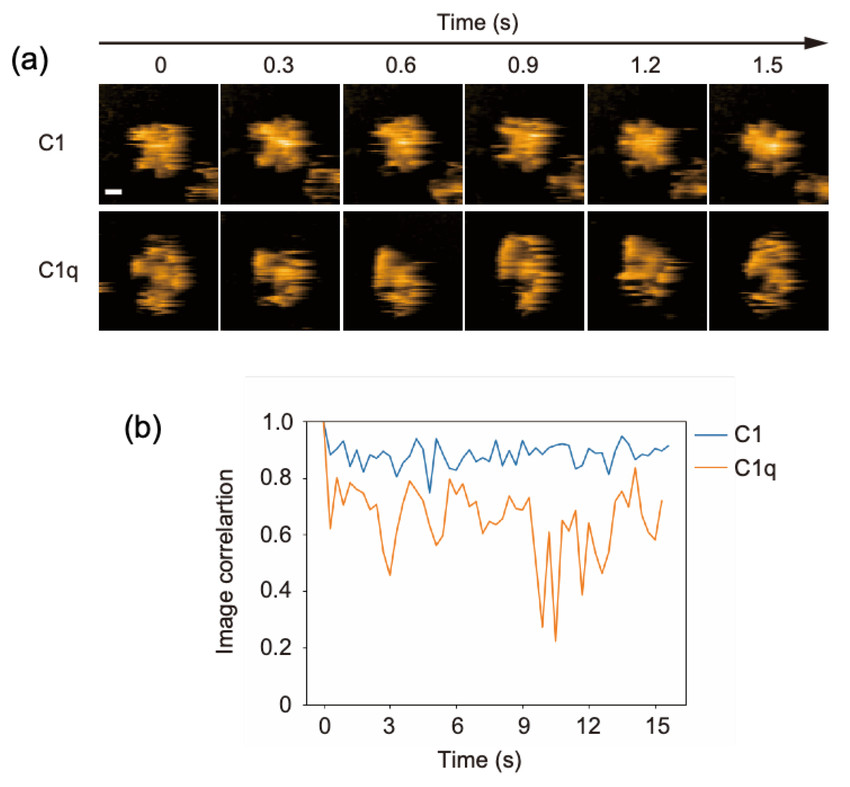 Fig. 2 HS-AFM observation of C1 and C1q.1,2
References
-
Yanaka, Saeko, et al. "Quantitative visualization of the interaction between complement component C1 and immunoglobulin G: the effect of CH1 domain deletion." International journal of molecular sciences 23.4 (2022): 2090. https://doi.org/10.3390/ijms23042090
-
Distributed under Open Access license CC BY 4.0, without modification.
Frequently Asked Questions
What is the difference between C1 complex activity testing and C1q binding assays?
C1q binding assays determine whether C1q interacts with an antibody, immune complex, target cell, or molecular surface. However, C1q attachment does not always result in activation of the complete C1 complex. C1 complex activity assays evaluate downstream functional consequences after C1 recognition, such as C1r/C1s activation or C4 cleavage. Therefore, they provide additional information about whether the interaction generates meaningful classical pathway activation.
Can the assay evaluate the activity of intact C1 complex rather than individual components?
Yes. Creative Biolabs can design assays specifically for intact C1 complex activity evaluation. These assays may use purified C1 complex, serum-based complement systems, immune-complex activation models, or cell-based platforms. Testing intact C1 complex function is particularly useful when researchers need to evaluate the complete biological process involving C1q recognition, C1r activation, C1s activation, and downstream complement initiation rather than only measuring one individual protein interaction.
How long does a Complement C1 Complex Activity Assay project take?
Project timelines depend on assay complexity, sample availability, assay development requirements, and the number of requested endpoints. A standard assay using an established platform may require less development time, while customized workflows involving new activation systems, cell models, cross-species analysis, or multiplex readouts may require additional optimization. Creative Biolabs can provide a project-specific timeline after reviewing experimental objectives and requirements.
Can Creative Biolabs help design a complete classical pathway evaluation strategy?
Yes. In addition to C1 complex activity assays, Creative Biolabs provides broader complement testing solutions covering upstream activation, pathway-specific functional assays, complement deposition analysis, inhibitor evaluation, and downstream terminal pathway assessment. Our scientists can help design a staged evaluation strategy that begins with molecular characterization and progresses toward serum-based and cell-based functional validation.
How much sample is required?
Sample volume depends on assay format, number of endpoints, number of replicates, dilution series, controls, and whether repeat testing is needed. Purified-protein assays may require relatively small amounts of test article, while multi-readout serum or cell-based studies may require larger volumes. Creative Biolabs can provide a project-specific sample requirement estimate after reviewing the study design.